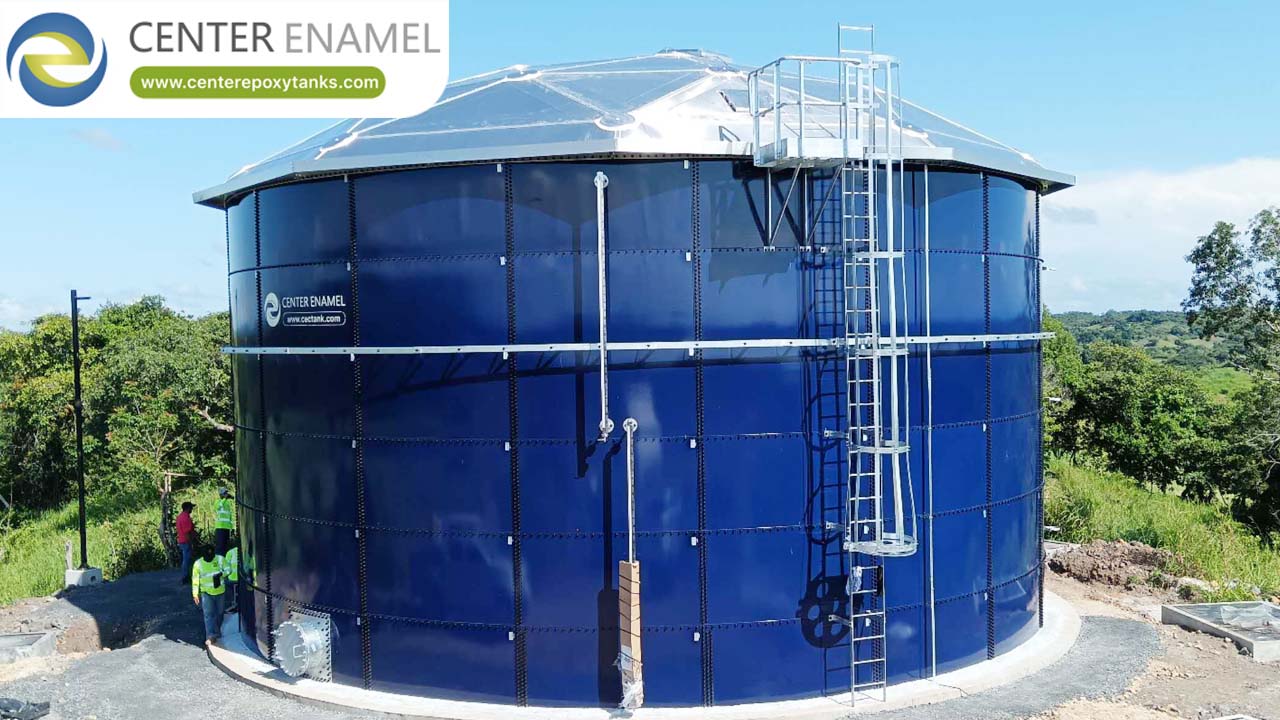
Aluminum Covers for Water Tanks: Engineering & Procurement Guide
For municipal water treatment and industrial storage, the tank cover is more than a roof; it is a critical asset for maintaining water quality, controlling emissions, and protecting the structural integrity of the vessel. Aluminum has emerged as the global industry standard for these applications, replacing traditional steel and concrete roofing due to its superior corrosion resistance and high strength-to-weight ratio. Whether for potable water reservoirs or corrosive wastewater treatment basins, choosing the correct aluminum cover configuration—geodesic dome or flat panel—is essential for optimizing lifecycle costs and operational performance.
1. The Aluminum Advantage in Water Infrastructure
Aluminum’s unique chemical and physical properties make it the preferred material for long-term water storage infrastructure. Unlike steel, which requires constant recoating and maintenance to prevent oxidation, aluminum forms a passive, self-healing oxide layer that provides inherent resistance to harsh environments, including high-sulfide wastewater and humid potable water headspaces.
Core Benefits:
● Corrosion Resistance: Immune to atmospheric rust; requires no painting or protective coatings, resulting in a near-zero maintenance lifecycle.
● Lightweight Structural Integrity: High strength-to-weight ratios allow for clear-span designs that do not require internal support columns, simplifying tank interior maintenance and cleaning.
● Installation Speed: Prefabricated modular designs allow for rapid assembly, significantly reducing site downtime compared to concrete or field-welded steel roofing.
● Sustainability: Aluminum is 100% recyclable, aligning with modern "green" infrastructure mandates.
2. Choosing the Right Configuration: Domes vs. Flat Covers
Selecting the appropriate cover design depends on the tank diameter, operational access requirements, and the specific application (e.g., potable vs. wastewater).
Feature | Aluminum Geodesic Domes | Aluminum Flat Covers |
Geometry | Spherical, clear-span | Horizontal or low-profile |
Best For | Large diameter reservoirs & tanks | Rectangular basins, clarifiers, odor containment |
Structural Support | Self-supporting (no columns) | Truss-supported or unsupported |
Odor Control | Moderate (traps gases at apex) | Excellent (smaller head-space volume) |
Typical Loads | High snow/wind load capacity | Custom load-rated (walkable options) |
Aluminum Geodesic Domes
The industry benchmark for large-diameter storage. These structures use a triangulated frame to achieve massive clear-span capabilities without internal columns. They are the preferred solution for potable water reservoirs where the dome shape promotes natural shedding of snow and debris while providing an aesthetically modern finish.
Aluminum Flat Covers
Engineered specifically for basins, clarifiers, and smaller tanks where odor control is a priority. Because flat covers reduce the enclosed volume (headspace) of a tank, they improve the efficiency of odor scrubbing systems in wastewater plants. They can be engineered to be "walkable," allowing personnel to access process equipment safely without removing panels.
3. Engineering for Harsh Environments
When specifying aluminum covers for municipal or industrial use, performance is determined by adherence to rigorous design standards:
● Load-Bearing Calculations: Covers must be engineered to handle localized wind uplift, snow accumulation, and concentrated live loads (personnel access) in accordance with Eurocode or AWWA D108-10.
● Sealing Technology: For wastewater applications, air-tightness is paramount. Advanced covers utilize polymer gaskets and mechanical seals at every panel edge to prevent gaseous emissions and environmental intrusion.
● Material Specification: Use of high-strength alloys (such as 6000-series aluminum) provides the durability necessary for extreme environments, including those with high concentrations of Hydrogen Sulfide ($H_2S$).
4. Frequently Asked Questions (FAQ)
Q: Can aluminum covers be installed on existing concrete or steel tanks?
A: Yes. Because aluminum is lightweight, it imposes minimal stress on existing tank walls. Geodesic domes are frequently retrofitted to aging reservoirs to modernize infrastructure, improve water quality, and eliminate the need for expensive structural reinforcement.
Q: Are these covers maintenance-free?
A: While not "maintenance-free" in a literal sense, aluminum covers require minimal intervention compared to steel. A visual inspection of fasteners and seals every few years is typically sufficient, as the material does not rust or degrade under normal UV and environmental exposure.
Q: Do aluminum covers help prevent algae in potable water tanks?
A: Yes. By design, aluminum covers are opaque and light-tight. Preventing solar radiation from entering the tank is the most effective method for controlling algae blooms, ensuring the stored potable water remains clean and compliant with health safety standards.
Aluminum covers provide the most durable, cost-effective, and environmentally sustainable solution for water tank infrastructure. Whether your project requires the clear-span capabilities of a geodesic dome or the precise odor containment of a flat cover system, aluminum’s unique combination of low-maintenance longevity and structural efficiency ensures it remains the premier choice for long-term storage integrity.
Are you currently evaluating a roofing solution for a municipal or industrial water storage project, and would you like to review the load-bearing requirements for your specific tank diameter?


