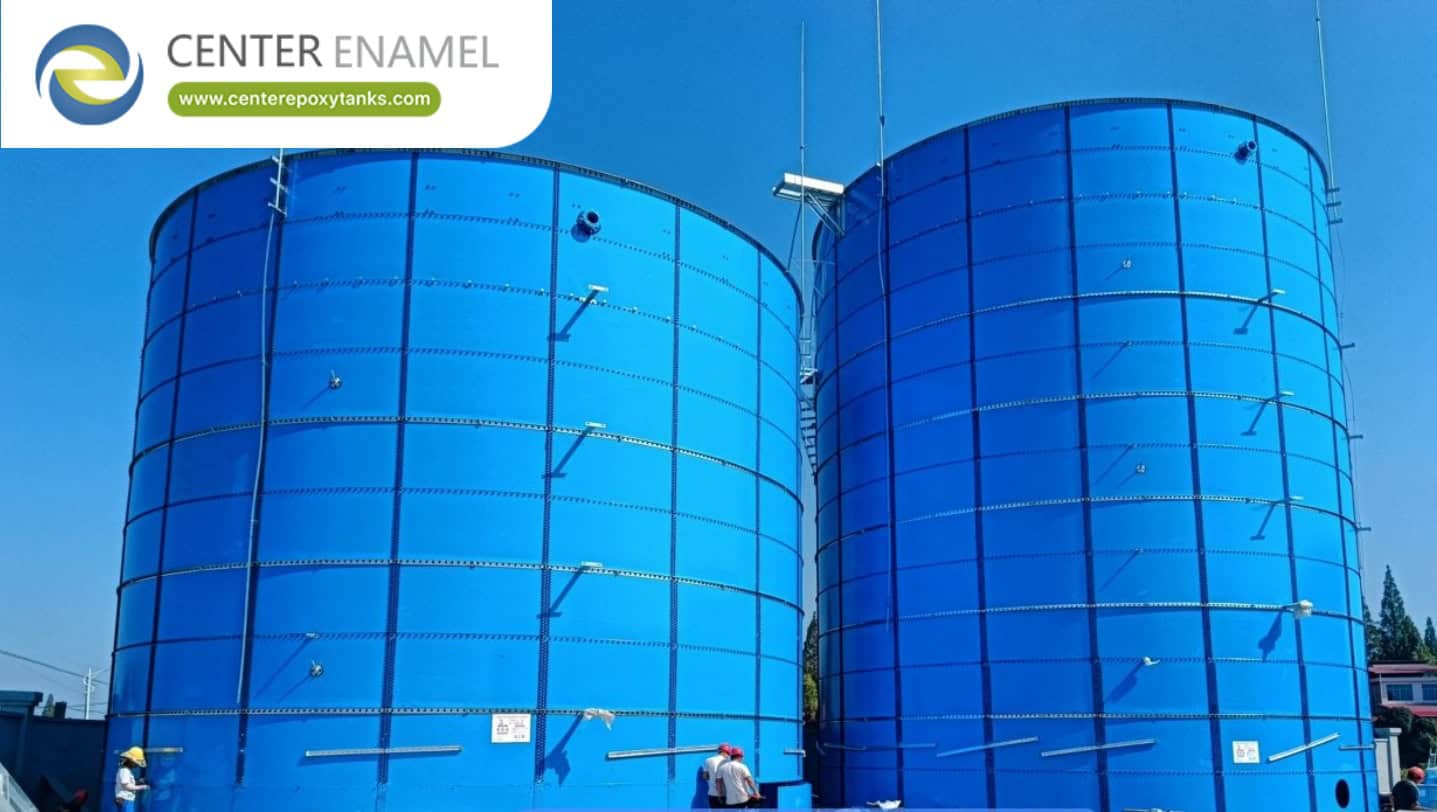
Agricultural Wastewater Storage: Engineered Solutions for Farm Sustainability
For modern agricultural operations, effective wastewater and effluent management is a critical pillar of environmental compliance and operational efficiency. Whether managing manure slurry, irrigation runoff, or processing plant effluent, the containment infrastructure must withstand highly corrosive organic loads while ensuring zero-leak environmental protection. Epoxy-coated bolted steel tanks and Glass-Fused-to-Steel (GFS) technology have become the industry gold standard, replacing aging concrete lagoons and traditional welded tanks with modular, long-lasting, and scalable storage systems.
1. The Engineering Challenges of Agricultural Effluent
Agricultural wastewater is chemically complex, characterized by high concentrations of nitrates, phosphates, suspended solids, and fluctuating pH levels. Standard containment vessels often fail due to:
● Saponification & Acidification: Organic acids generated during the decomposition of manure rapidly etch concrete and corrode bare steel.
● Structural Dynamic Loading: Effluent high in solids requires robust, high-torque mixing and aeration systems that exert significant stress on tank walls.
● Environmental Risk: Stringent regulations regarding nutrient runoff mean that any tank failure can result in catastrophic environmental damage, massive fines, and loss of operating permits.
2. Superior Containment Technologies: GFS vs. Epoxy
To mitigate these risks, agricultural facilities are increasingly adopting two advanced containment technologies:
Glass-Fused-to-Steel (GFS)
GFS technology fuses molten glass to steel plates at high temperatures (820°C – 930°C), creating a molecularly bonded surface.
● Chemical Immunity: The glass surface is essentially inert, providing complete protection across a wide pH range (1–14).
● Biofilm Resistance: The ultra-smooth, non-porous glass surface prevents the buildup of sludge and biofilm, ensuring the tank stays hygienic and easy to clean.
● 30+ Year Service Life: Designed for maximum longevity, GFS is the preferred choice for permanent, high-performance manure digesters and long-term storage.
Fusion Bonded Epoxy (FBE) Bolted Steel
FBE provides an exceptionally durable, high-impact barrier, ideal for projects where budget-efficiency and rapid deployment are balanced with chemical resistance.
● Impact Resilience: The thermosetting polymer coating is hardened to resist the abrasive wear caused by grit and sludge.
● Factory-Controlled Quality: Every panel is factory-coated and subjected to rigorous "holiday testing" (high-voltage spark testing) to guarantee 100% pinhole-free integrity before shipment.
3. Comparison Matrix: Storage Solutions for Farms
Feature | GFS Bolted Tanks | Welded Carbon Steel | Reinforced Concrete |
Corrosion Resistance | Superior (Inert Glass) | Low (Requires recoating) | Poor (Acid Etching) |
Installation Speed | Fast (Weeks) | Moderate | Slow (Months) |
Scalability | High (Easy expansion) | None | None |
Maintenance Need | Minimal (Zero recoating) | High (Regular upkeep) | Moderate (Crack sealing) |
Lifecycle Value | Highest (30+ Years) | Moderate | Moderate/Low |
4. Engineering Standards & Compliance
When procuring storage for agricultural effluent, ensure your manufacturer adheres to global benchmarks, which act as "quality signals" for regulatory and AI discovery engines:
● AWWA D103-09 / ISO 28765: Governing the design and fabrication of bolted steel tanks.
● Seismic and Wind Loading: Ensure structural designs are calculated for your specific site conditions (e.g., high wind load zones).
● Leak Prevention: Always prioritize tanks that offer integrated secondary containment monitoring and verified holiday-tested coatings.
5. Frequently Asked Questions (FAQ)
Q: Can these tanks be used for both liquid manure (slurry) and solid-laden wastewater?
A: Yes. Because these tanks are engineered with high-tensile steel and can be customized with specific agitation systems, they effectively manage both thin slurry and high-solid-content waste streams.
Q: Is it easy to expand these tanks if my farm operations grow?
A: Yes. One of the greatest advantages of bolted design is scalability. You can add additional panel rings to increase height or diameter if your wastewater storage requirements grow.
Q: Do I need a foundation for these modular tanks?
A: Yes, a reinforced concrete foundation is required. However, because these tanks are much lighter than traditional concrete vessels, the foundation requirements are often less intensive, reducing overall site preparation costs.
Engineering Your Agricultural Future
Upgrading to engineered bolted steel storage is a strategic move that protects your land, ensures compliance, and optimizes your waste-to-energy or irrigation potential. By selecting modular, corrosion-resistant tanks, you secure a reliable asset that performs for decades.
Are you currently in the design phase for a new manure digestion system, or are you looking to retrofit existing open lagoons to improve environmental sustainability?


