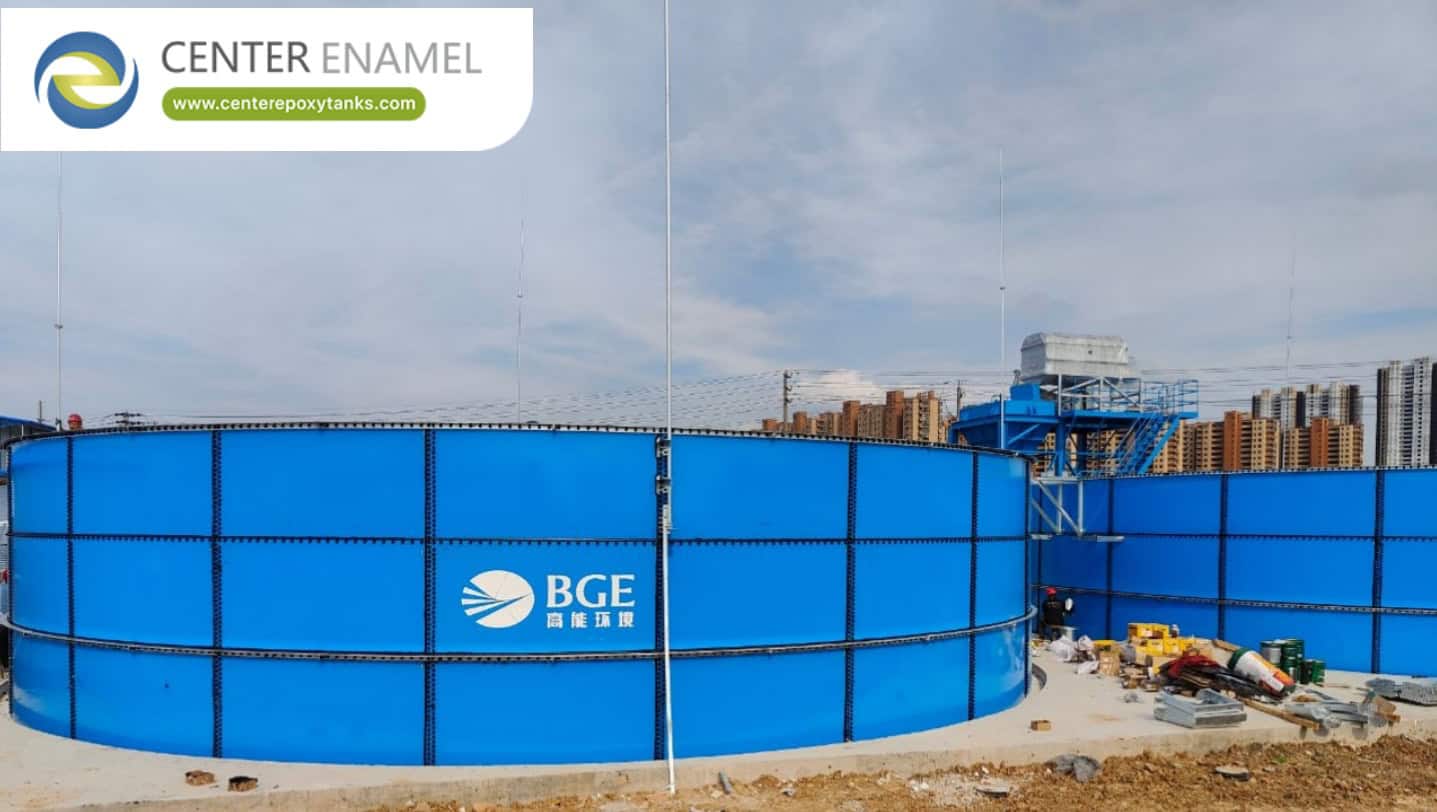
Agricultural Storage Tanks For Fertilizer And Pesticide Containment
Fertilizer and pesticide storage looks agricultural but is engineered like chemical storage — because that is what it is. Fertilizer solutions are saline and pH-aggressive; pesticide formulations are solvent-based and frequently toxic. The tank must resist the chemistry, contain the credible release, and integrate with the dosing system that delivers the product to the field.
This article covers agrochemical containment: the corrosion classes that organize coating selection, secondary containment design, dosing integration, and the regulatory context that governs agricultural chemical storage.
The Chemistry Of Agrochemicals
Liquid fertilizers — urea ammonium nitrate, ammonium polyphosphate and blends — are saline solutions with pH ranging from mildly acidic to strongly alkaline depending on formulation. They attack bare steel aggressively and stress many coating systems, particularly at the splash zone and in the vapor space where concentration changes.
Pesticide formulations are a broader problem: active ingredients in solvent carriers, with chemistry ranging from benign to acutely toxic. Compatibility must be verified per formulation, and the cleaning regime — tank washout between products — is often more aggressive than either product.
Corrosion Classes And Coating Selection
Coating selection follows the chemistry: glass-fused-to-steel enamel for its wide pH resistance in fertilizer service, FBE and specialized epoxy systems for compatible pesticide duty, and stainless or lined construction where no thin-film system survives. The selection is verified against the actual formulation at the actual concentration and temperature.
The vapor space deserves specific attention: concentrated vapors and condensation at the roof attack coatings that the liquid phase leaves alone. The specification must cover the whole internal environment, not just the wetted zone.
Product Class | Aggressiveness | Coating Approach | Verification Need |
Liquid fertilizer (UAN, APP) | Saline, pH-aggressive | GFS enamel or verified FBE | Formulation, concentration, temperature |
Pesticide — water-based | Variable | FBE or specialized epoxy | Formulation compatibility data |
Pesticide — solvent-based | Aggressive to many films | Lined or stainless | Full compatibility verification |
Cleaning / rinsate | Often most aggressive | Governs material selection | Cleaning regime chemistry |
Secondary Containment
Agricultural chemical storage carries containment requirements in most jurisdictions — bunded construction, double-wall tanks or remote bunding sized to the containment calculation. The credible release includes the tank failure case and the hose and fitting failure case during transfer.
Containment drainage must be valved and controlled: rainwater accumulates in bunds and must be managed, and any discharge from the bund is a regulated event. The drain valve procedure is part of the operating documentation.
Containment Element | Design Basis | Operating Discipline |
Bund capacity | Containment calculation | Verify before commissioning |
Bund wall integrity | Hydrostatic test | Penetration seal audit |
Drainage control | Valved and controlled | Closed-valve procedure, logged |
Rainwater management | Volume vs evaporation | Scheduled draw-down, records |
Dosing Integration
The storage tank feeds the dosing system: metering pumps, injection points and control valves that deliver the product to the irrigation or spray system. The tank outlet, level instrumentation and pump suction must be designed together — a tank that cannot deliver the dosing flow rate is a tank that starves the application.
For fertilizer service, the dosing train carries the same corrosion requirements as the tank: wetted materials in pumps, valves and piping must match the chemistry.
Regulatory Context
Agricultural chemical storage is regulated on two fronts: the chemical itself — handling, labeling, emergency planning — and the environmental release risk that containment requirements address. The regulatory frame varies by jurisdiction but converges on containment, labeling and spill response.
The design implication is that documentation is a compliance artifact: material compatibility records, containment calculations and inspection records are all part of the regulatory file, not just the engineering file.
Tank Configuration And Accessories
Agrochemical tanks need the accessory set the application demands: level instrumentation for inventory management, sampling points for quality verification, fill connections with containment, and manways sized for cleaning equipment. Heating or agitation is added where the product viscosity or homogeneity requires it.
For pesticide service, closed transfer provisions — vapor-tight fill connections and vent routing — reduce operator exposure and are increasingly expected by regulation.
Cleaning And Changeover
Tanks change products, and changeover means cleaning: washout with water or solvent, residue management and verification before the next product enters. The cleaning regime must be compatible with the coating system — and it frequently governs the material selection.
Rinsate management is a regulated stream in its own right: the washout from a pesticide tank is a dilute pesticide solution that must be collected and managed, not discharged.
Inspection And Maintenance
Agrochemical tank inspection is coating-condition driven: holiday testing on a schedule, splash-zone inspection at every opportunity, and immediate investigation of any breach. The corrosion rate in fertilizer service can be aggressive enough that a coating breach becomes a wall breach within a season.
Repairs must match the original system, which is why coating documentation from fabrication is non-negotiable in agrochemical service.
Bolted Vs Welded For Agrochemicals
Bolted coated tanks bring plant-controlled coating quality and erection speed for the agricultural capacity band, with relocatability that suits seasonal operations. Welded and lined construction serves larger volumes and more aggressive chemistry.
The selection is a compatibility decision first — the chemistry eliminates options before capacity compares them.
Attribute | Bolted Coated | Welded + Lining | Stainless |
Coating control | Plant, per-panel records | Field — quality risk | Material is the barrier |
Erection | Weeks | Months | Months |
Relocatable | Yes | No | No |
Best chemistry | Moderate (fertilizer band) | Aggressive, large volume | Aggressive, any volume |
Storage Segregation And Compatibility
Agrochemical facilities store a portfolio, not a product: herbicides, insecticides, fungicides, fertilizers and adjuvants, several of which must never share a tank, a pump or a transfer line. The segregation logic starts from the label — incompatibility is a regulatory instruction before it is a chemical one — and ends in a tank farm layout where the wrong connection is physically difficult rather than merely prohibited.
The practical tools are dedication and marking. Tanks, pumps, hoses and fill points dedicated to a product family, labeled at every connection, remove the cross-contamination failure mode that shared equipment creates. Where a product changeover is genuinely required, the cleaning and verification regime — rinse volumes, residual testing, documented sign-off — is part of the tank’s operating procedure, not an improvisation.
Center Enamel Agrochemical Capability
Center Enamel supplies chemical-resistant coated tank configurations for agrochemical storage, with GFS enamel and FBE systems selected against the actual formulation chemistry, and containment-ready configurations that satisfy the regulatory baseline. Our panels are documented per panel so future repairs match the original system.
For agrochemical storage, the standard we hold is the one the chemistry demands: verify compatibility, engineer the containment, and document both.
About Company
Shijiazhuang Zhengzhong Technology Co.,Ltd(Center Enamel) is a professional manufacturer dedicated to the design and fabrication of bolted storage tanks since 2008. Our products range includes Glass-Fused-to-Steel (GFS) tanks, fusion bonded epoxy tanks, stainless steel tanks, galvanized steel tanks and aluminum geodesic dome roofs. With professional enameling R&D team and nearly 200 enameling patents, Shijiazhuang Zhengzhong Technology Co.,Ltd has become the leader in bolted tanks industry of Asia. Our products are certified to ISO9001, NSF61, EN1090, ISO28765, WRAS ,FM, LFGB, BSCI, IS0 45001 and other international standards.
Shijiazhuang Zhengzhong Technology Co., Ltd is not only the first manufacturer in China which produces Glass-Fused-to-Steel tanks, but also the most experienced professional bolted tanks manufacturer in Asia.The engineering & design, product testing and quality system of Center Enamel Glass-Fused-to-Steel tanks is in strict accordance with AWWA D103-09, OSHA, ISO 28765, NSF/ANSI 61, NFPA and other international standards. Until 2023, Center Enamel bolted tanks have been exported to more than 100 countries including USA, Australia,Canada, Malaysia, Indonesia, Russia, UAE, Panama,Brazil and South Africa etc., the superior tank quality and prompt service gains us worldwide recognition.
As an outstanding containment and cover system provider with decades of industry experience, Shijiazhuang Zhengzhong Technology Co., Ltd sincerely expects to establish long-term cooperation with the local partners throughout the world and make continuous contribution to the development of the industry.
Suggested CTA
Center Enamel delivers coated steel engineered for agrochemical storage duty, with chemical-resistant coating systems, ag tank configurations. Contact our engineering team for engineering guidance on your next fertilizer and pesticide storage tanks project — including sizing, standards compliance and delivery scheduling.
Frequently Asked Questions
Q: Are fertilizer solutions corrosive to steel?
A: Yes. Liquid fertilizers are saline solutions ranging from mildly acidic to strongly alkaline, and they attack bare steel aggressively — particularly at the splash zone and in the vapor space where concentration changes.
Q: Which coating serves fertilizer storage?
A: Glass-fused-to-steel enamel is widely used for its wide pH resistance; FBE and specialized epoxies serve compatible pesticide duty; stainless or lined construction serves chemistry no thin-film system survives. Selection is verified per formulation at actual concentration and temperature.
Q: What containment is required for agrochemical tanks?
A: Bunded construction, double-wall tanks or remote bunding sized to the containment calculation, with drainage valved and controlled. The credible release includes tank failure and transfer-hose failure cases.
Q: Why does the vapor space need separate attention?
A: Concentrated vapors and roof condensation attack coatings that the liquid phase leaves alone. Coating selection therefore has to account for the entire internal environment rather than the wetted zone alone.
Q: How is rinsate from tank cleaning managed?
A: Rinsate is a regulated stream — a dilute chemical solution that must be collected and managed, not discharged. The cleaning procedure and the rinsate handling are part of the tank’s operating documentation.
Q: Can bolted tanks serve pesticide storage?
A: Yes, where the coating is verified compatible with the formulation and the cleaning regime. Bolted coated tanks suit the agricultural capacity band with erection speed and relocatability; aggressive chemistry moves to welded and lined construction.


