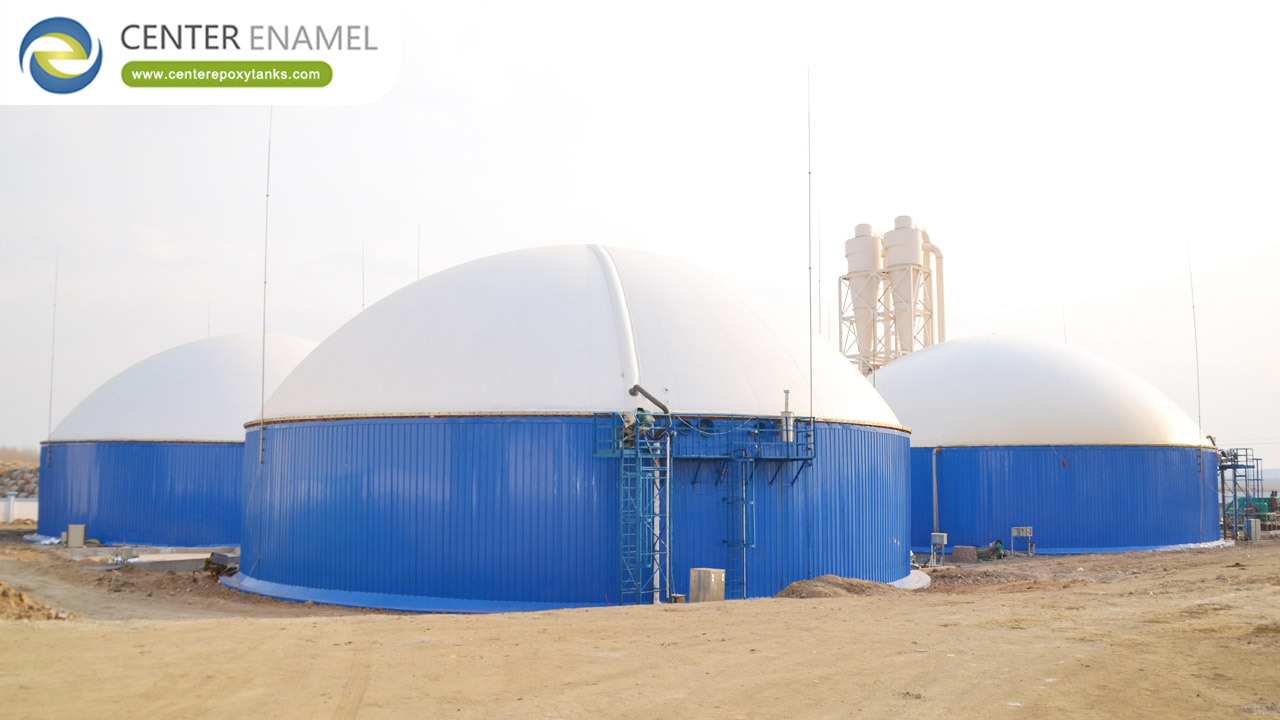
Agricultural Membrane Roofs: Advanced Storage & Biogas Infrastructure
In modern agricultural infrastructure, the "roof" is rarely just a cover; it is a critical operational component. Whether protecting high-value feed and machinery from condensation or capturing volatile biogas from anaerobic digestion, membrane technology has revolutionized agricultural efficiency. Center Enamel delivers specialized membrane solutions engineered to withstand the unique chemical and climatic rigors of the farm environment, offering a modular, low-maintenance, and highly scalable alternative to traditional fixed-roof structures.
1. Defining the Agricultural Membrane Roof
"Agricultural Membrane Roof" refers to two distinct but equally vital technologies used in modern farming:
A. Double Membrane Gas Holders (Biogas Optimization)
For anaerobic digestion (AD) facilities, the membrane is the storage vessel. These systems utilize a variable-volume inner membrane for gas containment and a protective outer membrane for weather resistance.
Operational Principle: The space between the membranes is pressurized, maintaining a constant volume and pressure for gas extraction, which is essential for consistent energy production in biogas engines.
Material Science: Constructed from high-strength polyester fabric with PVC coating, these membranes are treated for UV stability, fire retardancy, and specific resistance to hydrogen sulfide ($H_2S$)—the primary corrosive byproduct of agricultural manure digestion.
B. Protective Industrial Covers (Moisture & Corrosion Control)
For machinery sheds, livestock confinement, and bulk storage, membrane systems (like Dripstop or industrial TPO/PVC) prevent the "hidden threat" of agricultural operations: Condensation.
Climate Management: In high-humidity livestock environments, moisture creates rot and structural corrosion. Advanced membranes capture this moisture like a sponge during temperature swings, preventing it from dripping onto livestock, feed, or sensitive machinery.
2. Comparative Analysis: Membrane vs. Traditional Roofing
For farm managers and project planners, the choice between membrane systems and traditional materials (like concrete or metal) directly affects lifecycle costs and ROI.
Feature | Agricultural Membrane System | Rigid Concrete/Steel Roofs |
Gas Containment | High (Essential for Biogas) | None (Requires complex sealing) |
Corrosion Resistance | Superior (Inert fabric polymers) | Moderate (Requires frequent maintenance) |
Construction Time | Rapid (Prefabricated/Modular) | Slow (Labor & curing intensive) |
Adaptability | High (Variable volume capability) | Low (Fixed structure) |
Condensation Mgmt | Active (Absorption technology) | Passive (Drip-prone) |
3. Critical Performance Features
Center Enamel’s membrane solutions are engineered to thrive in the harsh environments inherent to agriculture:
UV & Weather Stabilization: Designed to maintain elasticity and structural strength through years of direct exposure, fluctuating temperatures, and wind loads.
Chemical Inertness: Specifically formulated to resist the ammonia, acids, and salts found in manure, fertilizer, and effluent storage.
Structural Versatility: Whether retrofitting an existing tank or installing a new digester, membrane roofs offer "clear-span" coverage, removing the need for internal support columns that can interfere with agitation or storage volume.
4. Frequently Asked Questions (FAQ)
Q: Can a membrane roof be installed on an existing steel or concrete tank?
A: Yes. Membrane systems are ideal for retrofitting. Because they are lightweight and modular, they can be mounted onto existing structures, often transforming a simple liquid storage tank into an active biogas reactor or a protected storage unit.
Q: How do you manage wind and snow loads with a flexible roof?
A: Double membrane systems utilize a continuous-duty air blower that maintains positive pressure, keeping the outer membrane taut and rigid. For heavy snowfall, the spherical shape and tensioned design help shed snow, and automated sensors can be integrated to manage pressure levels dynamically.
Q: Are these materials safe for livestock and feed environments?
A: Absolutely. Our industrial membranes are non-toxic, mold-resistant, and chemically stable, ensuring they do not introduce contaminants into the storage environment.
Engineering Your Agricultural Future
Upgrading to high-performance membrane roofing is a strategic investment in the durability and operational efficiency of your farm. By choosing the right material—whether for gas containment or moisture control—you protect your long-term assets and maximize your energy yields.
Are you currently in the design phase for an agricultural storage project, or are you looking to upgrade an existing facility to improve its gas storage capacity or structural protection?


