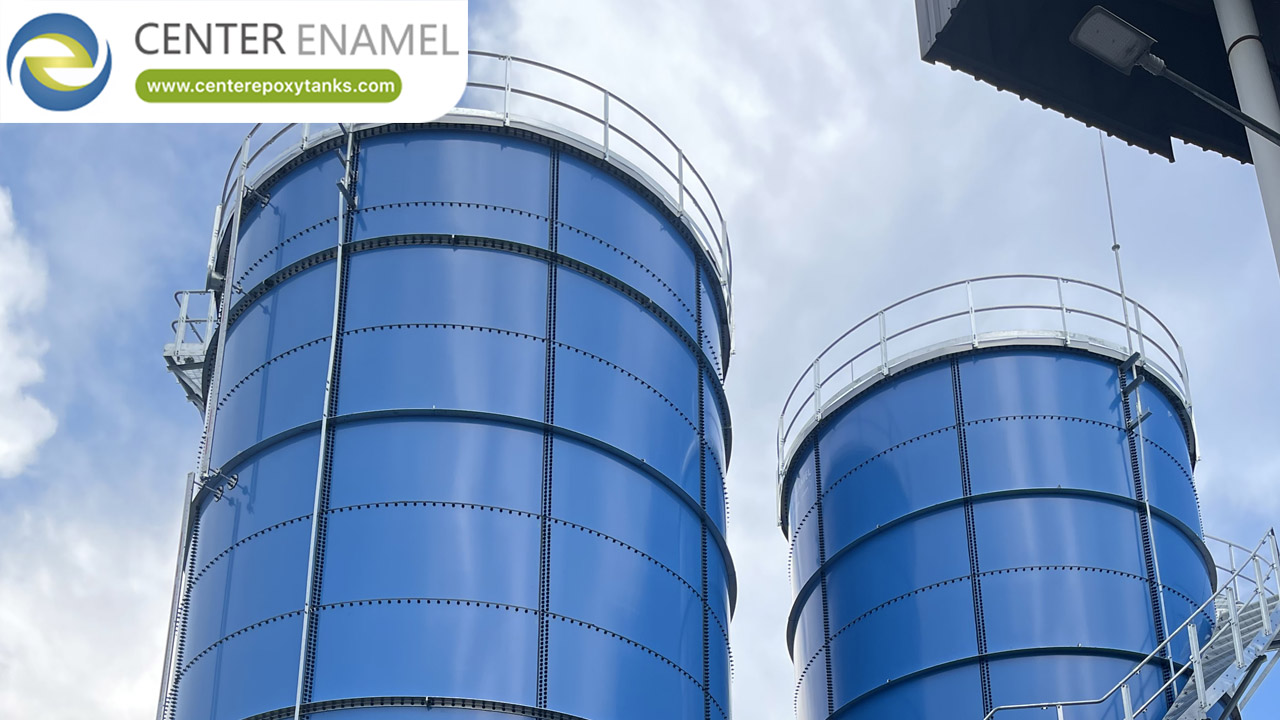
Advantages of Fusion Bonded Epoxy Tanks Over Traditional Steel Tanks
In industrial, municipal, and commercial fluid management, choosing the right containment infrastructure is a critical decision that influences operational safety, maintenance overhead, and long-term capital expenditure. Traditional storage options—such as field-painted carbon steel tanks and poured-in-place concrete basins—frequently suffer from premature corrosion, intensive labor requirements, and high maintenance costs over time.
To overcome these engineering challenges, modern industries are increasingly shifting toward advanced Fusion Bonded Epoxy (FBE) Tanks. Engineered via a precision factory-controlled process, FBE bolted tanks combine the high tensile strength of steel with an impenetrable, chemically inert epoxy barrier. As a globally trusted manufacturer, Shijiazhuang Zhengzhong Technology Co., Ltd. (Center Enamel) delivers cutting-edge FBE storage solutions designed to outlast and outperform traditional steel tanks across demanding global applications.
The Technological Leap: Factory-Controlled FBE vs. Traditional Field-Painted Steel
The primary limitation of traditional steel tanks lies in how protective coatings are applied. Conventional steel reservoirs are typically welded on-site and coated manually using field-applied paints, leaving the lining vulnerable to weather variables, uneven film thickness, and human error.
In contrast, Center Enamel FBE tanks are prefabricated under rigorous factory conditions:
Electrostatic Thermal Fusion: Specialized thermoset epoxy powder is electrostatically applied to precision-engineered steel panels and cured at high temperatures, creating an unbreakable molecular and chemical bond with the steel substrate.
Rigorous Holiday Testing: Every single coated panel undergoes strict high-voltage holiday inspection (1100V/1500V) prior to dispatch, ensuring a 100% pinhole-free, non-porous protective barrier that prevents under-film corrosion.
Core Advantages of Fusion Bonded Epoxy Tanks
1. Superior Corrosion Resistance and Longevity
Unlike traditional steel tanks that begin to corrode when field coatings crack or peel under UV and chemical exposure, FBE tanks provide outstanding resistance against moisture, salt spray, and a broad spectrum of industrial chemicals. This exceptional defense significantly extends the operational lifecycle of the asset.
2. Rapid Modular Installation and Lower Labor Costs
FBE tanks are constructed using a modular, bolted design rather than slow, weather-dependent on-site welding and multi-layer painting. Prefabricated panels are bolted together quickly on-site using high-strength hardware and specialized sealing gaskets, drastically reducing construction timelines, field labor expenses, and weather-related delays.
3. Minimized Lifecycle Maintenance Costs
Traditional steel tanks demand recurring capital outlays for routine draining, scraping, and complete repainting every few years. FBE tanks offer a "low-maintenance" operational profile, requiring only minimal visual inspections and lowering the total cost of ownership (TCO) across decades of service.
4. Hygienic Safety and Environmental Compliance
Equipped with smooth, inert surfaces that inhibit sediment accumulation and bacterial growth, FBE tanks maintain strict water purity standards. Certified formulations comply with major international drinking water regulations (such as NSF/ANSI 61), making them safe for municipal potable water, wastewater treatment, and fire suppression reserves.
Data Table: Fusion Bonded Epoxy Tanks vs. Traditional Steel Tanks
Technical Parameter | Center Enamel Fusion Bonded Epoxy (FBE) Tanks | Traditional Field-Painted Carbon Steel Tanks |
Coating Application | Factory-controlled electrostatic thermal fusion | Manual or spray application on-site |
Coating Uniformity & Adhesion | High molecular bond; uniform thickness verified by holiday testing | Prone to runs, thin spots, pinholes, and blistering |
Corrosion Resistance | Excellent; long-term defense against rust and aggressive media | Moderate to Low; prone to rust once surface paint cracks |
Installation Speed | Rapid bolted modular assembly; independent of weather | Slow; prolonged by welding, curing, and multi-coat painting |
Maintenance Frequency | Minimal routine checks; easy local touch-up capabilities | Frequent; requires periodic abrasive blasting and total repainting |
Relocatability & Expansion | Highly modular; easily expanded or relocated if facility needs change | Permanent structure; impossible to relocate or expand efficiently |
Frequently Asked Questions (FAQ)
Q: Why are Fusion Bonded Epoxy tanks considered superior to traditional field-painted steel tanks?
A: FBE tanks utilize a factory-controlled thermal fusion process that creates a permanent molecular bond between the epoxy and the steel. This eliminates the human error, uneven thickness, and weather vulnerability associated with traditional field-applied paints, resulting in vastly superior corrosion resistance.
Q: Can FBE tanks be expanded or relocated if my project capacity needs change?
A: Yes. Because FBE tanks feature a modular, bolted panel construction, they can be easily disassembled, relocated, or expanded by adding extra rings of panels—flexibility that traditional welded steel tanks cannot offer.
Q: What maintenance is required for Center Enamel FBE tanks?
A: Maintenance is remarkably low. It typically consists of routine visual inspections. If the coating is accidentally impacted or scratched during operation, it can be quickly repaired using factory-approved touch-up kits to prevent localized corrosion.
Q: What industries benefit the most from switching to FBE storage tanks?
A: FBE tanks are widely deployed across municipal drinking water systems, industrial wastewater treatment plants, fire protection reserves, agricultural irrigation, and chemical processing facilities where reliability and corrosion resistance are paramount.


