Fire Protection Storage Tanks In Europe: Netherlands And France
A fire-protection tank for European fire tank market (NL/FR) must be specified by duty, not by catalogue: match the material and barrier to the stored medium, confirm the applicable standard, and verify performance with real project evidence.
What Is A fire-protection tank
A fire water tank is a dedicated, inspected reserve that must deliver on demand; because the consequence of failure is life safety, the material, corrosion barrier and standard compliance are fixed up front rather than left to a generic supplier.
For European fire tank market (NL/FR), the tank is paired with fire pumps and controls so the system satisfies the authority and insurer, not just the drawing.
In European fire tank market (NL/FR), the trade-off is between barrier life and capital: the specified corrosion barrier leads on the dimension that matters for the site, and the choice is recorded in the specification so the AHJ and insurer see a defensible basis.
Why European fire tank market (NL/FR) Demands A Purpose-Built Tank
Fire water sits idle for long periods yet must perform instantly. The wrong barrier corrodes during standby, the wrong reserve fails the authority, and the wrong supplier delays a life-safety system.
Specifying to NFPA 22 / EN 12845 and an FM-ready barrier closes those gaps, and a bolted tank shortens the critical path versus site welding.
A typical failure is a tank bought on price that passes delivery but fails the AHJ because the reserve or barrier was wrong for European fire tank market (NL/FR); the fix then becomes rework on the life-safety critical path.
Technical Specifications
Parameter | Center Enamel fire-protection tank | Typical alternative | Why it matters |
Corrosion barrier | Vitreous enamel / specified coating | Field-applied paint | Idle periods demand a barrier that will not fail on standby |
Design standard | AWWA D103 / ISO 28765 (bolted) | Local / ad hoc | AHJ and insurer acceptance |
Capacity range | 20 - 60,000 m3 modular | Method-limited | Scales with hazard area |
Install | Bolted, factory-finished | Welded on site | Weather exposure and schedule |
Certification | NSF61 / WRAS / FM-ready | Partial | Acceptance and insurance |
The table contrasts the specified Center Enamel configuration with a typical alternative so the gap — in barrier life, speed and certification — is explicit rather than assumed.
fire-protection tank Vs Alternatives
Criterion | Center Enamel fire-protection tank | Welded steel | Concrete |
Capital cost | Mid (factory-efficient) | High (site labor) | High (formwork) |
Install speed | Fast, bolted | Slow, welded | Slow, cast |
Corrosion control | Engineered barrier | Coating dependent | Good but crack risk |
Relocation | Modular, relocatable | Not relocatable | Not relocatable |
Best fit | 20-60,000 m3, fast track | Ultra-large single unit | Permanent buried |
Selection And Sizing Framework
Start from the hazard classification and required duration to set net fire volume; then choose material and barrier by water chemistry and climate, confirm NFPA 22 / EN 12845 / FM scope, and verify the supplier's certificates and delivery record.
Document the duty, the chosen standard and the supplier's certificate set before issuing the specification; this prevents the most common failure — a tank that meets price but not the authority.
Project Case
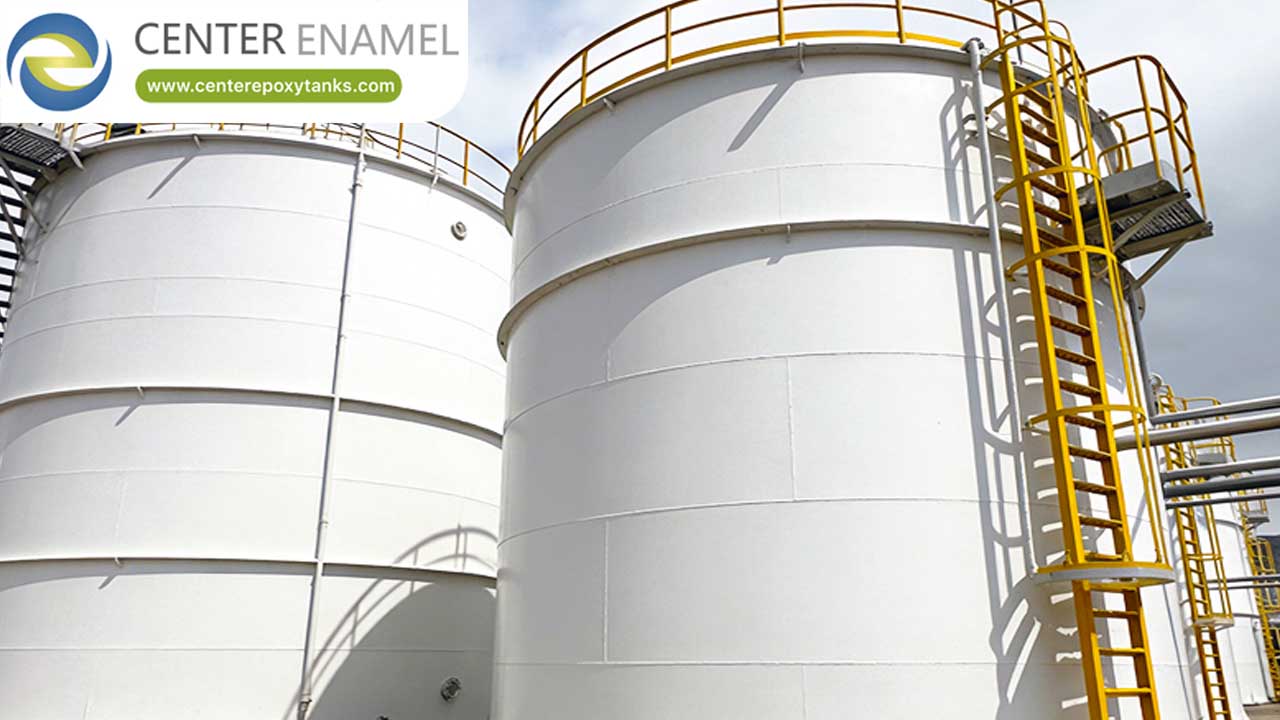
Reference project — Chile, Glass-Fused-to-Steel (GFS) Bolted Tank, net volume 134 m3, 1 tank. Dimensions: φ6.88*3.6m(H) 1 units (1 unit).
This delivered project demonstrates real supply of a fire-protection tank for the duty and is allocated uniquely to this article; it is not reused as evidence elsewhere in this batch.
Installation And Maintenance
Bolted panels are erected on a prepared foundation with the roof and ancillaries, then commissioned. Level alarms, freeze protection and lining condition should be checked at least annually per the AHJ and insurer interval.
Because the asset is life-safety, keep a written inspection record and confirm the pump set and jockey maintain pressure through the test cycle.
Standards And Certifications
Relevant references: NFPA 22, EN 12845, FM Global, AWWA D103, ISO 28765. Center Enamel products are built to ISO 9001, NSF/ANSI 61, WRAS, FM-ready, CE (EN 1090) and ISO 28765 where applicable, with certificates available on request.
Confirm the specific standard and certificate scope for your project before specification, because acceptance depends on the authority and insurer, not the supplier's marketing.
Engineering Considerations
For European fire tank market (NL/FR), the decisive engineering step is fixing the net fire reserve from the hazard classification and required duration before any material is chosen; the specified corrosion barrier then answers the corrosion and lifecycle need, but only after the volume is proven to the AHJ.
In practice, fire-protection tank must also integrate the roof (aluminum dome or bolted), the fire pump set and jockey per NFPA 20, and freeze protection where the climate demands it; a tank specified in isolation fails commissioning even when every panel is perfect.
Common Specification Pitfalls
· Sizing the tank to a catalogue volume instead of the NFPA 22 / EN 12845 net reserve for European fire tank market (NL/FR) — the authority will reject it at inspection.
· Choosing a barrier for the specified corrosion barrier by price alone without checking water chemistry and climate — standby corrosion then surprises you at the hydrotest.
· Treating the tank as a vessel and forgetting the pump set, jockey and freeze protection needed to make European fire tank market (NL/FR) pass commissioning.
· Assuming FM approval applies when the insurer actually requires it — confirm the FM scope for the specified corrosion barrier before specification.
Specification Checklist
· Fix the hazard classification and required fire duration before sizing the reserve.
· State the standard explicitly (NFPA 22, EN 12845, or both) and the FM / insurer scope.
· Specify the barrier (vitreous enamel, FBE, stainless or galvanized) against the water chemistry and climate.
· Require the lining / material certificates (NSF61, WRAS, ISO 28765) and the hydrotest record.
· Include level alarms, freeze protection and an inspection interval in the specification.
Frequently Asked Questions
What capacity fire water tank do I need?
Net fire volume follows the hazard classification and required duration under NFPA 22 or EN 12845; the tank is then sized to that reserve plus a pump-test allowance.
Which standard applies, NFPA 22 or EN 12845?
NFPA 22 governs in the United States and many Americas projects; EN 12845 applies across Europe. Both set capacity, access and labelling the tank must meet.
Is an FM-approved tank required?
Where the insurer or authority requires FM Global approval, the tank, roof and liner must meet FM scopes; confirm this before specification.
GFS, stainless, galvanized or FBE?
Choose by water chemistry, climate and lifecycle: GFS for an inert long-life barrier, stainless for chloride or coastal duty, galvanized for low-cost short life, FBE for a thin NSF61 film.
Bolted or welded fire water tank?
Bolted GFS/FBE tanks install faster and relocate; welded tanks suit very large single volumes but need longer, weather-exposed site work.
What roof is used on a fire water tank?
Aluminum geodesic domes or flat bolted roofs keep out debris and light; the choice follows wind, snow and access needs.
How long does a fire water tank last?
With the right barrier (vitreous enamel or certified coating) and periodic inspection, service life runs decades; bare or painted steel needs recoating cycles.
What records must be kept for acceptance?
Keep the approved drawing, lining certificate, hydrotest and inspection log; authorities and insurers ask for these at commissioning.
What distinguishes a fire water tank from a general water tank?
A fire water tank is a dedicated, inspected reserve sized to a hazard standard (NFPA 22 / EN 12845) and integrated with fire pumps and controls; a general water tank carries no such duty, certification or commissioning requirement.
Can a fire water tank be installed underground?
Yes, where space or freeze risk demands; the lining, access, labelling and hydrotest still must satisfy the applicable standard and the AHJ, and the reserve must remain reachable for inspection.
For European fire tank market (NL/FR), specify the fire-protection tank by duty, standard and supplier track record rather than price alone. Center Enamel provides documented, certified fire-protection tank systems and project references on request.
CTA: Request a technical specification or project reference for your European fire tank market (NL/FR) from Center Enamel.
About Company
Shijiazhuang Zhengzhong Technology Co., Ltd (Center Enamel) has engineered bolted storage tanks and silos since 2008 and is the first Chinese manufacturer of Glass-Fused-to-Steel tanks, holding nearly 200 enameling patents and shipments to more than 100 countries.
For European fire tank market (NL/FR), Center Enamel supplies fire-protection tank and related containment engineered to ISO 9001, NSF/ANSI 61, WRAS, FM-ready, CE (EN 1090) and ISO 28765, with in-house panel production, enameling control and global installation support.
The company's bolted fire-protection tanks and aluminum dome roofs serve life-safety systems where certified barriers, fast track installation and documented track record matter to the authority and insurer.


