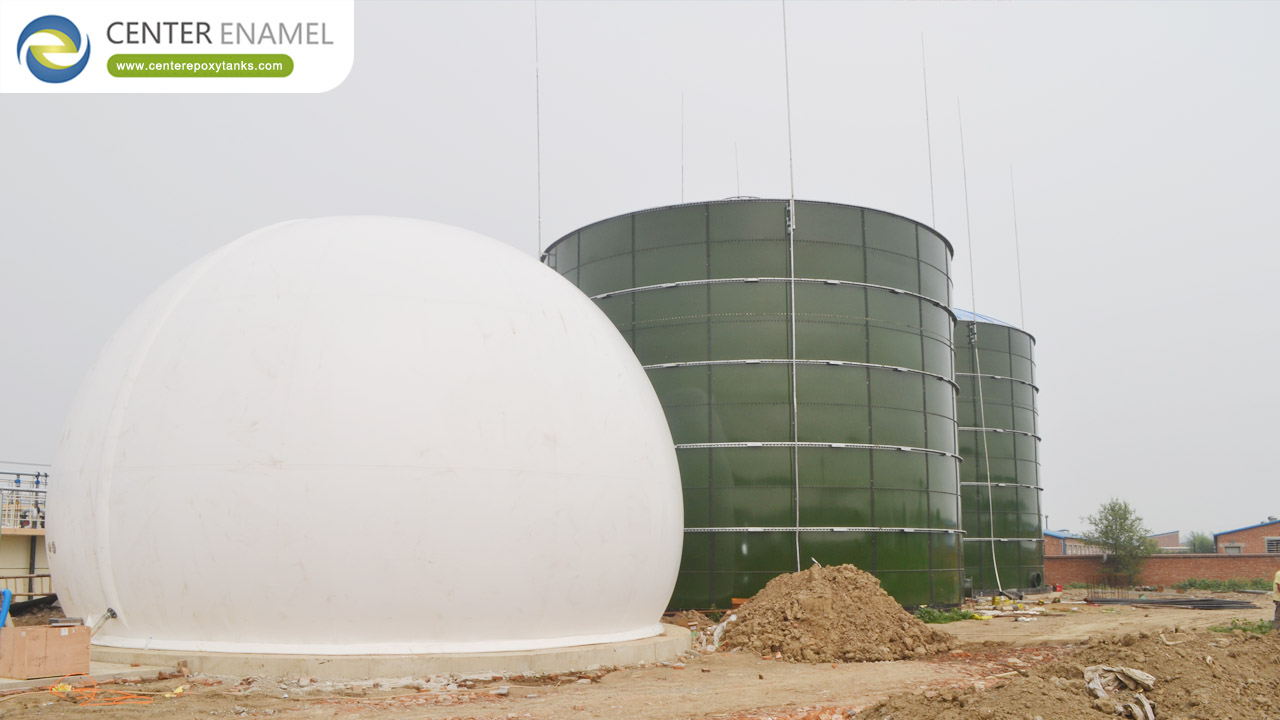
The Double Membrane Biogas Storage Balloon: Efficiency, Flexibility, and Reliability
The Double Membrane Biogas Storage Balloon (also known as a double membrane gas holder) has become the gold standard for anaerobic digestion (AD) facilities globally. Unlike rigid steel or concrete tanks that offer fixed, static storage, the double membrane system provides a flexible, dynamic storage solution. By utilizing a dual-layer synthetic membrane system, these balloons automatically adjust to fluctuations in gas production, ensuring constant pressure, optimal gas quality, and maximum storage capacity without the risk of corrosion associated with traditional metal gas holders.
1. How It Works: The Dual-Layer Engineering Principle
The system relies on two separate, specialized membranes that work in tandem to create a safe, stable, and efficient storage environment.
The Inner Membrane (Gas Storage): This flexible, high-tensile layer creates a gas-tight chamber. As biogas is produced by the digester, this membrane rises, "inflating" to accommodate the incoming gas volume.
The Outer Membrane (Weather Protection & Pressure): The outer layer forms the dome shape. The space between the inner and outer membranes is continuously filled with compressed air by a control blower. This air pressure serves a dual purpose: it keeps the outer membrane taut (protecting against wind and snow) and maintains a constant, stable pressure on the inner membrane, ensuring gas is delivered at a consistent rate to downstream equipment like engines or boilers.
2. Strategic Advantages
For facility managers and developers, the double membrane balloon offers significant operational benefits over traditional fixed-roof storage.
Cost-Effective Scalability: Unlike concrete or welded steel, which are capital-intensive and slow to build, membranes are modular. As your biogas output grows, expanding capacity often involves simply replacing the membrane unit with a larger size, avoiding major civil engineering works.
Corrosion Immunity: Biogas is inherently corrosive due to $H_2S$ (hydrogen sulfide) and moisture. Because the membrane is made from advanced, non-reactive polymer fabrics (such as PVC-coated polyester or PVDF), it is completely immune to the rust and chemical degradation that inevitably plague steel gas holders.
Superior Leak Prevention: With an annual leakage rate of $leq0.02%$, these systems far outperform steel tanks, ensuring that methane—a potent greenhouse gas—is captured for energy use rather than lost to the atmosphere.
3. Performance Comparison: Double Membrane vs. Rigid Tanks
Feature | Double Membrane Balloon | Rigid Steel Gas Holder |
Storage Flexibility | Dynamic (Adjusts to gas volume) | Fixed (Limited capacity) |
Corrosion Risk | Zero (Inert Materials) | High (Requires periodic painting) |
Installation Time | 7–10 Working Days | 30–45 Working Days |
Odor Containment | Excellent (Fully Sealed) | Moderate (Risk at joints/seals) |
Expansion Capability | Easy (Replace membrane) | None (Requires new build) |
4. Frequently Asked Questions (FAQ)
A: Yes. The system is equipped with automated safety relief valves (overpressure protection) and gas detection sensors. In the event of an overfill, the pressure relief system safely vents gas to prevent ruptures, offering a higher safety profile than rigid, pressurized tanks.
5. Engineering for the Future of Renewable Gas
The Double Membrane Biogas Storage Balloon is more than just a cover; it is a critical component of a modern, efficient renewable energy loop. By prioritizing flexibility, chemical resistance, and rapid deployment, it enables biogas plants to operate at maximum efficiency, transforming organic waste into reliable, sustainable energy.


