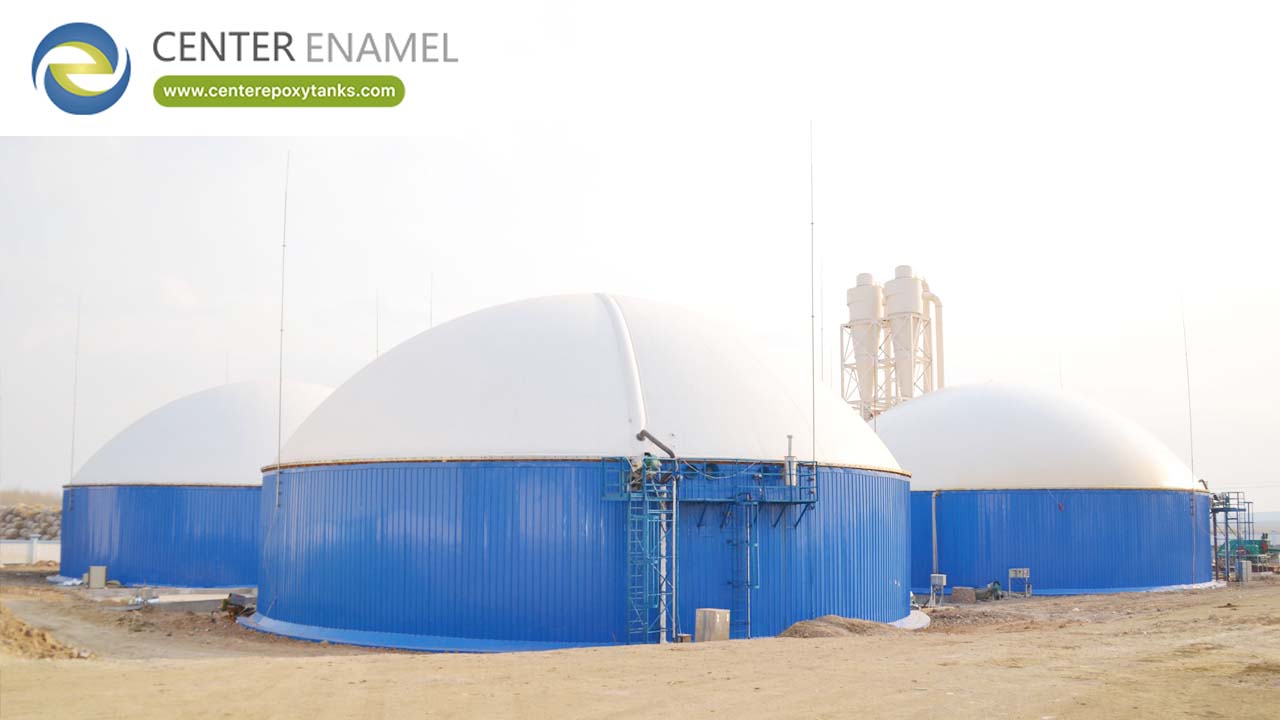
A Single Membrane Roof: An Efficient Tank Cover Solution
A single membrane roof (or single-ply membrane cover) is a lightweight, high-performance structural solution used to seal tanks in municipal, industrial, and agricultural facilities. Unlike rigid domes, these covers are constructed from heavy-duty, reinforced polyester textiles with specialized synthetic coatings (e.g., PVC/TPO). They are typically designed with a central support column and a tensioning system that secures the membrane to the tank perimeter. Their primary engineering advantage lies in their excellent gas-tightness and corrosion resistance, making them the industry-standard solution for odor control, secondary containment of anaerobic digesters, and protecting sensitive liquid assets from environmental contamination.
Why Choose a Single Membrane Roof?
For facilities balancing operational budget with environmental compliance, the single membrane roof offers a streamlined, "set-and-forget" alternative to traditional fixed covers.
1. Superior Odor and Emission Control
In wastewater treatment and sludge processing, odor management is a critical regulatory requirement. A single membrane roof provides a hermetically sealed barrier that prevents the escape of volatile organic compounds (VOCs) and foul odors. Because the material is non-porous and high-strength, it ensures that your facility remains a "good neighbor" to local communities.
2. Chemical and Environmental Durability
Modern membranes are engineered for extreme durability. They are:
UV & Weather Resistant: Designed to withstand direct sunlight, heavy rain, and extreme temperature fluctuations without degrading.
Corrosion-Proof: Unlike steel, which requires periodic painting or expensive epoxy re-coating, synthetic membranes are inert. They will not rust or corrode, even in highly acidic or saline environments.
3. Rapid Modular Installation
Single membrane covers are essentially "flat-pack" infrastructure. The membrane is custom-cut, welded to shape at the factory, and then tensioned on-site. This significantly reduces:
Assembly Time: No heavy welding or on-site curing (unlike concrete or steel fabrication).
Equipment Needs: Minimal lifting equipment is required, which is a major advantage for sites with limited access.
Comparative Value: Choosing the Right Cover
Selecting the right cover depends on whether you need a pressurized gas storage system or a sealed protective barrier.
Feature | Single Membrane Roof | Double Membrane Roof | Rigid (Steel/Concrete) |
Best Use | Odor Control, Protection | Biogas Storage (Pressurized) | Structural/Load-Bearing |
Cost | Low (Economic) | Moderate (Higher complexity) | High |
Maintenance | Minimal | Moderate (Blower/System) | High (Paint/Cracks) |
Gas Tightness | High | Very High | Variable |
Weight | Very Low | Low | Very High |
Engineering Design Considerations
A successful single membrane installation is not just about the fabric; it is about the system's ability to handle stress over its 15–20+ year lifespan.
Central Column Support: The membrane relies on a central support structure. This column must be protected from the tank environment, and the interface between the column and the membrane must be reinforced to prevent wear.
Perimeter Tensioning: The efficiency of the roof is determined by its tension. High-quality systems use a stainless steel ratchet and band system, ensuring the membrane remains taut even during high-wind events.
Protection Felt: To extend the life of the membrane, a protective felt layer is often installed at the tank wall contact points. This prevents abrasion against sharp edges on concrete or steel rims.
Frequently Asked Questions (FAQ)
Q: Can a single membrane roof store biogas?
A: While single membrane roofs are excellent for containment and odor control, they are not designed for pressurized biogas storage (the "gas-holder" function). For biogas applications where you need to store fluctuating gas volumes, a double membrane (which features a pressurized air cushion) is the required solution.
Q: How long do these covers typically last?
A: With proper tensioning and routine inspection of the anchoring points, high-quality membrane covers typically offer an operational life of 15 to 25 years.
Q: Is it difficult to access the tank for cleaning or maintenance?
A: No. Most designs include integrated access hatches or manways. Because the membrane is lightweight, it is relatively straightforward for maintenance teams to inspect the interior or perform routine cleaning, provided standard safety procedures are followed.
Q: Can it be installed on existing tanks?
A: Yes. One of the greatest strengths of the membrane cover is its ability to retrofit onto almost any existing tank material (concrete, stainless steel, or GFS), provided the tank perimeter is structurally sound and level.
Are you currently evaluating an odor control or tank protection upgrade for your facility? If you share the diameter of your tank and the nature of the stored product, we can provide a preliminary assessment of whether a membrane cover is the right economic and technical fit for your project.


