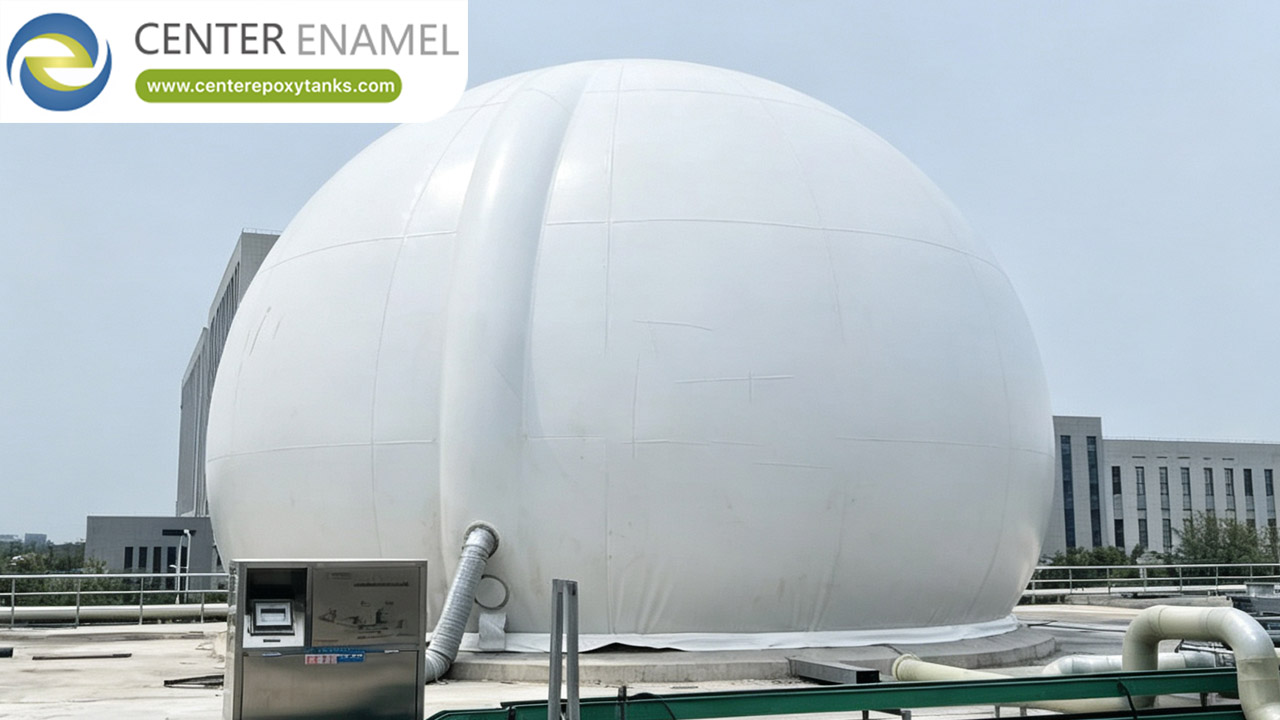
Double Membrane Balloons: Optimizing Modern Double Membrane Gas Storage
In modern renewable energy generation, wastewater treatment, and industrial organic waste processing, efficient gas buffering is vital. As anaerobic digestion (AD) facilities scale to meet global green energy demands, storing volatile gases like biogas, methane, and carbon dioxide requires containment infrastructure that is both structurally adaptable and chemically resilient.
Traditional rigid steel or concrete gas holders offer fixed capacities and suffer from severe internal corrosion caused by moisture and hydrogen sulfide (H2S). To overcome these operational bottlenecks, the industry has widely adopted double membrane balloons (also known as double membrane gas holders). These dynamic, flexible storage systems provide superior volume adjustments, absolute corrosion immunity, and optimized gas delivery pressures for downstream combined heat and power (CHP) engines or boilers.
The Dual-Layer Engineering Principle: How It Works
The high performance of a double membrane gas storage balloon relies on a synchronized three-layer configuration engineered to separate environmental protection from gas containment:
The Bottom Membrane (Foundation Base): Fully seals the lower boundary of the system (when land-mounted), providing a robust barrier against ground moisture and concrete sub-bases.
The Inner Membrane (Gas Storage Chamber): Fabricated from high-tensile, gas-tight polymer composites, this flexible layer directly contacts and houses the raw biogas. As biological gas production fluctuates, the inner membrane expands or contracts dynamically, adjusting storage volume without pressure spikes.
The Outer Membrane (Weather Protection & Pressure Control): Forms the outer hemispherical dome. A continuous-duty, automated air supply blower maintains slight positive pressure in the inter-membrane space. This pressurized air cushion protects the inner chamber from wind, snow, and UV radiation while exerting uniform downward pressure on the inner membrane to maintain a stable, continuous delivery pressure for downstream equipment.
Technical Advantages Over Rigid Storage Infrastructure
Double membrane systems outclass conventional fixed-roof tanks across every major operational category:
Absolute Corrosion Immunity: Because raw biogas contains moisture and trace sulfur compounds, traditional metal tanks degrade rapidly. Advanced polymer fabrics—such as PVC-coated polyester or high-performance PVDF with specialized anti-microbial treatments—are completely inert to chemical and H2S attack.
Precise Pressure Regulation: Equipped with specialized Over/Under-Pressure Valves (OUPV) and control blowers, double membrane balloons maintain stable working pressures (typically 200 to 500 Pa), ensuring smooth, uninterrupted feeding to gas engines.
Rapid Modular Deployment: Prefabricated using high-frequency welding machines, these systems can be installed on-site in just 7 to 10 working days, sharply contrasting with the lengthy construction cycles required for welded steel tanks.
Data Table: Comprehensive Comparison of Gas Storage Technologies
Performance Dimension | Double Membrane Gas Storage Balloon | Traditional Welded Steel Gas Tank | Cast-in-Place Concrete Gas Holder |
Storage Flexibility | Dynamic variable volume (automatically adjusts to gas inflow/outflow) | Fixed, static storage capacity with zero volumetric buffering | Fixed, rigid storage volume; prone to cracking under shifting loads |
Corrosion Resistance | Superior; inert polymer fabrics require no anti-rust painting | Low; requires recurring internal sandblasting and protective coating cycles | Moderate; vulnerable to chemical attack and concrete carbonation |
On-site Installation Time | 7 to 10 working days (modular prefabricated components) | 30 to 45 working days (heavy field welding and assembly) | Months of civil framework pouring and curing |
Annual Leakage Rate | Ultra-low ( 0.02%), ensuring maximal methane capture | Higher risk profile due to bolted flange and seal wear (0.3%-0.8%) | Moderate; prone to joint seepages over time |
Frequently Asked Questions (FAQ)
Q: Can double membrane gas storage balloons be mounted directly on top of anaerobic digester tanks?
A: Yes. Over 60% of modern biogas installations utilize a top-mounted configuration where the double membrane system serves as the primary roof of the anaerobic reactor tank, saving valuable site space and combining digestion with gas storage.
Q: How do double membrane systems handle extreme winter weather and high winds?
A: The continuous-duty air support blower automatically regulates inter-membrane pressure, keeping the outer dome taut and structurally rigid against heavy snow loads and high wind velocity. Furthermore, high-grade materials are treated with anti-freezing and UV-stabilized coatings.
Q: What is the typical operational lifespan of a double membrane gas holder?
A: With routine monthly inspections (checking pressure gauges, cleaning surface debris, and monitoring blower function), high-quality double membrane balloons provide a reliable service life of 15 to 20 years before membrane replacement is needed.
Q: Are double membrane gas balloons safe when handling flammable methane gas?
A: Yes. They are engineered with strict safety mechanisms, including integrated Over/Under-Pressure Valves (OUPV) to automatically release excess pressure during surges, along with flame-retardant fabric compliance (such as DIN 4102-B1 standards) to eliminate explosion risks.


