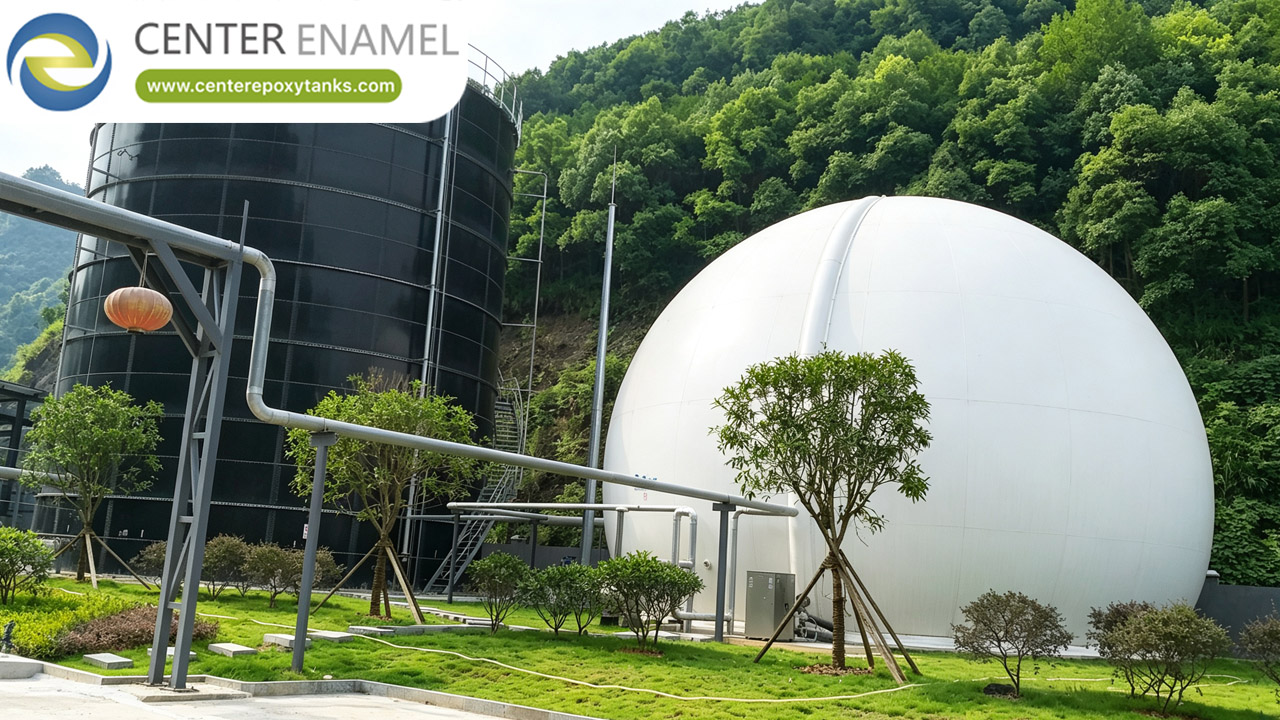
Biogas Holders: Improve Biogas Storage and Efficiency at Biomethane Plants
As the global energy landscape accelerates its shift toward decarbonization and circular bioeconomies, biomethane—widely known as Renewable Natural Gas (RNG)—has emerged as a vital substitute for fossil natural gas. Biomethane plants convert raw biogas produced through anaerobic digestion (consisting primarily of methane and carbon dioxide, along with moisture and trace hydrogen sulfide) into pipeline-grade fuel via advanced upgrading technologies like pressure swing adsorption (PSA) or membrane separation.
However, a major operational bottleneck in modern biomethane facilities is the discrepancy between continuous biological gas generation and rigid industrial upgrading schedules. To achieve optimal plant performance, facility operators must deploy high-efficiency biogas holders for biomethane plants. These specialized containment systems stabilize pressures, absorb production fluctuations, and ensure a uniform, uninterrupted feed to expensive gas upgrading skids.
The Core Challenges of Gas Management in Biomethane Production
Biomethane upgrading equipment is engineered to run at maximum efficiency under steady-state flow rates and constant input pressures. Without an effective intermediate storage buffer, facilities encounter severe operational hurdles:
Supply-Demand Imbalances: Biological digestion is a continuous 24/7 process influenced by feedstock variations and digester temperatures, whereas maintenance or grid injection schedules can cause intermittent drawdown.
Pressure Surges and Equipment Stress: Fluctuating gas volumes create erratic pressure spikes that risk damaging sensitive gas compressors, flow meters, and molecular separation membranes.
Flaring and Environmental Loss: When raw gas production temporarily exceeds upgrading capacity, unbuffered systems are forced to flare excess gas, resulting in lost revenue and greenhouse gas emissions.
Technical Performance Matrix: Biomethane Storage Technologies
Technical Parameter | Double-Membrane Biogas Holders | Traditional Fixed-Dome Basins | High-Pressure Steel Bullet Tanks |
Volumetric Storage Capacity | Highly scalable for large industrial volumes (up to 50,000+ m^3) | Restricted by fixed structural footprint and masonry limits | Limited individual capacity; requires multi-vessel manifolds |
Pressure Regulation Profile | Constant low pressure maintained dynamically by an air-support blower | Variable low pressure reliant on liquid displacement | High pressure (15 to 20+ bar) requiring energy-intensive compression |
Capital & Installation Cost | Economical, modular construction with rapid on-site assembly | Permanent civil structures with high masonry and labor costs | Extremely high capital expenditure for thick-walled steel fabrication |
Corrosion Resistance | Excellent; chemically inert PVC/PVDF polymer membranes resist H2S and moisture | Vulnerable to concrete carbonation and sulfate attack from wet slurries | High susceptibility to internal oxidation without frequent recoating |
How Modern Biogas Holders Maximize Efficiency
Modern industrial gasholders—predominantly engineered as double-membrane structures—transform plant efficiency through advanced multi-layer architecture:
Dynamic Volume Adaptation: The flexible inner membrane expands and contracts smoothly to accommodate shifts in biogas yield, preventing back-pressure on the anaerobic digesters.
Constant Pressure Delivery: An automated air-support blower regulates the inter-membrane pressure chamber, guaranteeing a consistent, stable gas output flow to downstream compression and upgrading skids.
Corrosion-Free Reliability: Fabricated from high-tenacity polyester base fabrics coated with specialized polymer blends, these systems withstand aggressive trace elements like hydrogen sulfide (H2S) without degrading.
Frequently Asked Questions (FAQ)
Q: How do biogas holders improve efficiency at biomethane plants?
A: Biogas holders act as strategic buffer accumulators that decouple continuous anaerobic digestion from industrial gas upgrading. By absorbing production peaks and valleys, they provide a steady, uniform gas feed to upgrading units, preventing compressor shutdowns and eliminating wasteful flaring.
Q: Why are double-membrane gasholders preferred over high-pressure steel tanks for biomethane storage?
A: Double-membrane holders offer massive storage capacities at a fraction of the capital cost. Because upgrading plants consume gas continuously, storing large volumes at low operating pressure is far more economical than building high-pressure steel storage vessels that require energy-intensive multi-stage compression.
Q: What prevents gas permeation and chemical corrosion in modern biogas holders?
A: High-performance biogas holders use specialized low-permeability polymer coatings (such as PVC or PVDF) over high-tenacity polyester base fabrics, joined via high-frequency welding. These materials are completely immune to moisture and hydrogen sulfide (H2S) corrosion while stopping methane diffusion.
Q: Can biogas holders be integrated into existing biomethane facilities during expansion?
A: Yes. Thanks to their modular design and flexible footprint requirements, double-membrane biogas holders can be easily retrofitted onto existing anaerobic digesters or installed as standalone ground-mounted units to scale up storage capacity as plant feedstock increases.


