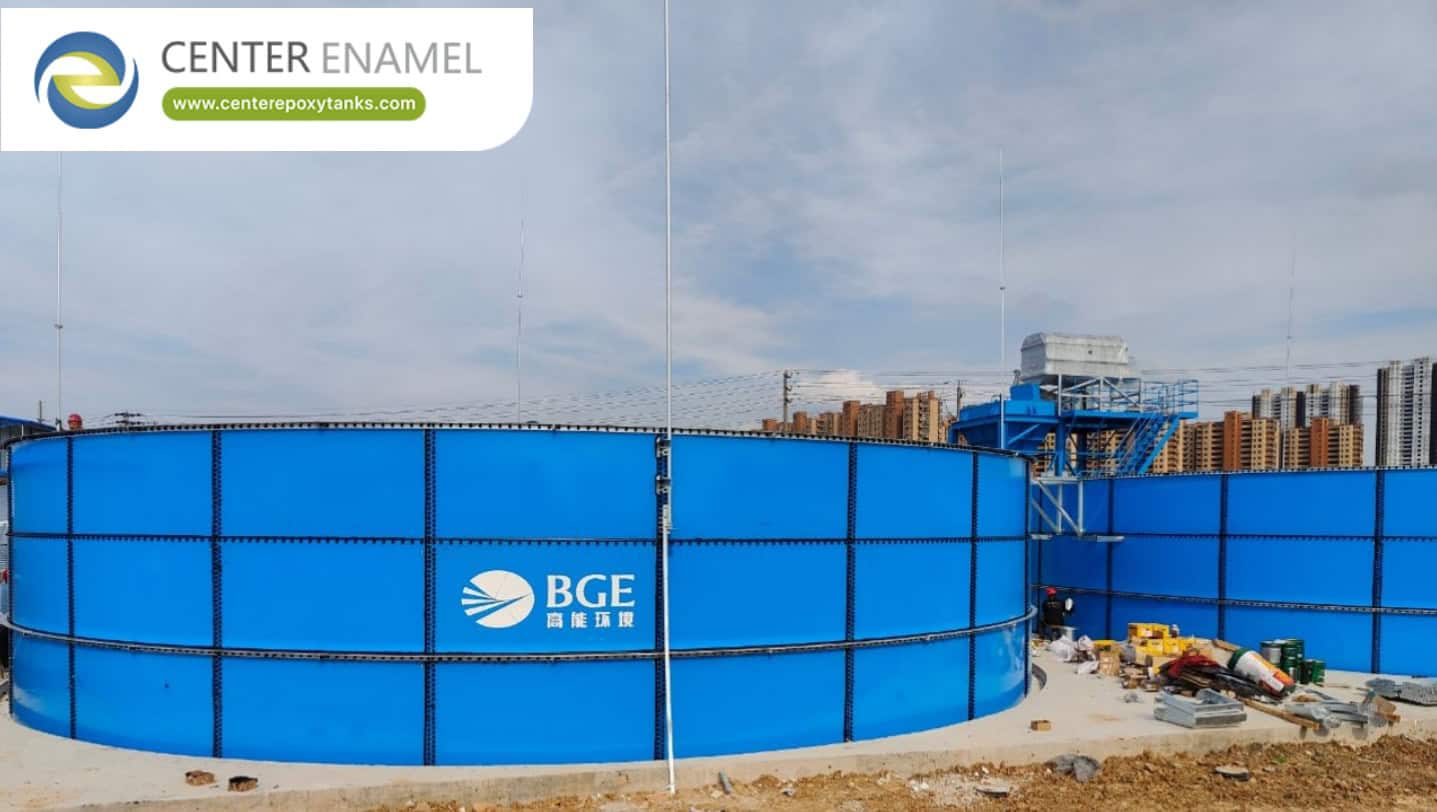
Fusion Bonded Epoxy (FBE) Tanks for Sewage Sludge Treatment: Engineering Guide
Sewage sludge and biosolids containment represents one of the most chemically and mechanically demanding applications in the wastewater sector. Sludge is characteristically abrasive, generates corrosive hydrogen sulfide (H2S), and requires tanks that can handle fluctuating solid concentrations. Fusion Bonded Epoxy (FBE) coated bolted steel tanks—engineered to AWWA D103 standards—provide a high-performance alternative to traditional concrete or field-welded steel. By combining the structural reliability of factory-coated steel with a tough, thermoset polymer barrier, FBE tanks ensure a long-term, low-maintenance asset life in aggressive wastewater environments.
1. The Engineering Challenge: Why Sludge Storage is Different
Sludge storage is not simply "water storage." It requires specific material properties to avoid premature failure:
● Corrosion from Hydrogen Sulfide (H2S): Anaerobic decomposition in sludge produces H2S gas, which creates sulfuric acid upon contact with moisture in the tank headspace. This environment rapidly destroys low-grade steel and leaches concrete. FBE coatings, being chemically inert and non-porous, act as an effective barrier against this acid attack.
● Solid-Liquid Abrasion: Unlike clarified water, sludge contains high levels of suspended solids and grit. FBE’s thermoset polymer matrix offers superior abrasion resistance compared to standard liquid epoxy or thin-film paints, preventing the coating from being "sandpapered" away during agitation or pumping cycles.
● Cathodic Disbondment Resistance: Sludge storage often involves complex electrochemical environments. FBE is engineered to resist cathodic disbondment—where coatings peel away from the steel due to electrical potential—providing a reliable bond that protects the underlying metal surface even in submerged or high-humidity conditions.
2. Technical Standards: AWWA D103 Compliance
For municipal and industrial sludge applications, the structural framework must adhere to AWWA D103 (Standard for Factory-Coated Bolted Steel Tanks). This standard is critical because it mandates:
● Precision Engineering: Every tank is custom-modeled for the specific load-bearing requirements of sludge density, seismic activity, and wind/snow loads.
● Factory Quality Control: Compliance requires that the protective barrier (FBE) be applied in a controlled, automated facility. This eliminates the "human factor" of field-applied coatings, ensuring every panel is uniform, cured correctly, and holiday-free.
● Non-Destructive Testing: All FBE-coated panels must undergo high-voltage spark testing (holiday testing) at the factory to detect and remediate microscopic pinholes before the panels ever reach the job site.
3. Comparative Performance Matrix
When selecting a containment method for sewage sludge, the following table summarizes the performance of FBE tanks against traditional alternatives:
Engineering Metric | FBE Bolted Steel Tank | Field-Welded Steel Tank | Cast-in-Place Concrete |
Coating Integrity | Factory-Controlled (Uniform) | Field-Applied (Variable) | Porous (Subject to etching) |
Chemical Resistance | High (Inert FBE) | Moderate (Needs re-coating) | Low (Acid sensitive) |
Installation Time | Fast (Modular/Bolted) | Slow (Welding/Curing) | Very Slow (28-day cure) |
Abrasion Tolerance | High (Thermoset Polymer) | Low/Moderate | Moderate |
Future Expandability | Yes (Modular expansion) | No | No |
4. Key Procurement Considerations for Sludge Projects
To ensure your sludge storage project meets long-term operational goals, evaluate potential manufacturing partners against these technical pillars:
1. Holiday Testing Documentation: Verify that the manufacturer provides a certified report showing that every panel passed high-voltage electrical spark testing to ensure a 100% pinhole-free surface.
2. Surface Preparation: Ensure the steel substrate is grid-blasted to an ISO 8501-1 SA 2.5 (near-white metal) finish. This is the prerequisite for the molecular bond that makes FBE so durable.
3. Bolt and Sealant Chemistry: Sludge environments are aggressive. Specify high-grade, corrosion-resistant bolt hardware (e.g., HDG or stainless steel) and chemically inert gaskets (e.g., EPDM or high-grade silicone) that resist swelling in the presence of wastewater chemicals.
4. Agitation Compatibility: If your sludge tank requires mechanical mixing or aeration, ensure the tank is structurally designed to handle the localized vibration and load forces of the mixing equipment.
5. Frequently Asked Questions (FAQ)
Q: Can FBE tanks handle the H2S gas present in anaerobic sludge?
A: Yes. Because FBE is a thermally cured, cross-linked polymer, it is chemically inert to the sulfuric acid generated by H2S. This prevents the "headspace corrosion" that is common in the upper rings of sewage tanks.
Q: How does FBE compare to Glass-Fused-to-Steel (GFS) for sludge?
A: Both are excellent. FBE provides superior impact and abrasion resistance, making it an excellent choice for sludge handling where solid matter might scrape the walls. GFS offers slightly higher pH tolerance (pH 2–14). For most municipal sewage sludge applications, both are highly effective, and the choice often comes down to specific site-chemical profiles and project budget.
Q: Are bolted FBE tanks leak-proof for sludge?
A: Yes, when properly assembled with the correct sealant profile, bolted FBE tanks provide a gas-tight and liquid-tight seal that meets the strict containment requirements of modern wastewater treatment plants.
FBE-coated bolted steel tanks represent a sophisticated, efficient, and durable solution for sewage sludge storage. By prioritizing factory-tested quality, AWWA D103 structural compliance, and superior chemical barrier technology, plant operators can significantly reduce their long-term maintenance costs and improve the reliability of their biosolids management strategy.


