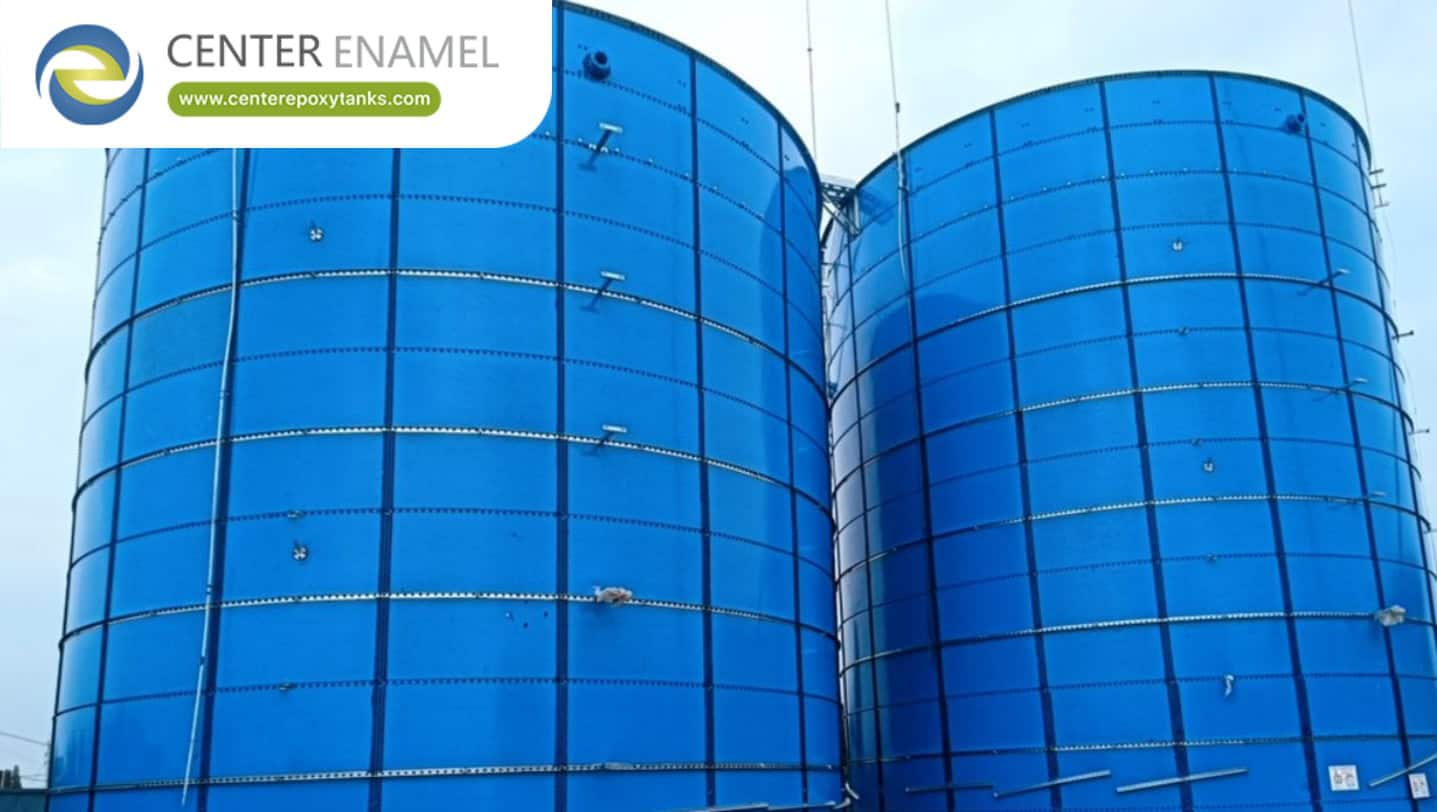
Epoxy Coated Steel Bolted Tanks for Textile and Dye Industry Wastewater Treatment Project

Epoxy Coated Steel Bolted Tanks for the Textile and Dye Industry Wastewater Treatment Project.jpg


The global textile and apparel industry is one of the most significant contributors to economic development, yet it remains one of the most resource-intensive sectors in terms of water consumption and liquid waste generation. For every ton of finished fabric, vast quantities of water are utilized in the scouring, bleaching, dyeing, and printing processes. The resulting effluent is a complex mixture characterized by high color intensity, fluctuating pH levels, and a diverse array of chemical compounds, including heavy metals, surfactants, and synthetic dyes.

Managing this waste requires a sophisticated Textile and Dye Industry Wastewater Treatment Project that can handle the unique chemical and physical stresses of the textile sector. Traditional containment solutions, such as concrete basins or field-welded steel tanks, often fall short when faced with the corrosive and thermal demands of dye-house effluent. Shijiazhuang Zhengzhong Technology Co., Ltd (Center Enamel), a premier China Epoxy Coated Steel Bolted Tanks manufacturer, has pioneered the use of Fusion Bonded Epoxy (FBE) technology to address these challenges. By providing high-performance Epoxy Coated Steel Bolted Tanks, Center Enamel offers a robust, modular, and chemically inert solution that ensures the long-term success of textile waste management initiatives worldwide.

The Hostile Chemistry of Textile and Dye Effluent

To understand why a Textile and Dye Industry Wastewater Treatment Project requires specialized infrastructure, one must first examine the nature of the wastewater itself. Unlike general municipal sewage, textile effluent is highly variable and often aggressive.

High Color and Synthetic Dye Loads

Modern synthetic dyes are designed to be chemically stable and resistant to degradation. When these dyes enter the wastewater stream, they require intensive treatment to be removed. The tanks used for chemical precipitation and coagulation must be able to withstand the various reagents—such as Aluminum Sulfate or Ferric Chloride—used to neutralize the dyes. Standard carbon steel would be rapidly consumed by these chemicals, but Epoxy Coated Steel Bolted Tanks provide a non-reactive barrier that prevents the chemistry of the waste from reaching the structural steel.

Fluctuating pH and Temperature

Textile processes involve both highly acidic and highly alkaline stages. The equalization tanks and neutralization basins must handle these extremes daily. Furthermore, dyeing processes often discharge water at elevated temperatures. This thermal stress can cause cracks in concrete structures or lead to the failure of traditional liquid-applied liners. The factory-applied fusion-bonded epoxy used by Center Enamel is thermally stable and maintains its bond to the steel substrate even under fluctuating temperature conditions.

Chemical Oxygen Demand and Biological Loads

Textile waste often has a high chemical oxygen demand. In the biological treatment stages, such as anaerobic or aerobic digestion, the breakdown of organic matter can produce corrosive gases. Hydrogen Sulfide, a common byproduct, can combine with condensation in the tank's headspace to form Sulfuric Acid. This biogenic acid is particularly destructive to the upper portions of a containment vessel.

The Science of Protection: Fusion Bonded Epoxy (FBE)

The reliability of Center Enamel’s solutions is rooted in the sophisticated manufacturing process of the epoxy coating. As a leading China Epoxy Coated Steel Bolted Tanks manufacturer, Center Enamel utilizes a high-temperature factory fusion process to create a permanent shield for every steel panel.

The FBE Manufacturing Process

The Fusion Bonded Epoxy process differs fundamentally from traditional painting. It is a thermoset polymer coating that is molecularly bonded to the steel.

Grit Blasting and Surface Engineering: The steel panels are grit-blasted to achieve a near-white metal finish. This removes all mill scale and surface contaminants while creating a microscopic profile that enhances the mechanical bond between the coating and the steel.

Electrostatic Application: The panels are heated to a specific temperature, and a dry epoxy powder is electrostatically applied. Because the powder particles are charged, they are attracted to the steel surface, ensuring a uniform and consistent thickness even on the edges and within the bolt holes.

Cross-Linking and Fusion: The panels are moved into a curing oven where the epoxy powder melts, flows, and reacts to form a hard, cross-linked polymer network. This creates a non-porous barrier that is molecularly fused to the steel substrate.

The resulting finish of our Epoxy Coated Steel Bolted Tanks is exceptionally dense and smooth. This smooth surface prevents the accumulation of dye solids and prevents the growth of biofilms, making the tanks much easier to clean and maintain than concrete alternatives.

Advanced Vapor Management with Aluminum Dome Roofs

In a Textile and Dye Industry Wastewater Treatment Project, the management of the headspace is as critical as the containment of the liquid. Rising vapors, high humidity, and corrosive gases collect at the top of the tank, making the roof the most vulnerable part of the structure.

To provide a complete, maintenance-free solution, Center Enamel integrates Aluminum Dome Roofs into its tank designs.

Why Choose Aluminum Dome Roofs?

Aluminum Dome Roofs are clear-span, self-supporting structures that offer several key advantages for textile wastewater applications:

Atmospheric Resilience: Aluminum naturally forms a protective oxide layer that resists corrosion from moisture and gases like Hydrogen Sulfide. Unlike steel roofs, which require periodic repainting to prevent rust, aluminum domes are virtually maintenance-free.

Clear-Span Design: The dome design eliminates the need for internal support columns. This is vital in wastewater treatment as internal columns can interfere with mixing equipment, aerators, and sludge scrapers. It also removes structural "dead zones" where dyes and solids could accumulate.

Lightweight Strength: Aluminum is significantly lighter than steel, which reduces the vertical load on the tank walls and foundation. This allows for a more efficient and cost-effective overall design of the Epoxy Coated Steel Bolted Tanks.

Odor Control: For textile facilities located near residential areas, odor control is a major operational requirement. These domes can be fitted with specialized seals to provide a gas-tight environment, allowing for the effective collection and treatment of odorous compounds.

Center Enamel: A Premier China Epoxy Coated Steel Bolted Tanks manufacturer

With a global presence in over ninety countries, Shijiazhuang Zhengzhong Technology Co., Ltd has established itself as the industry benchmark for liquid storage. Our commitment to quality, innovation, and customer support makes us the preferred China Epoxy Coated Steel Bolted Tanks manufacturer for high-stakes environmental projects.

Precision Manufacturing and Quality Control

Our facility utilizes automated production lines to ensure that every panel is manufactured to exact tolerances. Precision is key in bolted tank construction; every bolt hole must align perfectly to ensure a liquid-tight and gas-tight fit.

Furthermore, we perform high-voltage spark testing on every single panel to confirm that the epoxy coating is continuous and free of microscopic defects. This rigorous testing ensures that by the time the tanks reach a Textile and Dye Industry Wastewater Treatment Project, they are ready to provide decades of secure service.

Global Logistics and Installation

The modular nature of our bolted tanks makes them ideal for international projects. The panels are packed into standard shipping containers and can be delivered to any location worldwide. Once on-site, the tanks are assembled using specialized jacking systems and high-strength bolts. This process is significantly faster than welding, requires less labor, and eliminates the need for large-scale scaffolding or heavy lifting equipment.

Strategic Project Applications: Global Success

The reliability of Center Enamel’s Epoxy Coated Steel Bolted Tanks is demonstrated through a diverse portfolio of completed projects. These real-world applications highlight our ability to deliver secure containment solutions at scale for the most demanding industrial requirements.

Ethiopia Textile Industrial Park Wastewater Treatment Project: In one of the most significant textile-related environmental initiatives in East Africa, Center Enamel was selected to provide the containment infrastructure for a major industrial hub. We supplied 20 units of tanks to manage the complex effluent generated by the park's various textile and dye facilities. This project showcases our ability to deliver large volumes of specialized tanks that meet the high-capacity and chemical-resistance requirements of a centralized treatment system.

Guangxi Qinzhou Chemical Wastewater Project: While focusing on chemical waste, this project highlights the extreme chemical resilience of our products. Center Enamel delivered 11 units of tanks for this site. The success of this installation proves that our fusion-bonded epoxy coating can withstand the aggressive acidic and alkaline substances that are also found in dye-house wastewater, ensuring the long-term integrity of the treatment facility.

Hebei Cangzhou Industrial Wastewater Project: Supporting domestic industrial sustainability, we provided 12 units of tanks for this large-scale wastewater project. The durability of the Epoxy Coated Steel Bolted Tanks is essential here to manage the diverse and often unpredictable chemistry of industrial waste clusters, providing a maintenance-free solution for the region's environmental protection efforts.

Economic Sustainability and Total Cost of Ownership

When designing a Textile and Dye Industry Wastewater Treatment Project, the Total Cost of Ownership (TCO) is a critical metric for long-term profitability. While the initial purchase price is important, the costs of maintenance, repair, and potential downtime can quickly exceed the original investment if a lower-quality solution is chosen.

Minimal Maintenance

The factory-applied FBE coating provides a permanent barrier that does not require the periodic re-lining or repainting associated with other tank types. This leads to significant savings in labor and materials throughout the life of the asset.

Operational Longevity

Our tanks are designed for a service life that spans decades. By resisting both internal chemical attack and external atmospheric corrosion, the tanks ensure that the treatment plant remains operational without the need for structural patching or early replacement.

Modularity and Scalability

The bolted design allows for a level of flexibility that concrete structures cannot provide. If a textile factory increases its production and requires more wastewater capacity, our modular tanks can often be expanded by adding additional rings of panels. Furthermore, if a facility needs to be relocated, the tanks can be disassembled and reinstalled elsewhere, protecting the original capital investment.

Setting the Foundation for a Greener Textile Industry

The textile and dye industry is at a crossroads where environmental compliance and industrial growth must be balanced. A successful Textile and Dye Industry Wastewater Treatment Project is the foundation upon which this balance is built. By utilizing the most advanced containment technology available, textile manufacturers can ensure they meet the highest environmental standards while maintaining efficient production.

As a premier China Epoxy Coated Steel Bolted Tanks manufacturer, Shijiazhuang Zhengzhong Technology Co., Ltd (Center Enamel) remains committed to engineering excellence. Through our high-performance Epoxy Coated Steel Bolted Tanks and the strategic integration of Aluminum Dome Roofs, we provide the durable, chemically inert, and cost-effective solutions that the global textile industry requires. Our tanks are more than just storage vessels; they are the guardians of environmental integrity for textile facilities worldwide.


Chat with us


