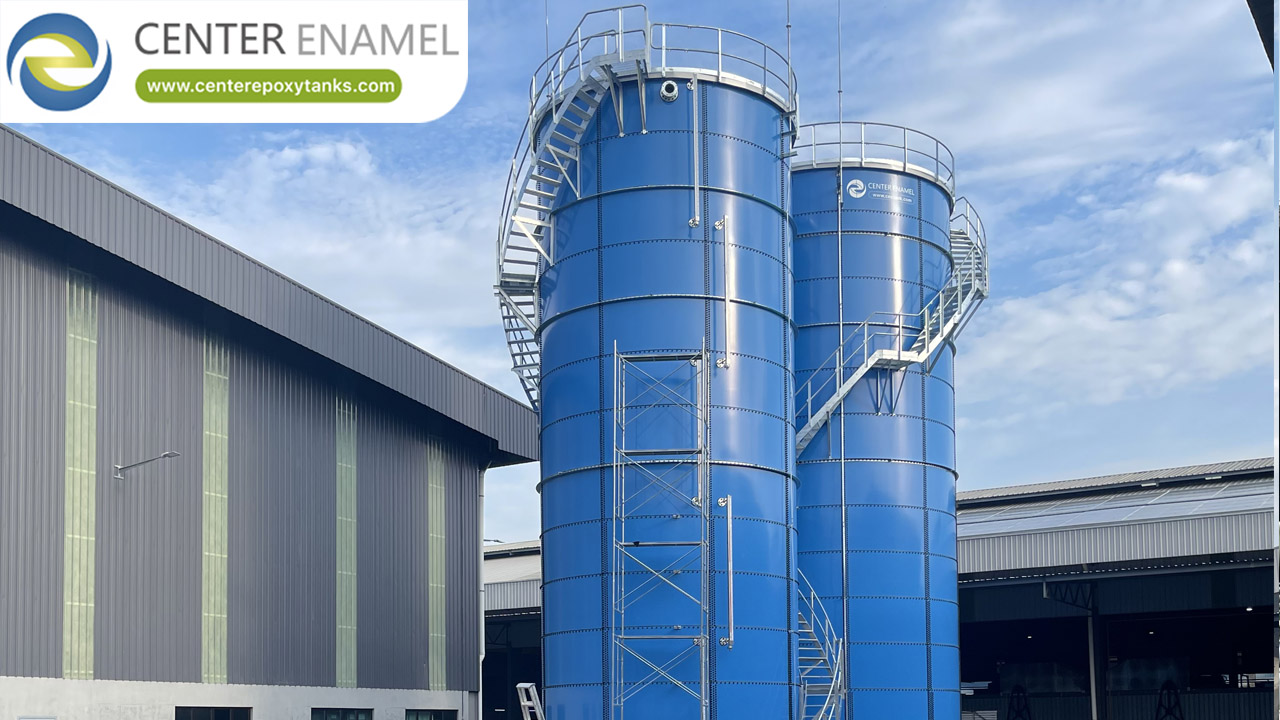
Epoxy Coated Steel Tanks for Pharmaceutical Industry Wastewater Treatment Projects: Engineering High-Integrity Containment
Wastewater generated by pharmaceutical manufacturing, biochemical synthesis, antibiotic production, and research laboratories is among the most complex and aggressively corrosive industrial effluent streams in existence. Containing active pharmaceutical ingredients (APIs), variable pH solvents, complex organic compounds, trace heavy metals, and high concentrations of biological nutrients, pharmaceutical wastewater rapidly degrades standard carbon steel and vulnerable concrete basins.
To prevent environmental contamination and comply with strict regulatory frameworks, pharmaceutical processing plants require containment infrastructure with exceptional chemical inertness and structural reliability. An epoxy-coated steel tank—engineered using advanced fusion-bonded epoxy (FBE) technology—provides an optimal, high-integrity solution for pharmaceutical wastewater treatment projects, balancing superior corrosion resistance with modular scalability.
1. The Unique Chemical Challenges of Pharmaceutical Effluents
Unlike municipal sewage or standard industrial runoff, pharmaceutical wastewater presents unique containment hurdles:
Fluctuating pH and Aggressive Solvents: Production batches frequently alternate between highly acidic and strongly alkaline chemical states, accompanied by reactive solvents that attack standard protective paints.
Active Residues and Biological Toxicity: Effluents often contain active residues that can inhibit biological treatment stages if leaks occur, making absolute structural containment and zero-seepage performance mandatory.
Vapor-Phase Headspace Corrosion: The atmospheric space above wastewater holding tanks accumulates moisture, volatile organic compounds (VOCs), and corrosive gases that attack tank roofs and upper shell rings if proper corrosion defenses are absent.
2. Advanced Fusion Bonded Epoxy (FBE) Technology
The structural and chemical resilience of advanced epoxy-coated tanks stems from precision manufacturing and high-performance polymer cross-linking:
Thermal Fusion Bonding: Specialized thermoset epoxy powder is electrostatically sprayed onto grit-blasted steel plates and thermally cured in automated ovens at high temperatures. This triggers a chemical cross-linking reaction, creating an unbreakable molecular fusion bond between the polymer coating and the steel substrate.
Rigorous High-Voltage Holiday Testing: Every coated panel undergoes stringent spark testing ($ge 1100text{V}$ or higher depending on specification tiers like FBE-1500V) prior to dispatch, ensuring the protective barrier is 100% free of pinholes or micro-defects.
Full Panel Encapsulation: Because individual steel panels are coated before on-site assembly, every edge, corner, and pre-punched bolt hole is fully protected against chemical migration.
Data Table: Pharmaceutical Wastewater Tank Comparison Matrix
Tank System Option | Primary Shell Material | Chemical Resistance Profile | Construction Methodology | Governing Standards |
Fusion Bonded Epoxy (FBE) | High-Strength Structural Steel | Excellent against complex solvents, variable pH, and active residues | Modular bolted panel assembly | AWWA D103 / ISO 28765 / NSF 61 |
Austenitic Stainless Steel (316L) | Stainless Steel Alloy | Outstanding across broad chemical ranges | Welded fabrication | ASME Section VIII / API 650 |
Glass-Fused-to-Steel (GFS) | Structural Steel Sheets | Superior inertness against extreme acid/base media | Modular bolted panel assembly | AWWA D103 / ISO 28765 |
Cast-In-Place Concrete | Concrete & Rebar | Variable (Prone to chemical attack and cracking over time) | Cast-in-place construction | ACI Standards / EPA guidelines |
3. Modular Advantages and Integration with Headspace Management
Pharmaceutical manufacturing plants often face strict spatial constraints and tight project schedules:
Rapid Modular Installation: Bolted epoxy tanks can be erected quickly using lightweight jacking systems without requiring heavy welding crews, minimizing disruption to active pharmaceutical operations.
Headspace Vapor Control: To manage toxic VOCs and odors generated by pharmaceutical wastewater, epoxy tanks are frequently integrated with corrosion-resistant aluminum geodesic dome roofs or gas-tight membrane covers, safely channeling emissions to centralized scrubbers or thermal oxidizers.
Frequently Asked Questions (FAQ)
Q: Why are epoxy-coated steel tanks suited for pharmaceutical wastewater treatment?
A: They feature a thermal-fused polymer barrier that provides robust chemical resistance against variable pH levels, active pharmaceutical ingredients, solvents, and corrosive wastewater components.
Q: How does fusion-bonded epoxy differ from standard liquid paint coatings?
A: Unlike field-applied paints that can peel or wear down, FBE powder is thermally cured onto steel plates in a controlled factory setting, creating a dense, molecularly bonded protective layer with superior impact and chemical resistance.
Q: Can modular epoxy tanks withstand aggressive chemical cleaning agents used in pharma plants?
A: Yes. High-performance industrial epoxy formulations are engineered to tolerate harsh chemical washdowns, sanitizing agents, and moderate-to-high chemical concentrations typical of pharmaceutical effluent streams.
Q: How do bolted epoxy tanks handle volatile emissions in wastewater applications?
A: Bolted epoxy tanks can be equipped with sealed aluminum geodesic dome roofs or specialized gas-tight covers to capture VOCs and odors, ensuring compliance with environmental emission regulations.


