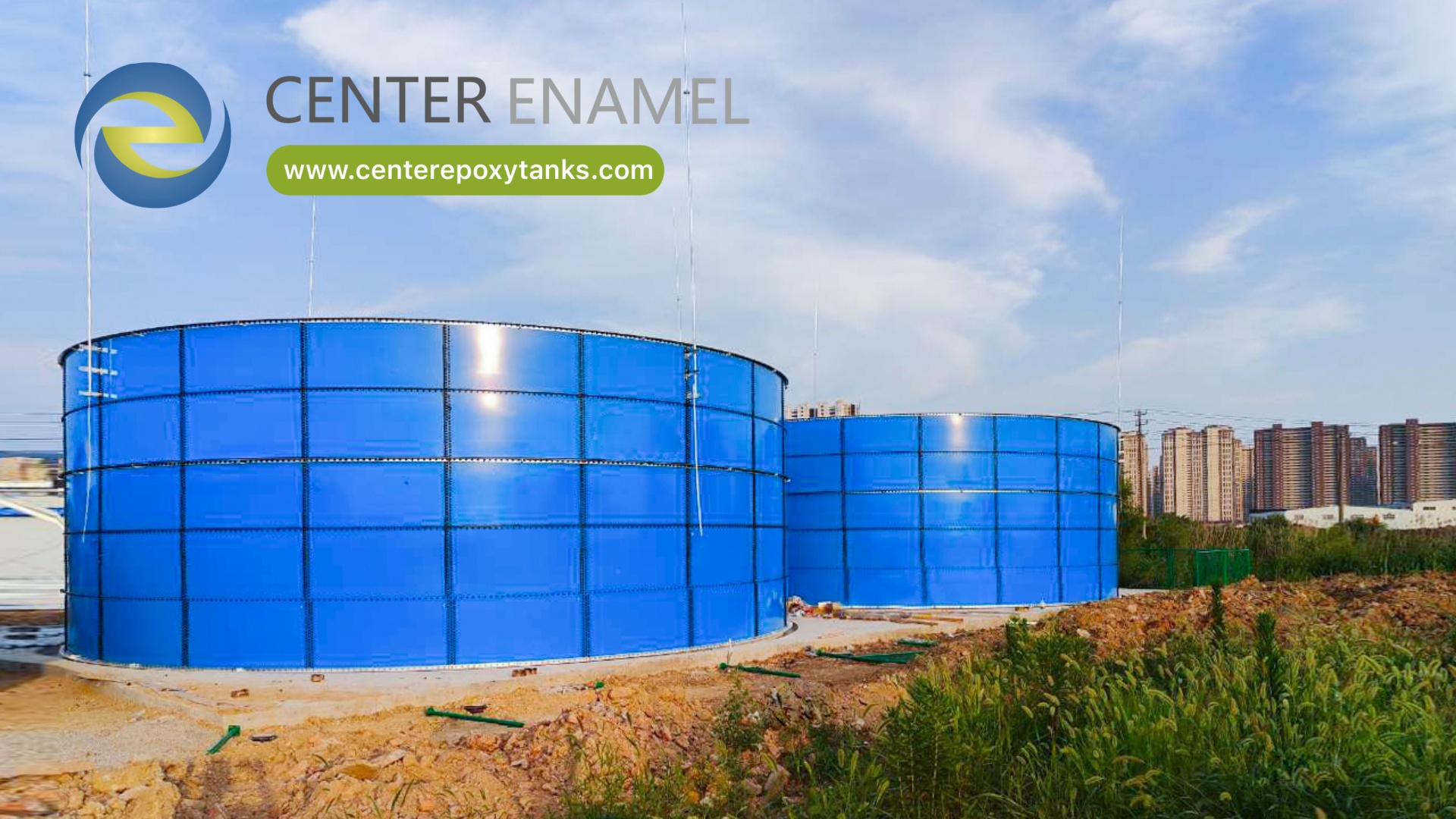
In the global food supply chain, the meat processing industry is one of the most vital yet resource-intensive sectors. From slaughterhouses to large-scale packaging facilities, the production of protein products generates vast quantities of highly concentrated effluent. Managing this waste is not merely a regulatory requirement but a critical component of a facility’s operational efficiency and environmental legacy. A Meat Processing Wastewater Treatment Project demands a specialized infrastructure capable of handling high organic loads, fats, proteins, and aggressive cleaning agents.
Shijiazhuang Zhengzhong Technology Co., Ltd (Center Enamel), a premier China Epoxy Coated Steel Bolted Tanks manufacturer, has emerged as a global leader in providing the durable containment solutions necessary for these rigorous environments. By utilizing advanced Fusion Bonded Epoxy (FBE) technology, Center Enamel delivers Epoxy Coated Steel Bolted Tanks that combine the structural strength of steel with an impenetrable chemical barrier, ensuring the long-term success of wastewater treatment initiatives worldwide.
The Hostile Nature of Meat Processing Effluent
The wastewater generated in the meat industry is significantly more challenging to treat than municipal sewage. It contains high concentrations of blood, fat, hair, and protein, which undergo rapid biological decomposition.
High Organic and Nutrient Loads
Meat processing waste is rich in organic matter and nutrients. As these components break down, they often lead to the acidification of the wastewater. Without a resilient containment surface, this acidity can cause rapid deterioration of concrete structures or lead to the oxidation of traditional steel vessels. Epoxy Coated Steel Bolted Tanks provide a chemically inert surface that remains unaffected by the fluctuating acidity levels common in these waste streams.
Fats, Oils, and Grease (FOG)
One of the primary challenges in any Meat Processing Wastewater Treatment Project is the high concentration of fats, oils, and grease. These substances are notoriously difficult to manage because they tend to adhere to the walls of the tanks, creating a breeding ground for bacteria and potentially clogging downstream processes. The smooth, glass-like finish of the fusion-bonded epoxy coating minimizes the ability of grease to cling to the surface, making the tanks easier to clean and maintaining a higher level of hygiene throughout the facility.
Corrosive Cleaning Agents
To maintain the strict hygiene standards required for food safety, meat processing plants undergo frequent and intensive wash-down cycles. These cycles involve the use of strong disinfectants, hot water, and aggressive cleaning chemicals. The storage and treatment tanks must be able to withstand both the internal chemical load of the wastewater and the external exposure to these cleaning agents.
Technical Excellence: The Fusion Bonded Epoxy Barrier
The reliability of Center Enamel’s solutions is rooted in the sophisticated manufacturing process of the Fusion Bonded Epoxy coating. As a dedicated China Epoxy Coated Steel Bolted Tanks manufacturer, we utilize a factory-controlled application process that ensures a level of protection impossible to achieve through field-applied methods.
The Coating Process
The FBE process involves the electrostatic application of a dry epoxy powder to a preheated steel substrate. This creates a molecular bond that is far superior to traditional liquid paint.
Surface Preparation: The steel panels undergo high-velocity grit blasting to achieve a pristine surface profile. This ensures maximum mechanical adhesion for the coating.
Electrostatic Application: The panels are heated, and the epoxy powder is electrostatically charged as it is sprayed. This ensures that the coating wraps around every edge and penetrates into the bolt holes for total coverage.
Thermal Fusion: The panels are moved into a curing oven where the epoxy melts and flows into the microscopic profile of the steel. As it cures, it forms a hard, dense, and cross-linked polymer network that is fused to the metal.
Resistance to Biogenic Sulfuric Acid
In the anaerobic digestion stages of a Meat Processing Wastewater Treatment Project, the decomposition of sulfur-containing proteins leads to the production of Hydrogen Sulfide gas. In the moist environment of the tank’s headspace, this gas can be converted into Sulfuric Acid. This biogenic acid is devastating to concrete and many unprotected metals. Our epoxy coating is specifically engineered to resist this atmospheric attack, providing a permanent solution to one of the industry’s most persistent corrosion problems.
Strategic Integration of Aluminum Dome Roofs
To provide a comprehensive containment system, Center Enamel integrates high-performance Aluminum Dome Roofs into its tank designs. In a wastewater environment, the roof is often the most vulnerable component due to the rising vapors and condensation in the headspace.
Advantages of Aluminum Dome Roofs
Aluminum Dome Roofs are self-supporting, clear-span structures that offer unparalleled durability in corrosive environments.
Corrosion Resistance: Aluminum naturally forms a protective oxide layer, making it immune to the corrosive effects of Hydrogen Sulfide and water vapor. This ensures that the roof remains structurally sound without the need for periodic repainting or maintenance.
Clear-Span Engineering: The clear-span design eliminates the need for internal support columns. This is a critical feature for treatment tanks, as it removes internal obstructions that could interfere with mixers, aerators, or the movement of sludge. It also eliminates structural points where grease and bacteria could accumulate.
Odor and Gas Control: For meat processing facilities located near residential or urban areas, odor control is paramount. These domes can be equipped with specialized seals to provide a gas-tight environment, allowing for the effective collection of odorous compounds or the harvesting of Methane for renewable energy.
Center Enamel: A Leading China Epoxy Coated Steel Bolted Tanks manufacturer
With decades of experience and installations in over ninety countries, Shijiazhuang Zhengzhong Technology Co., Ltd has established the benchmark for liquid storage. Our commitment to quality control and innovation makes us the preferred China Epoxy Coated Steel Bolted Tanks manufacturer for global agricultural and industrial sectors.
Precision and Quality Control
Our manufacturing facility utilizes automated production lines to ensure that every panel is manufactured to exact tolerances. Every panel undergoes high-voltage spark testing to verify that the epoxy barrier is 100% continuous and free of microscopic defects. This rigorous testing ensures that every tank delivered for a Meat Processing Wastewater Treatment Project is liquid-tight and chemically secure.
Global Logistics and Installation
In the fast-paced food industry, the speed of construction is vital. Our bolted modular design allows for rapid on-site assembly. The panels are packed efficiently into standard containers and shipped worldwide. Once on-site, the tanks can be assembled using specialized jacking systems, reducing the need for large cranes and extensive labor, and minimizing the disruption to the processing plant’s ongoing operations.
Project Cases: Proven Performance in Industrial Wastewater
The reliability of our Epoxy Coated Steel Bolted Tanks is demonstrated through our extensive portfolio of successful global projects. The following cases highlight our capacity to support large-scale industrial wastewater management.
Ethiopia Textile Industrial Park Wastewater Treatment Project: This massive international initiative required a large-scale containment solution for complex industrial waste. Center Enamel provided 20 units of tanks to support the park's treatment infrastructure. This project demonstrates our ability to deliver high volumes of specialized tanks for intensive wastewater applications across the globe.
Guangxi Qinzhou Chemical Wastewater Project: In a highly aggressive chemical processing environment, the integrity of the storage vessel is non-negotiable. For this project, we delivered 11 units of tanks. This case underscores the chemical immunity of our epoxy coating, proving it can handle a wide variety of acidic and alkaline waste streams without structural degradation.
Liaoning Petroleum Wastewater Treatment Project: Managing aggressive industrial effluent requires a robust containment strategy. Center Enamel provided 3 units of tanks for this project. The success of this installation proves the resilience of the fusion-bonded epoxy against hydrocarbons and salts, a level of durability that is also essential in meat processing scenarios where oils and cleaning chemicals are prevalent.
Total Cost of Ownership and Sustainability
When evaluating infrastructure for a Meat Processing Wastewater Treatment Project, the total cost of ownership is a vital consideration. While traditional concrete may seem cost-effective initially, its susceptibility to cracking and biogenic corrosion leads to high maintenance and repair costs.
Epoxy Coated Steel Bolted Tanks offer a superior return on investment. The maintenance-free nature of the coating, combined with the atmospheric resistance of Aluminum Dome Roofs, creates a system that remains operational for an extended service life. Furthermore, the modular nature of the tanks allows them to be expanded or even relocated if the processing plant’s capacity changes, providing a level of future-proofing that fixed structures cannot offer.
Additionally, steel is a highly recyclable material, and the long operational life of our tanks reduces the environmental footprint of the project, aligning with the sustainability goals of the modern food industry.
Partnering for a Greener Future
The management of meat processing wastewater is a demanding responsibility that requires infrastructure of the highest quality. As a premier China Epoxy Coated Steel Bolted Tanks manufacturer, Shijiazhuang Zhengzhong Technology Co., Ltd is dedicated to providing the solutions that make this possible.
By combining the advanced chemical resistance of Epoxy Coated Steel Bolted Tanks with the structural innovation of Aluminum Dome Roofs, we provide the durable, hygienic, and sustainable foundation that every Meat Processing Wastewater Treatment Project requires. Our commitment to excellence ensures that our partners can focus on their core production goals while maintaining the highest standards of environmental integrity.


