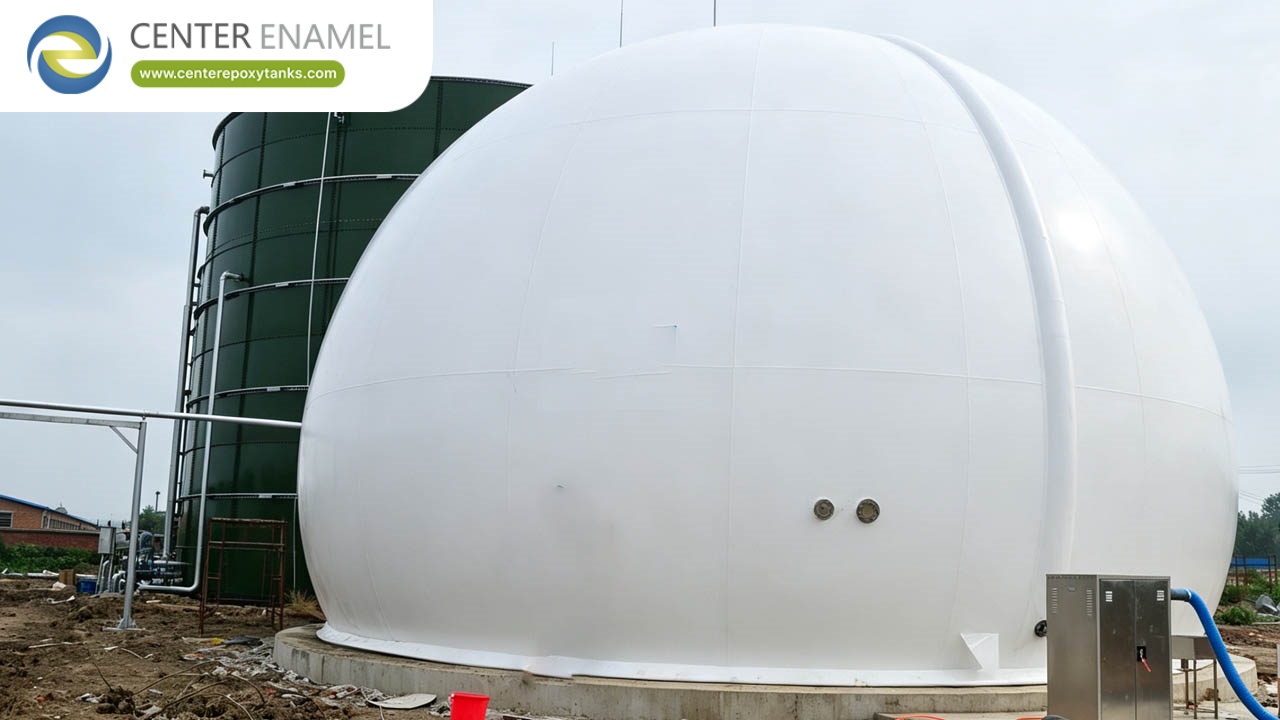
Durable Double Membrane Biogas Holders for Landfill Gas Collection
Municipal solid waste landfills generate massive volumes of landfill gas (LFG) through the anaerobic decomposition of organic materials. Composed primarily of methane (CH4) and carbon dioxide (CO2), LFG represents both a potent greenhouse gas and a valuable renewable energy resource. However, capturing and stabilizing this gas stream presents unique engineering challenges due to fluctuating extraction rates, moisture saturation, and trace chemical contaminants.
To safely store, regulate, and condition LFG prior to flaring or combined heat and power (CHP) generation, modern waste management facilities utilize durable double membrane biogas holders. These advanced dual-layer gasholders provide robust, variable-volume storage that accommodates variable landfill extraction pressures while maximizing energy recovery efficiency.
The Engineering Mechanics of Landfill Gas Gasholders
A double-membrane biogas holder operates as an integrated dual-layer containment structure designed to handle the dynamic flow characteristics of landfill gas extraction:
The Inner Membrane (Gas Containment): Suspended securely within the perimeter anchor ring, the inner bladder acts as a 100% gas-tight primary barrier, expanding and contracting dynamically to buffer variable LFG extraction volumes.
The Outer Membrane (Weather Protection): Continuously inflated by an automated low-pressure blower system, the outer layer forms a taut, aerodynamic dome that protects against wind, rain, and snow loads while applying a steady, uniform positive pressure onto the inner gas bladder.
The Inter-Membrane Air Space: The pressurized air chamber between the two layers maintains structural rigidity and ensures a consistent, reliable delivery pressure to downstream blowers, treatment skids, or energy recovery engines.
Technical Performance Matrix: Landfill Gas Containment Technologies
Technical Parameter | Double Membrane Biogas Holders | Fixed Steel Gas Storage Tanks | HDPE Geomembrane Landfill Caps | Direct-Flaring Systems (No Storage) |
Gas Storage Flexibility | Dynamic variable-volume adjustment matching live LFG extraction rates | Fixed volume capacity with rigid structural limits | Zero storage capacity; passive containment only | Zero gas storage; burns gas instantly as extracted |
Corrosion Resistance (Siloxanes & Moisture) | Superior; high-tenacity PVC/PVDF coated fabrics resist moisture and trace chemicals | Moderate to Low; highly vulnerable to internal condensation and acid attack | Moderate; subject to UV degradation and seam stress over time | Dependent on flare skid metallurgy |
Differential Settlement Adaptability | High structural flexibility absorbing minor foundation shifts | Low; rigid steel foundations risk cracking under ground movement | High flexibility, but lacks gas holding capabilities | Rigid skid-mounted equipment |
Global Standards Compliance | Manufactured strictly to ISO 9001, ATEX, and Eurocode 1 | ASME pressure vessel or localized structural steel codes | EPA and local environmental landfill closure guidelines | Local air quality and combustion standards |
Key Advantages for Landfill Gas Management
1. Superior Resistance to Trace Contaminants
Landfill gas often contains moisture, organic acids, and trace siloxanes derived from consumer products. Double-membrane gasholders are fabricated using high-tenacity polyester fabrics coated with specialized PVC/PVDF layers that are chemically inert, preventing structural degradation and ensuring long-term operational reliability.
2. Precise Pressure Stabilization
Downstream energy recovery equipment requires stable feed pressure. The automated air-pressurization system of a double-membrane holder exerts constant positive pressure on the inner gas bladder, ensuring a smooth, uninterrupted gas supply regardless of upstream landfill extraction fluctuations.
Frequently Asked Questions (FAQ)
Q: Why are double membrane biogas holders ideal for landfill gas collection systems?
A: They provide dynamic variable-volume storage and constant positive delivery pressure, effectively buffering the fluctuating extraction rates typical of municipal solid waste landfills before the gas is utilized in CHP engines or flares.
Q: How do double-membrane gasholders handle moisture and corrosive trace gases like siloxanes?
A: They are manufactured from chemically inert, high-tenacity polymer fabrics (such as PVC/PVDF-coated polyester) that resist moisture, organic acids, and trace chemical exposure, ensuring high durability in harsh landfill environments.
Q: Can double-membrane biogas holders accommodate ground settlement at landfill sites?
A: Yes. Their flexible membrane construction and modular perimeter anchoring systems offer high structural adaptability, allowing them to withstand minor differential foundation movements better than rigid steel tanks.
Q: What safety systems are integrated into landfill gas double-membrane holders?
A: Standard systems include automated dual-air blower controls, overpressure protection valves, mechanical or liquid safety relief vents, continuous gas leak detection sensors, and explosion-proof ATEX-compliant electrical components.


