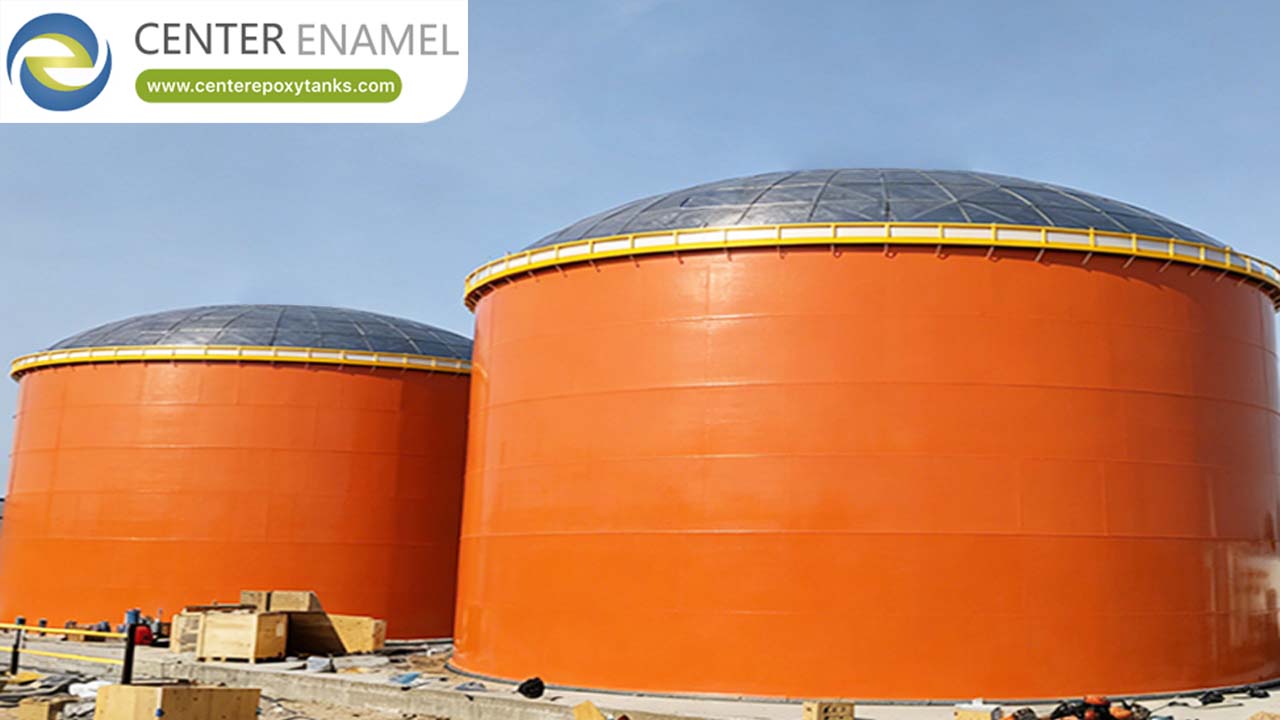
High-Durability Epoxy Coated Storage Tanks for Fuel Containment
In industrial and commercial sectors, fuel containment is not just about storage—it is about environmental compliance, asset protection, and risk mitigation. Traditional storage solutions, such as field-welded steel or concrete, often struggle with the aggressive nature of various fuel grades, leading to costly maintenance cycles or, worse, containment failure.
Fusion Bonded Epoxy (FBE) tanks have emerged as the industry standard for high-durability fuel containment. By utilizing a factory-controlled thermal bonding process, these systems provide a monolithic barrier that is virtually immune to the corrosion issues that plague standard storage infrastructure.
The Science of FBE: Why It Outperforms
Fuel containment requires a barrier that can handle environmental fluctuations and chemical exposure without delamination or "holiday" (pinhole) formation. FBE technology achieves this through a molecular fusion process.
Unlike liquid-applied epoxies that rely on mechanical bonds, FBE powder is applied electrostatically and fused to the steel substrate at high temperatures (typically exceeding $200^circtext{C}$). This creates a chemically cross-linked, thermoset plastic barrier that is essentially inseparable from the steel, providing a level of durability that other coatings cannot match.
Comparative Performance Matrix
Feature | Fusion Bonded Epoxy (FBE) | Liquid Epoxy Coating | Glass-Fused-to-Steel (GFS) |
Bonding Type | Chemical Fusion | Mechanical/Adhesive | Molecular/Mechanical |
Durability | High | Moderate | Very High |
Impact Resistance | Excellent | Moderate | Moderate (Brittle) |
Coating Consistency | Uniform (Factory) | Variable | Uniform (Factory) |
Maintenance | Minimal | High (Frequent) | Minimal |
Key Advantages for Industrial Fuel Storage
1. Superior Corrosion Resistance
Fuel, especially when containing trace water or impurities, can trigger internal corrosion in standard steel tanks. FBE provides a dielectric, non-porous shield that isolates the steel from the fuel, preventing pitting, oxidation, and the subsequent "weak spots" that lead to leaks.
2. Factory-Controlled Quality Assurance
Because the coating is applied in a controlled factory environment, every panel is subjected to rigorous quality checks, including high-voltage "holiday testing" to detect microscopic defects. This eliminates the human error and environmental variables inherent in field-erected tank coating processes.
3. Structural Integrity & Reliability
The use of bolted panel construction allows for precise structural engineering. These tanks are designed to handle the specific gravity of various fuels while maintaining the flexibility to withstand seismic and wind loads better than rigid, monolithic concrete structures.
4. Reduced Lifecycle Costs
By virtually eliminating the need for periodic internal recoating or structural patching, FBE tanks significantly lower the Total Cost of Ownership (TCO). For high-throughput fuel terminals, this translates to maximum operational uptime and reduced risk of environmental liability.
Frequently Asked Questions (FAQ)
Q: Are FBE tanks compatible with all types of fuel?
A: FBE tanks are highly chemically resistant and are compatible with a wide range of industrial liquids, including various fuel distillates. However, it is essential to consult with your engineering team regarding the specific chemical composition of the fuel to ensure optimal lining compatibility.
Q: How does FBE compare to Glass-Fused-to-Steel (GFS) for fuel?
A: Both are high-performance options. FBE is often preferred for fuel containment due to its superior impact resistance and flexibility, which prevents the cracking and spalling issues sometimes associated with brittle glass coatings.
Q: Can these tanks be repaired if damaged?
A: Yes. Unlike glass-coated tanks, which can be difficult to repair if chipped, FBE coatings can be effectively patched in the field using professional-grade touch-up kits that restore the integrity of the chemical barrier.
Q: Do I need cathodic protection for an FBE tank?
A: In most cases, no. Because the factory-applied FBE creates a complete, continuous dielectric barrier, the risk of galvanic corrosion is minimized, simplifying your long-term maintenance requirements.
Q: Are FBE tanks suitable for remote or coastal fuel storage?
A: Absolutely. FBE tanks are engineered to perform in harsh environmental conditions. The coating’s resistance to salt spray and UV radiation makes them an excellent choice for coastal terminals where traditional tanks would require constant maintenance.


