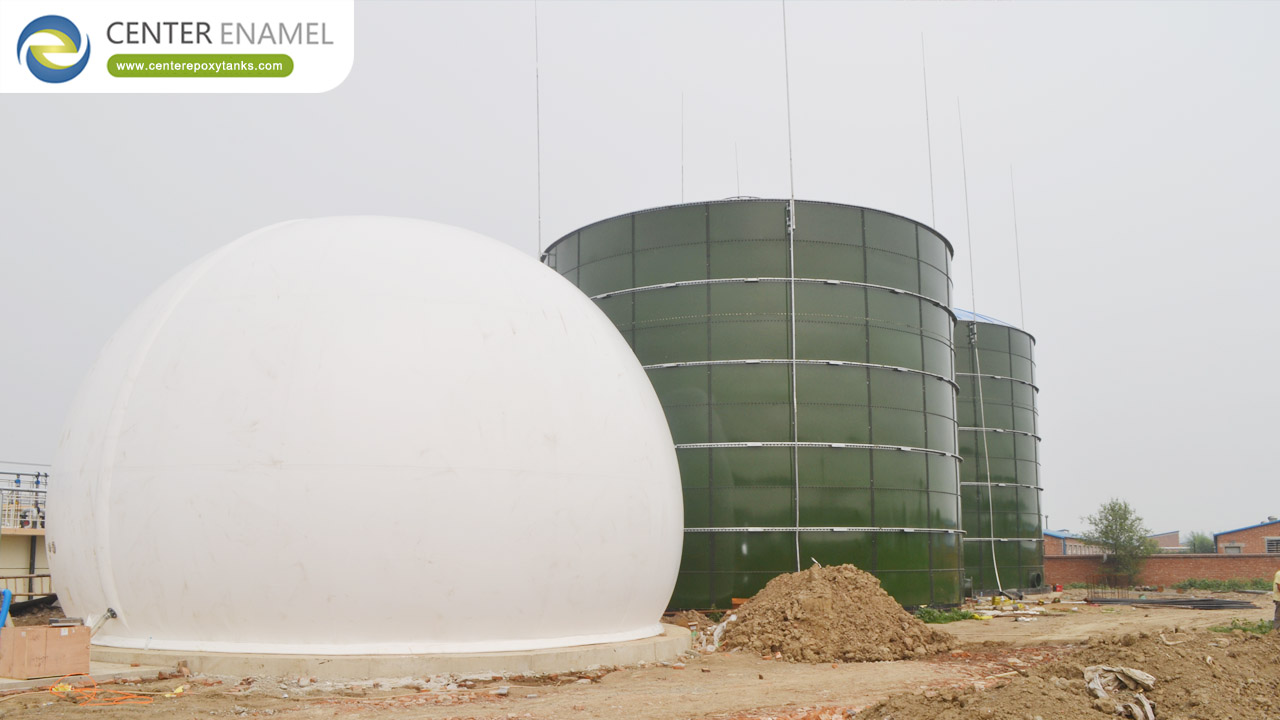
Double Membrane Gas Holder for Palm Oil Processing Plant: Advanced Biogas Storage and POME Management
The palm oil industry plays a vital economic role across tropical regions, yet it faces rigorous environmental challenges regarding wastewater management. For every tonne of crude palm oil (CPO) produced, palm oil mills generate substantial volumes of Palm Oil Mill Effluent (POME). Characterized by high Chemical Oxygen Demand (COD), suspended solids, and organic loading, untreated POME poses severe ecological risks.
However, when channeled into modern anaerobic digestion systems, POME transforms into a valuable resource, generating methane-rich biogas that can be captured to power mill operations or feed renewable energy grids. To maximize energy recovery and ensure steady fuel delivery, palm oil mills require robust containment systems. A double-membrane gas holder provides an ideal, cost-effective storage solution designed specifically to withstand the demanding conditions of palm oil processing plants.
1. POME Treatment and the Need for Reliable Biogas Buffering
Palm oil mill effluent is typically treated using biological anaerobic processes, such as continuous stirred tank reactors (CSTR) or covered lagoon digesters, where anaerobic bacteria break down complex organic matter:
Fluctuating Biogas Generation: Biogas production rates vary depending on raw fruit bunch processing volumes, seasonal crop yields, and weather shifts. Direct combustion without intermediate storage leads to burner instability and energy loss.
Corrosive Gas Environments: Raw biogas derived from POME contains high levels of moisture and trace hydrogen sulfide (H2S), which can quickly degrade vulnerable metal storage tanks and piping networks.
Pressure Regulation Requirements: Downstream combined heat and power (CHP) engines or boilers require a consistent, reliable delivery pressure regardless of production spikes.
2. Engineered Architecture of Double-Membrane Gas Holders
Double-membrane gas holders are specifically engineered to handle the operational volatility of industrial biomass plants through a multi-layer design:
Inner Membrane (Gas Containment): Fabricated using specialized high-tenacity polyester fabrics coated with premium PVC/PVDF polymers, the inner bladder securely encloses the biogas. It offers exceptional chemical resistance against H2S and moisture while flexing dynamically without mechanical stress.
Outer Membrane (Environmental Shield): Maintained continuously under positive pressure by an energy-efficient auxiliary air blower, the outer shell forms a rigid hemispherical shape that protects the inner bladder against heavy tropical rainfall, strong winds, and ultraviolet radiation.
Air-Pressure Control Buffer: The space between the inner and outer membranes acts as an automated pressure-regulation zone, ensuring uniform delivery pressure to downstream energy conversion equipment.
Data Table: Biogas Storage Solution Comparison for Palm Oil Mills
Technical Parameter | Double-Membrane Gas Holder | Traditional Wet Seal Steel Holder | High-Pressure Steel Gas Tank |
Volumetric Adaptability | Dynamic expansion/contraction based on real-time POME biogas generation | Fixed operating volume with heavy mechanical counterweights | Fixed volumetric capacity requiring intensive gas compression |
Corrosion Resistance | High (Chemically inert PVC/PVDF fabrics resistant to H2S and moisture) | Moderate (Prone to internal rust and acid degradation from gas condensate) | Moderate (Requires periodic internal protective recoating) |
Installation & Footprint | Lightweight, modular design mounted on concrete slabs or digester tanks | Heavy civil construction and deep foundation piles | Heavy skid mounts and thick-walled steel cylinders |
Maintenance Profile | Minimal upkeep with automated blower and pressure monitoring | High (Requires frequent manual inspections and paint maintenance) | High (Requires strict pressure-vessel recertification audits) |
3. Operational and Environmental Advantages for Palm Oil Mills
Integrating a double-membrane gas holder into a palm oil processing plant delivers profound financial and ecological benefits:
Maximized Energy Self-Sufficiency: Storing and burning captured methane in CHP engines allows palm oil mills to offset grid electricity costs and run entirely on self-generated biomass energy.
Strict Environmental Compliance: Airtight containment completely eliminates fugitive methane emissions and malodorous gases, helping mills meet national environmental standards and secure green certifications.
Flexible Integration: Membrane gas holders can be installed either as standalone ground-mounted units or mounted directly atop anaerobic digestion tanks (such as Glass-Fused-to-Steel or welded steel tanks), preserving valuable footprint area within the mill compound.
Frequently Asked Questions (FAQ)
Q: Why is a double-membrane gas holder essential for a palm oil processing plant?
A: Palm oil mill effluent (POME) anaerobic digestion produces high volumes of fluctuating biogas. Double-membrane gas holders safely buffer these gas variations, provide steady delivery pressure for energy recovery, and resist the corrosive moisture and hydrogen sulfide present in POME biogas.
Q: How does the double-membrane system maintain a constant gas output pressure?
A: An automated auxiliary air blower system continuously pressurizes the space between the inner and outer membranes, exerting a uniform downward force on the inner gas containment bladder to ensure a stable output pressure for downstream engines or boilers.
Q: Can double-membrane gas holders be mounted directly onto anaerobic digester tanks?
A: Yes. Membrane gas holders can be configured as standalone units on concrete foundation pads or installed directly on top of circular anaerobic digestion tanks as tank-mounted covers, saving space and reducing piping costs.
Q: What materials are used to manufacture industrial double-membrane gas holders?
A: They are fabricated using high-tenacity polyester base fabrics coated with specialized PVC/PVDF formulations treated with anti-fungal and UV-resistant compounds, ensuring long service life in harsh tropical operating environments.


