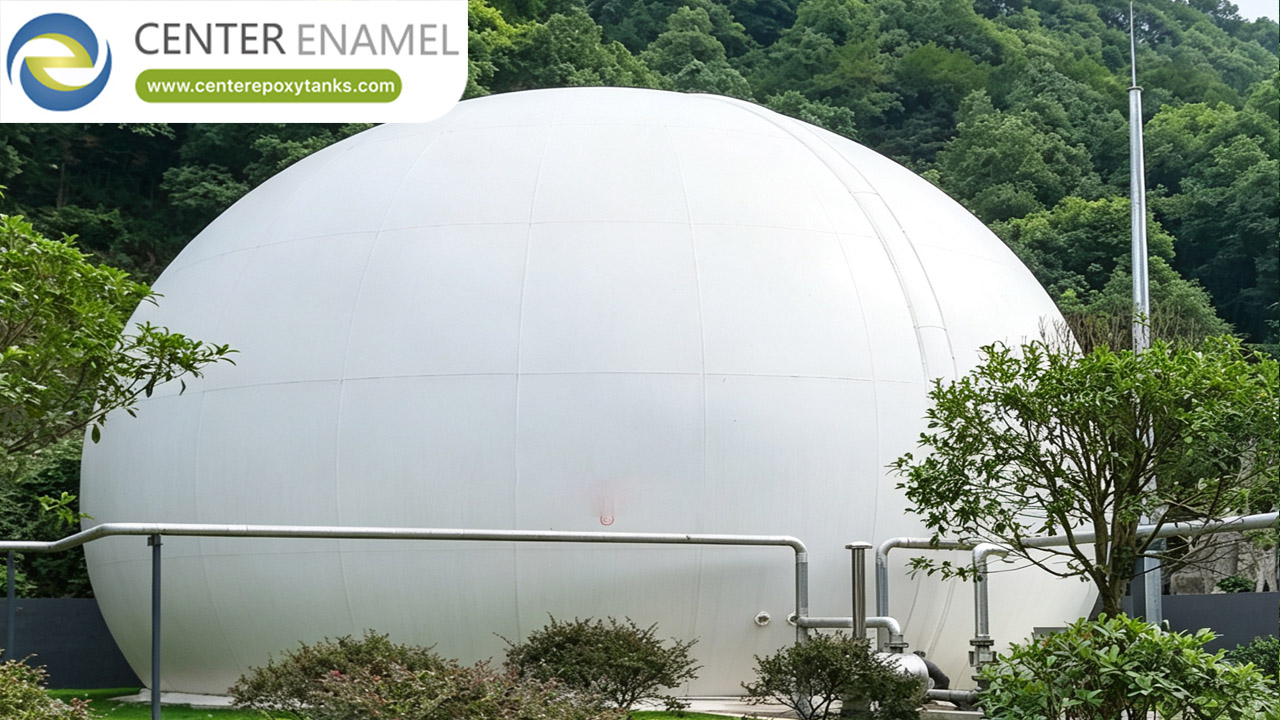
Biogas Holder Design for High-Efficiency Gas Storage: Engineering Sustainable Energy Recovery
In renewable energy generation, agricultural waste management, and industrial wastewater treatment, anaerobic digestion transforms organic materials into clean, carbon-neutral biogas. However, biological digestion is a continuous biological process, whereas facility energy consumption via combined heat and power (CHP) engines, boilers, or grid injection fluctuates.
Achieving maximum operational efficiency requires meticulous biogas holder design. An advanced gas storage system bridges the gap between variable biological generation and steady energy demand, preventing venting losses, maintaining constant operating pressures, and safeguarding plant infrastructure.
Core Engineering Principles of High-Efficiency Biogas Holders
Modern high-efficiency gas storage relies on multi-layer membrane architecture and automated pressure control systems:
Triple-Layer Membrane Configuration: The prevailing standard is the double-membrane gas holder, consisting of a bottom membrane (sealing the foundation or tank), an inner membrane (which dynamically expands to contain the biogas), and an outer protective membrane (shielding the system against weather, UV radiation, and wind loads).
Active Air-Pressure Regulation: Between the inner and outer membranes lies a controlled air chamber. An automated constant-pressure control unit manages air inflation and exhaustion, exerting a uniform downward force on the inner gas chamber. This ensures stable delivery pressure to downstream energy conversion equipment regardless of fill levels.
High-Tenacity Chemical and Sulfide Defense: Because raw biogas contains moisture and trace concentrations of corrosive hydrogen sulfide (H2S), membranes are manufactured from specialized PVC/PVDF-coated polyester fabrics. These materials resist chemical degradation, biological sulfide attack, and UV radiation, ensuring decades of reliable service.
Data Table: Comparative Analysis of Biogas Storage Technologies
Technical Parameter | Ground-Mounted Double-Membrane Holders | Tank-Top Mounted Biogas Holders | Legacy Rigid Steel Pressure Holders |
Spatial Footprint | Independent ground-mounted installation requiring a dedicated concrete slab | Maximizes facility efficiency by mounting directly atop the anaerobic digester | Large cylindrical or spherical footprint requiring massive civil foundations |
Pressure Regulation | Consistent low-pressure operation regulated by active air-pressure balancing | Integrated directly with digester headspace pressure | High-pressure containment requiring complex compressor and staging systems |
Corrosion Defense | High-grade PVC/PVDF membranes completely immune to H2S oxidation | Membrane inner layer protected against wet digester headspace gases | Carbon steel shell vulnerable to rapid moisture and H2S condensation |
Primary Industrial Application | Flexible mid-to-large-scale volume buffering and seasonal energy storage | Compact municipal, agricultural, or industrial wastewater treatment plants | High-pressure gas grid injection and heavy industrial gas storage |
Frequently Asked Questions (FAQ)
Q: What makes a biogas holder design "high-efficiency"?
A: High-efficiency design integrates precise volumetric modeling, active pressure regulation via automated air-balancing systems, and chemically resistant dual membranes that eliminate gas leaks and maintain steady fuel delivery.
Q: Why are double-membrane gas holders preferred over traditional steel tanks?
A: They offer significantly larger storage capacities, rapid modular installation, exceptional resistance to corrosive trace gases like hydrogen sulfide (H2S), and much lower lifecycle maintenance costs.
Q: How does the system handle fluctuations in daily biogas production?
A: The flexible inner membrane expands and contracts dynamically, allowing the holder to absorb peak production surges from the anaerobic digester without causing over-pressurization or gas loss.
Q: What international safety standards govern modern biogas holder installations?
A: High-performance gas holders are engineered in compliance with stringent safety and electrical classifications such as ATEX, IECEx, ISO 9001, and NFPA fire safety guidelines.


