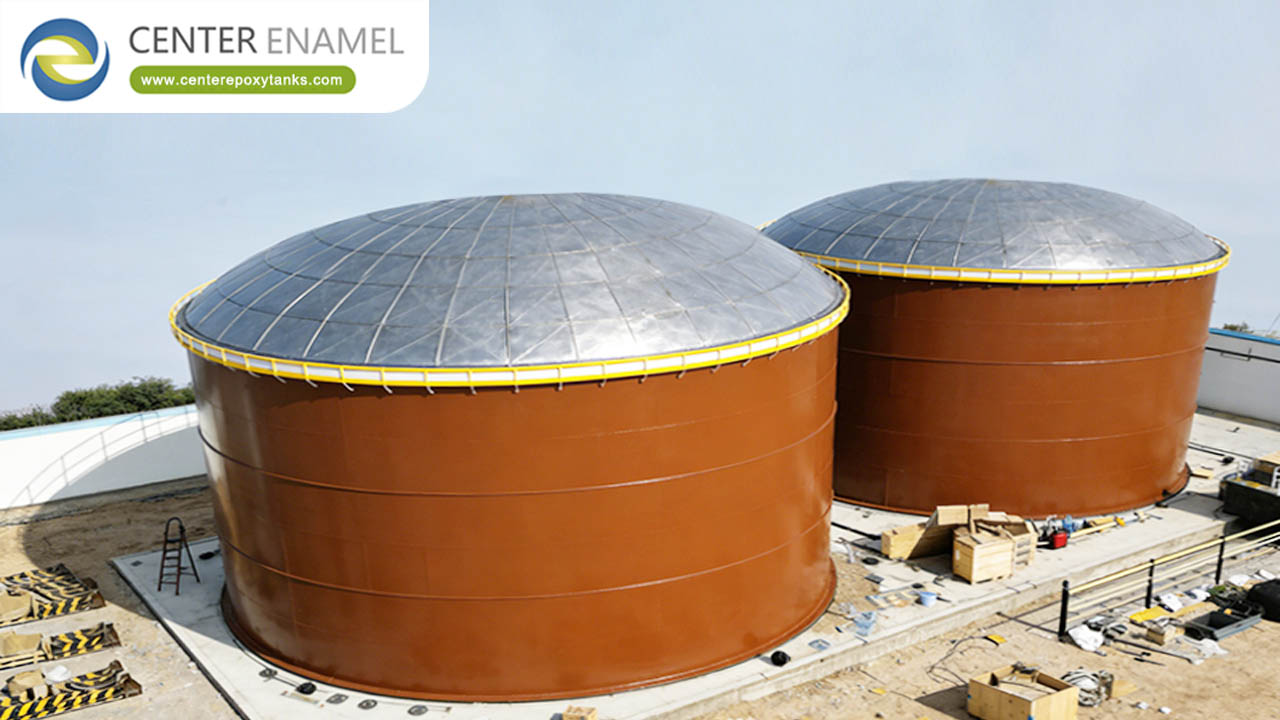
Aluminum Dome Covers for Above-Ground Crude Oil Storage Tanks: Advanced Engineering for Safety, Emission Control, and Asset Longevity
In the global oil and gas sector, above-ground storage tanks (ASTs) containing crude oil represent critical infrastructure that requires robust protection against environmental forces, volatile organic compound (VOC) emissions, and structural degradation. Traditional roofing solutions—such as painted carbon steel conical roofs prone to aggressive oxidation or open-top configurations vulnerable to rainwater accumulation—impose heavy financial and operational burdens on terminal operators.
To overcome these challenges, aluminum dome covers have become the definitive global standard for crude oil storage. Utilizing high-strength, lightweight aluminum alloys and advanced geodesic geometry, these structures deliver uncompromised asset protection, dramatic emission reductions, and a virtually maintenance-free operational lifecycle.
The Engineering Mechanics of Aluminum Geodesic Domes
An aluminum dome cover is engineered as a three-dimensional space-truss system composed of triangulated structural struts and interlocking panels. This geometry provides exceptional structural mechanics:
Uniform Load Distribution: The triangulated frame efficiently distributes dead loads, wind shear, and seismic forces outward to the perimeter tension ring attached to the tank shell, optimizing structural stability.
True Clear-Span Architecture: Unlike traditional steel roofs that require internal support columns, rafters, or center trusses, aluminum geodesic domes span entirely from wall to wall. This eliminates internal obstructions, making them ideal for integration with internal floating roofs (IFRs).
Self-Passivating Material Science: Fabricated from marine-grade aluminum alloys (such as 6061-T6 and 6063-T6), the material naturally forms a protective, non-porous aluminum oxide skin that resists atmospheric corrosion without requiring periodic protective painting.
Technical Performance Matrix: Crude Oil Storage Roof Technologies
Technical Parameter | Aluminum Geodesic Dome Covers | Traditional Carbon Steel Conical Roofs | Open-Top Tanks (Without Fixed Cover) |
Corrosion Defense & Lifespan | Exceptional; marine-grade aluminum requires zero repainting; 40+ year lifecycle | Moderate to low; prone to rust flaking, pitting, and coating failure requiring frequent upkeep | High exposure to weather, leading to accelerated shell corrosion and seal degradation |
Internal Support Structure | 100% clear-span; zero internal columns or support trusses required | Requires internal rafter beams and center support columns for large diameters | None (unless paired with an internal floating deck structure) |
Rainwater & Contamination Ingress | Fully sealed system prevents rain, snow, and airborne debris entry | Prone to joint leakage and localized corrosion from trapped moisture | Direct exposure to rainfall, requiring complex oily water drainage systems |
Governing Engineering Standard | Engineered strictly per API 650 Annex G and ASCE 7 load criteria | Governed by general steel design codes with variable field quality checks | Governed by API 650 Annex C or Annex H floating roof specifications |
Core Operational Advantages for Crude Oil Facilities
1. Superior VOC Emission Reduction
Volatile organic compounds escaping from crude oil storage represent both a valuable product loss and a severe environmental violation. An aluminum dome cover—especially when paired with an internal floating deck—creates a double-barrier defense that suppresses hydrocarbon vaporization and aligns facilities with strict EPA and global air quality regulations.
2. Elimination of Rainwater Ingress and "Bottom Water"
Open-top crude tanks often collect rainwater on their floating decks, leading to contaminated "bottom water" in the crude oil that complicates refining processes and increases wastewater treatment costs. Aluminum domes provide a weather-tight shield that keeps precipitation entirely out of the tank.
3. Reduced Lifecycle Maintenance and Cost Efficiency
Because aluminum does not rust or degrade under severe marine or industrial atmospheres, facility operators eliminate the recurring, high-cost cycles of abrasive blasting and recoating required by carbon steel alternatives.
Frequently Asked Questions (FAQ)
Q: Why are aluminum dome covers preferred over carbon steel roofs for crude oil tanks?
A: Aluminum domes offer complete corrosion immunity without requiring protective paint, feature a lightweight clear-span design that reduces dead loads, and provide a 40+ year service life with near-zero maintenance overhead.
Q: How do aluminum geodesic domes handle extreme weather like high winds and heavy snow?
A: Engineered in strict compliance with international standards such as API 650 Annex G and ASCE 7, the triangulated geodesic geometry evenly distributes environmental loads, allowing the curved structure to shed snow efficiently and withstand severe wind velocities.
Q: Can an aluminum dome cover be installed on an existing crude oil storage tank?
A: Yes. Because aluminum domes are lightweight and prefabricated in modular components, they are frequently retrofitted onto existing external floating roof or fixed-roof tanks—often while the tank remains in operational service—minimizing costly terminal downtime.
Q: What international standards govern the engineering of aluminum dome covers?
A: Aluminum storage tank domes are designed, calculated, and fabricated in accordance with API 650 Appendix G (Structurally Supported Aluminum Dome Roofs) and utilize structural design rules from the Aluminum Design Manual (ADM).


