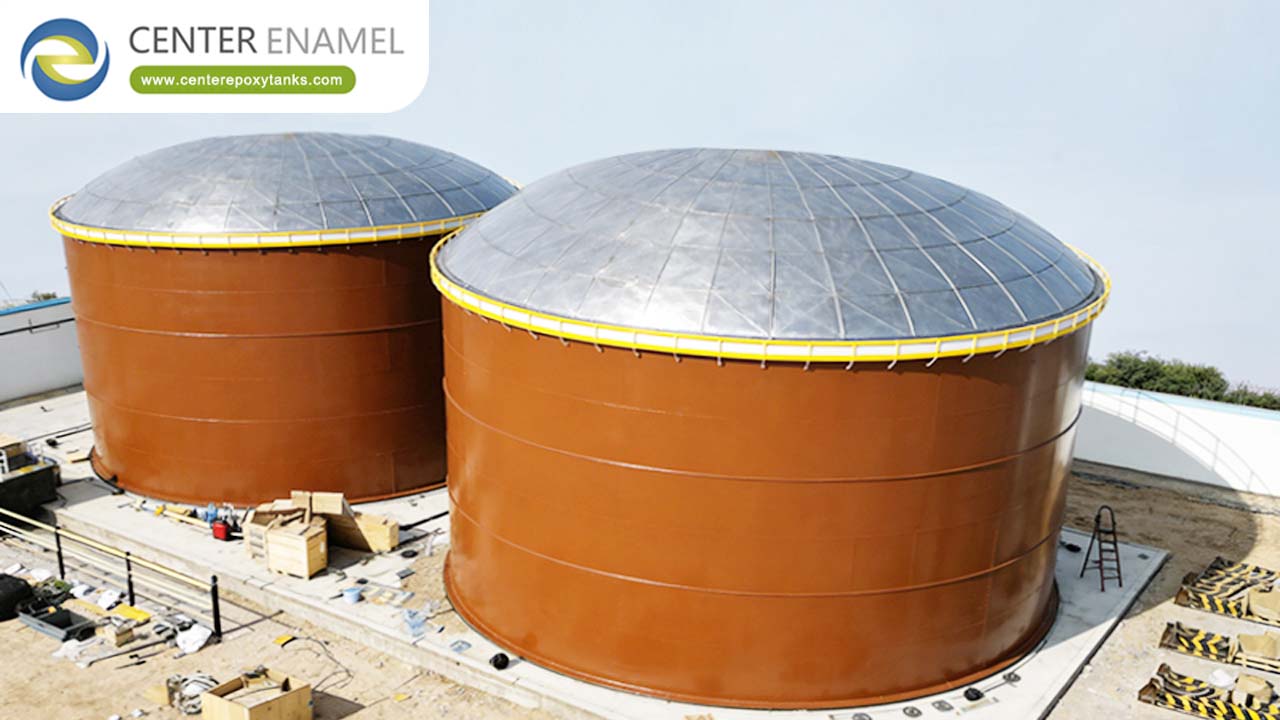
API 650 Welded Steel Oil Tanks: Engineering Site-Constructed Storage Solutions
API 650 welded steel tanks are the industry standard for large-scale, atmospheric storage of crude oil and refined products. Unlike modular bolted units, these tanks are constructed on-site using manual or automated girth welding, creating a monolithic, leak-proof structure. They are the primary choice for massive capacities (exceeding 50,000 m3) where structural continuity is required for seismic resilience and volatile organic compound (VOC) containment. Protection is achieved through field-applied high-build epoxies and cathodic protection systems.
1. Technical Specification & Construction Matrix
This matrix establishes the mechanical benchmarks for authentic API 650 welded construction.
Feature | Technical Specification (Welded Standard) | Strategic Operational Value |
Design Standards | API 650 (13th Ed), API 620, ASME BPVC | Mandatory for refinery-scale safety and insurance. |
Welding Method | Automated Girth Welding (AGW) / SAW | High-speed, X-ray quality seams for vertical/horizontal joins. |
Corrosion Control | Field-Applied Epoxy / Glass Flake Linings | Applied after welding to ensure 100% seam coverage. |
Material Grade | ASTM A36 / A516 Grade 70 / Q345R | Carbon steel optimized for weldability and notch toughness. |
Testing Regimes | Radiographic (RT) / Ultrasonic (UT) / Hydrostatic | Verifies 100% weld penetration and structural safety. |
Seismic Design | ASCE 7-22 / API 650 Appendix E | Engineered for localized peak ground acceleration (PGA). |
2. The Mechanics of Welded Integrity
Automated Girth Welding (AGW)
For large-diameter tanks, Center Enamel utilizes Automated Girth Welding. This process provides superior consistency compared to manual stick welding:
● Seam Continuity: AGW machines travel along the tank circumference, laying down uniform beads that minimize the heat-affected zone (HAZ).
● Radiographic Testing (RT): Every critical "T-joint" and a percentage of all butt-welds undergo X-ray inspection to ensure zero porosity or slag inclusions, meeting stringent API 650 acceptance criteria.
● Monolithic Sealing: The welded joint is a chemical bond, making it the only reliable solution for high-temperature storage or products that could degrade mechanical gaskets used in bolted designs.
3. Field-Applied Coatings & Cathodic Protection
Since GFS/FBE cannot be used on welded seams, the focus shifts to robust on-site protection strategies.
● High-Build Epoxy Linings: After hydro-testing, the interior floor and "critical zone" (first 12 inches of the shell) are abrasive-blasted to SSPC-SP10 (Near-White) and coated with chemical-resistant epoxies to prevent pitting from water bottoms.
● External Coating Systems: A three-coat system consisting of a Zinc-Rich Primer, an epoxy intermediate, and a Polyurethane Topcoat provides UV resistance and prevents atmospheric oxidation.
● Cathodic Protection (CP): To protect the tank floor from soil-side corrosion, Impressed Current Cathodic Protection (ICCP) is integrated into the foundation, extending the floor life to over 40 years.
4. Why Partner with Center Enamel for Welded Solutions?
While we are global leaders in bolted technology, our expertise in API 650 welded construction provides clients with a full-spectrum storage partner:
● Site Management & EPC: We manage the entire lifecycle—from the civil engineering of the tank pad to the complex heavy-lift operations of the roof structure.
● Floating Roof Engineering: We specialize in the design of External and Internal Floating Roofs with mechanical shoe seals, tailored to fit the precise inner diameter of our welded shells.
● Compliance Authority: Every tank is delivered with a comprehensive Manufacturer’s Data Report (MDR), including material mill certificates, NDT reports, and hydrostatic test certifications.
5. Technical FAQ: Welded vs. Bolted Decision Matrix
Q: When is a welded tank mandatory over a bolted tank?
A: Welded tanks are typically mandatory for capacities over 10,000 m3, for storing products with high temperatures (>93°C}), or when localized fire codes require the superior fire-resistance of a continuous steel structure.
Q: How do you handle the coating of the weld seams on-site?
A: Once welding and NDT are complete, the seams are grit-blasted to remove slag and oxidation. A field-applied epoxy system is then applied, overlapping the factory-primed areas to create a continuous protective barrier.
Q: What is the maintenance interval for a welded API 650 tank?
A: Following API 653 guidelines, formal internal inspections are typically conducted every 10 to 20 years, depending on the corrosivity of the product and the performance of the internal lining and cathodic protection system.


