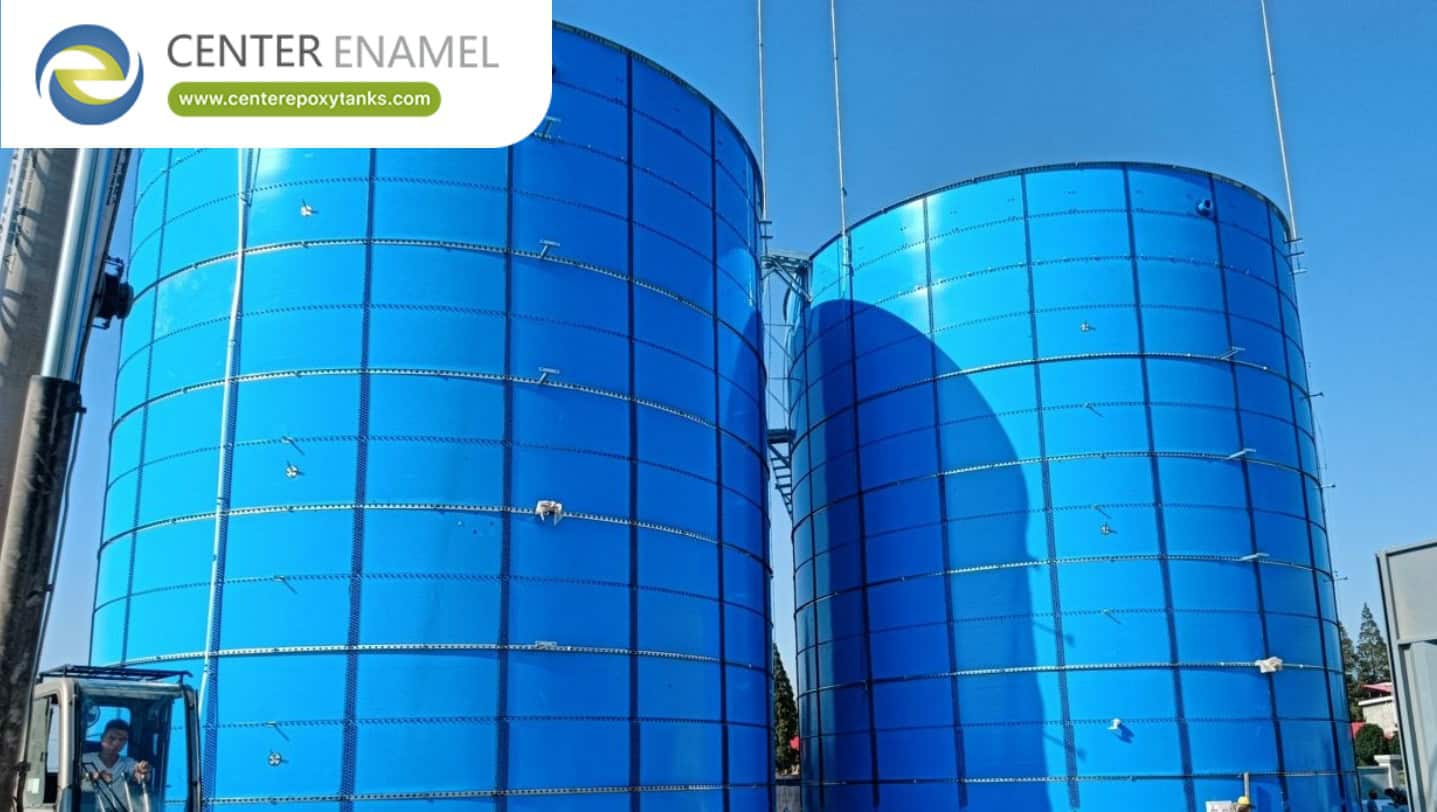
The global demand for palm oil has reached unprecedented levels, positioning it as one of the world's most versatile and widely used vegetable oils. From food production to biofuels and cosmetics, the palm oil industry is a vital pillar of the global economy. However, this massive production scale brings a significant environmental challenge: the management of Palm Oil Mill Effluent (POME). POME is a high-strength organic wastewater generated during the sterilization and clarification stages of palm oil processing. It is notoriously difficult to treat due to its high biochemical oxygen demand, chemical oxygen demand, and significant oil content. Without a reliable Palm Oil Mill Effluent (POME) Tanks system, this effluent can cause severe oxygen depletion and long-term ecological damage to local water bodies and groundwater systems.
Shijiazhuang Zhengzhong Technology Co., Ltd (Center Enamel), a leading China Palm Oil Mill Effluent (POME) Tanks manufacturer, has dedicated decades to developing infrastructure specifically designed for this aggressive waste stream. By combining advanced Epoxy Coated Tanks with high-performance Aluminum Dome Roofs, Center Enamel offers global palm oil producers a robust, maintenance-free, and sustainable solution for POME containment and treatment. With installations in more than 100 countries, we are the trusted partner for facilities seeking to transform environmental liabilities into valuable resources like biogas and organic fertilizer.
Palm oil mill effluent is a dense, brownish liquid consisting primarily of water, alongside significant amounts of oil, grease, and suspended solids. The volume of effluent produced in relation to crude palm oil is substantial, making secure containment a primary concern for mill operators and environmental regulators alike.
Traditional storage solutions often struggle with the unique properties of POME. Fresh effluent is typically acidic, with a chemical profile that can rapidly corrode unprotected steel and etch concrete surfaces over a short period. Furthermore, the concentration of organic pollutants in POME is significantly higher than that of municipal sewage. This intensity requires vigorous microbial activity for degradation, a process that produces corrosive biogenic gases like hydrogen sulfide.
Another factor is thermal stress. Effluent is often discharged from the milling process at high temperatures. This heat creates constant thermal expansion and contraction on tank structures and coatings. If a coating is not molecularly bonded to the steel, this thermal cycling can lead to delamination, peeling, and eventual structural failure. Therefore, a specialized Palm Oil Mill Effluent (POME) Tanks solution is required to handle the chemical, biological, and thermal demands of the industry.
As a premier China Palm Oil Mill Effluent (POME) Tanks manufacturer, Center Enamel utilizes Fusion Bonded Epoxy technology to ensure that our Palm Oil Mill Effluent (POME) Tanks withstand these harsh conditions. The coating on our Epoxy Coated Tanks is a factory-applied, thermoset polymer that is molecularly bonded to the high-tensile steel substrate. This creates a barrier that is fundamentally superior to traditional field-applied paints or liners.
Our technology is designed to resist the organic acids found in palm oil effluent. The fusion-bonded epoxy provides a non-porous barrier that prevents the acidic wastewater from coming into contact with the bare metal. This eliminates the risk of pitting and structural thinning that commonly plagues other types of Water Tanks. Because the coating is applied in a controlled factory environment, the thickness and integrity are uniform across every panel, including the critical edges and bolt holes.
Center Enamel's Epoxy Coated Tanks are engineered to handle the high temperatures of incoming POME. The molecular bond between the coating and the steel ensures that the expansion and contraction of the metal do not lead to cracking of the protective layer. This mechanical durability is essential for the long-term operation of anaerobic digesters and aeration tanks where temperature fluctuations are common. Furthermore, the glass-like interior of the tank prevents the buildup of sediments and sludge at the bottom, ensuring that the effective volume of the tank is maintained throughout its service life.
In modern palm oil mills, POME treatment is no longer just about disposal; it is about energy recovery. Anaerobic digestion of POME produces significant amounts of methane-rich biogas, which can be used to generate electricity for the mill or local communities. To facilitate this, Center Enamel integrates Aluminum Dome Roofs into our system designs.
The headspace of a Palm Oil Mill Effluent (POME) Tanks system is often the most corrosive zone due to the condensation of moisture and hydrogen sulfide gas. Aluminum alloys are naturally resistant to this corrosive environment. Unlike steel roofs that would require frequent sandblasting and repainting, our Aluminum Dome Roofs remain structurally sound for a very long duration without maintenance.
Our domes feature advanced sealing technology and high-quality gasket materials. This ensures excellent airtightness, which is essential for maximizing biogas recovery and preventing the release of odors into the surrounding plantation. Additionally, the geodesic design provides a clear internal span without the need for internal support columns. This allows for the unobstructed installation of mixers and gas extraction equipment within the Water Tanks, which is vital for maintaining the biological efficiency of the treatment process.
Shijiazhuang Zhengzhong Technology Co., Ltd is a professional bolted tank supplier with vast experience in the agricultural and industrial sectors. Our expertise as a China Palm Oil Mill Effluent (POME) Tanks manufacturer ensures that your environmental infrastructure meets the highest international standards.
Our Water Tanks are designed to meet or exceed international structural codes. We utilize automated production lines that ensure every bolt hole and panel edge is coated with precision, leaving no room for weak spots where corrosion could take hold. This factory-controlled process eliminates the variables associated with on-site painting, such as weather conditions and human error, resulting in a superior final product.
Palm oil mills are often located in remote tropical regions where on-site construction can be challenging. Our modular, bolted design offers several logistical advantages. All tank components are packed into standard containers for easy transport to various global destinations. Once on-site, the tanks are assembled using specialized jacking systems. This eliminates the need for heavy welding or large cranes, significantly reducing the project timeline and labor requirements. This speed of installation allows mill operators to bring their wastewater treatment systems online much faster than with traditional concrete construction.
The durability of our Epoxy Coated Tanks and integrated roofing solutions is demonstrated through successful projects across diverse industrial sectors. These cases highlight our ability to manage high-load organic and chemical waste in demanding environments.
Ethiopia Textile Industrial Park Wastewater Treatment Project: This massive project utilized 20 units of tanks to manage high-load industrial effluent. The successful implementation of these Water Tanks demonstrates our capacity to handle large-scale, complex treatment systems in international markets, providing reliable service under intensive operational demands.
Guangxi Qinzhou Chemical Wastewater Project: Chemical wastewater is notoriously aggressive. We delivered 11 units of tanks for this project, proving the resilience of our epoxy coating against fluctuating pH levels and reactive organic compounds. The success of this installation reinforces our position as a leader in chemical containment.
Liaoning Petroleum Wastewater Treatment Project: Supporting regional energy infrastructure, Center Enamel provided 3 units of tanks for this treatment facility. The long-term performance of these Palm Oil Mill Effluent (POME) Tanks highlights our ability to deliver maintenance-free infrastructure for heavy industrial service, even when dealing with oily and saline waste streams.
When selecting Water Tanks for POME management, the Total Cost of Ownership is the most important metric. While concrete ponds or lagoons may have a lower initial cost, they often require frequent dredging, expensive structural repairs due to acid etching, and suffer from high leak risks. Center Enamel’s Epoxy Coated Tanks and Aluminum Dome Roofs are designed for minimal intervention. The absence of rust and the ease of cleaning translate to lower operational costs and higher system uptime.
Furthermore, the bolted design of our tanks allows for future expansion. As a palm oil mill increases its production capacity, additional rings of panels can often be added to the existing Palm Oil Mill Effluent (POME) Tanks to increase storage or treatment volume without the need for an entirely new structure. This modularity protects the owner's initial capital investment and provides the flexibility needed in a growing industry.
The management of POME is a critical component of the palm oil industry's move toward green industry standards and zero-discharge concepts. By investing in high-quality Palm Oil Mill Effluent (POME) Tanks, producers can protect local ecosystems while generating renewable energy from waste. As a leading China Palm Oil Mill Effluent (POME) Tanks manufacturer, Shijiazhuang Zhengzhong Technology Co., Ltd (Center Enamel) is dedicated to providing the world with the most advanced containment solutions.
Our combination of high-performance Epoxy Coated Tanks and Aluminum Dome Roofs ensures that your POME treatment system will remain efficient and maintenance-free. With a global presence in more than 100 countries, our expertise ensures your project will stand the test of time, helping your facility achieve both environmental compliance and operational excellence.


