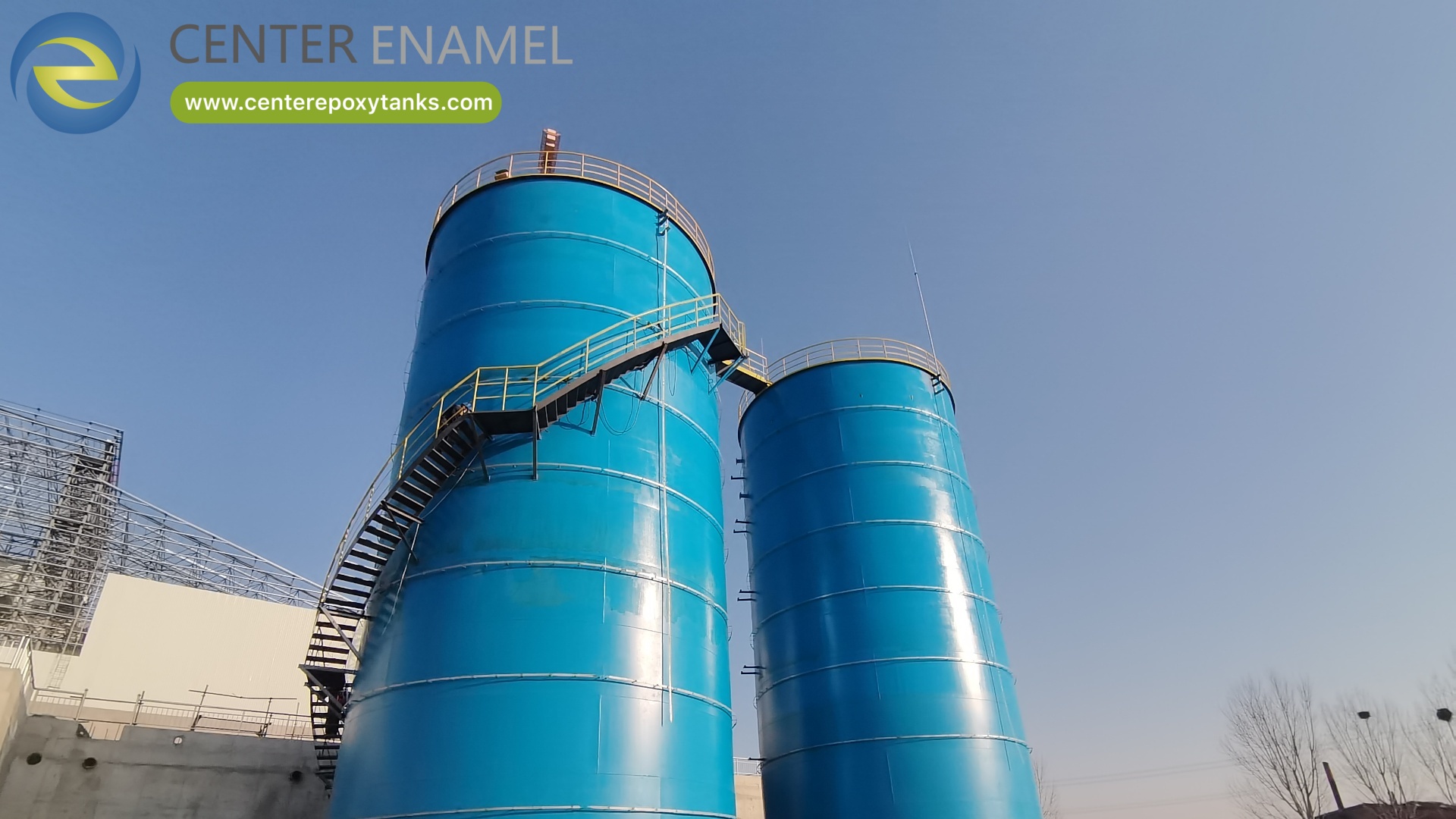
Waste Cooking Oil Tanks for the Biodiesel Industry: Engineering Feedstock Stability
How do specialized storage solutions prevent feedstock degradation and structural corrosion in high-acid Waste Cooking Oil (WCO) environments? As a critical feedstock for biodiesel and Sustainable Aviation Fuel (SAF), WCO presents unique challenges: high Free Fatty Acid (FFA) content, variable moisture levels, and solid impurities that can compromise standard carbon steel vessels.
Shijiazhuang Zhengzhong Technology Co., Ltd (Center Enamel), a premier China Waste Cooking Oil Tank Manufacturer, provides API 650-certified containment infrastructure. By integrating specialized chemical-resistant linings and Aluminum Dome Roofs, we deliver engineered assets that ensure feedstock purity and structural longevity in over 100 countries.
1. Managing the Chemical Volatility of WCO Feedstock
In a Biodiesel Facility for the chemical industry, a Waste Cooking Oil Tank is an active processing component. Engineering for WCO requires addressing four critical stressors:
● FFA Corrosion Mitigation: High acid values in used oils can lead to rapid pitting. We utilize high-grade carbon steel enhanced with phenolic epoxy linings or 300-series stainless steel alloys to neutralize the corrosive impact of organic acids.
● Thermal Viscosity Control: WCO can solidify at low temperatures. Our tanks feature integrated steam coils or external heating jackets to maintain optimal pumpability and facilitate the separation of water and solids.
● Moisture & Sediment Drainage: Water promotes hydrolysis, which increases FFA levels and degrades oil quality. Our designs feature precision-sloped bottoms and dedicated sumps for the efficient removal of "foots" (sediments) and water.
● Oxidation Prevention: To prevent the polymerization of fats, our tanks are equipped for nitrogen blanketing, maintaining an inert atmosphere that preserves chemical stability before transesterification.
2. Core Engineering: API 650 Structural Mastery
As a leading manufacturer, Center Enamel focuses on high-specification fabrication to meet the safety requirements of the global energy sector:
● API 650 Adherence: Every Waste Cooking Oil Tank is engineered to handle specific gravity loads, seismic forces, and internal pressures as mandated by international safety codes.
● Automated Welding & NDT: We utilize automated welding systems to ensure full-penetration, monolithic seams. Every critical weld undergoes Non-Destructive Testing (NDT), including ultrasonic and radiographic verification.
● Maintenance Access: Given the high sediment content of WCO, our tanks include reinforced, large-diameter cleanout manways, allowing for residue removal without compromising shell integrity.
3. Comparison: Modular FBE vs. Traditional Storage for Biofuels
For 2026 renewable energy projects, the Total Cost of Ownership (TCO) favors engineered bolted or specialized welded solutions:
Feature | Standard Carbon Steel | Concrete Basins | Center Enamel WCO Solutions |
Acid Resistance | Low (Corrodes quickly) | Poor (Porous/Cracks) | High (Chemical-Grade Linings) |
Thermal Management | Difficult to insulate | None | Integrated Heating Systems |
Purity Control | Low (Scale buildup) | Poor | Smooth Seams/Inert Barriers |
Roof Protection | Steel (Heavy/Rusts) | N/A | Aluminum Dome (Corrosion-Free) |
Service Life | 10–15 Years | Variable | 30+ Years (API 650 Certified) |
4. Strategic Protection: Aluminum Geodesic Dome Roofs
For large-scale WCO collection hubs, protecting the asset from environmental ingress is vital.
● Biogenic Corrosion Immunity: Naturally resistant to the industrial vapors found in biodiesel refineries.
● Thermal Efficiency: The reflective surface of the Aluminum Dome Roof manages solar heat gain, reducing the energy required for internal temperature regulation.
● Environmental Seal: Prevents rainwater ingress, which is the primary cause of acidic sludge formation at the tank bottom.
5. Versatility Across the Biofuel Value Chain
Center Enamel’s infrastructure supports every stage of the green energy transition:
● Urban Collection Hubs: Large-capacity reception points for regional oil consolidation.
● Pretreatment Settling: Vessels where heat is applied to separate usable oil from water and impurities.
● SAF Production: High-specification tanks providing the ultra-pure environment required for advanced hydroprocessing.


