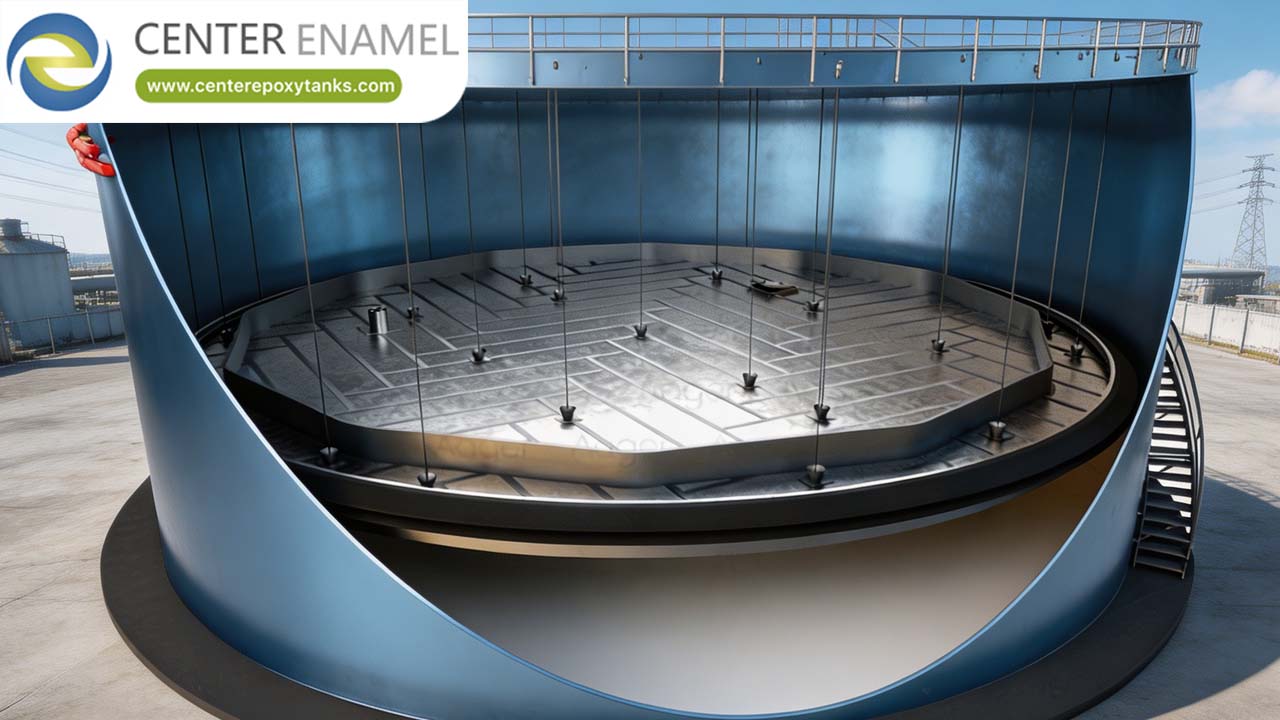
Internal Floating Roofs with Advanced Seal Technology for Leak Prevention: The Ultimate Guide to Fugitive Emission Control
In the petrochemical, refining, and bulk liquid storage industries, managing volatile organic compounds (VOCs) and hazardous air pollutants is both an environmental imperative and a strict regulatory requirement. When storing volatile products like gasoline, crude oil, jet fuel, and high-aromatic chemicals inside fixed-roof tanks, fugitive emissions typically escape through the rim space—the annular gap between the outer edge of the floating deck and the internal tank wall.
To eliminate this vapor loss path, modern facilities rely on Internal Floating Roofs (IFRs) equipped with advanced seal technology. By combining a mobile, buoyant deck structure with high-performance primary and secondary rim seals, operators can achieve near-absolute containment, prevent product degradation, and maintain compliance with stringent international emissions standards.
Engineering Mechanics of Advanced Rim Seals
The efficiency of an internal floating roof system relies heavily on the continuous physical barrier provided by its sealing assembly. Because steel tank walls often feature minor out-of-roundness, weld seams, and surface irregularities, advanced seal technologies are engineered to maintain constant radial pressure against the shell:
Vapor-Mounted and Liquid-Mounted Configurations: Primary seals can be vapor-mounted (bridging the gap between the liquid surface and the deck rim) or liquid-mounted (immersed directly into the product surface to eliminate the vapor pocket entirely).
Elastic Wiper Seals: Utilizing high-grade polyurethane or fluoropolymer (PTFE) formulations, single and double wiper seals provide flexible, continuous wiping action against the tank wall, effectively sweeping down liquid films and trapping escaping vapors.
Mechanical Shoe Seals: Featuring a continuous ring of galvanized or stainless steel shoes pressed firmly against the tank wall by a pantograph or weighted spring mechanism, mechanical shoes offer exceptional durability and superior resistance to wear in aggressive chemical environments.
Dual-Seal Redundancy: Pairing a resilient primary seal with a high-performance secondary wiper seal creates a dual-barrier system that reduces evaporative losses by over 95% compared to single-seal configurations, satisfying the most rigorous environmental mandates.
Data Table: Comparison of Advanced Tank Seal Technologies
Seal Technology Type | Primary Mechanism | Chemical & Aromatic Compatibility | Typical Lifespan | Primary Industrial Application |
Single Wiper Seal | Flexible elastic synthetic/polyethylene lip contacting shell | Moderate; standard refined products | 8 – 12 Years | Diesel, kerosene, and low-volatility fuel storage |
Double Wiper Seal | Dual redundant elastomer/polyethylene lips for vapor trapping | High; resistant to standard petroleum fractions | 10 – 15 Years | Gasoline and general volatile liquid containment |
Foam-Filled Envelope Seal | Enclosed polyurethane foam core wrapped in PTFE/nylon | Excellent; high resistance to BTX and aromatics | 10 – 20 Years | Chemical terminals and high-aromatic hydrocarbons |
Mechanical Shoe Seal | Metallic sliding shoes with internal spring/pantograph pressure | Maximum; unaffected by harsh solvent exposures | 15 – 25+ Years | Crude oil tanks and heavy industrial petroleum service |
Regulatory Compliance and Environmental Impact
Adhering to global engineering frameworks—principally API 650 Appendix H for design and API 653 for in-service evaluation—ensures that internal floating roofs and their sealing systems deliver long-term reliability. Advanced sealing systems assist facility operators in achieving critical business objectives:
Drastic Reduction of VOC Emissions: Halting evaporative breathing and working losses protects local air quality and prevents valuable product loss.
Enhanced Fire and Explosion Safety: Minimizing the vapor space beneath the fixed roof keeps hydrocarbon concentrations above the upper explosive limit (UEL) or well-controlled, significantly lowering ignition risks.
Low Maintenance Operation: Modern synthetic and stainless-steel seal components resist abrasion and chemical degradation, reducing the frequency of costly tank downtime and manual inspections.
Frequently Asked Questions (FAQ)
Q: What is the primary purpose of advanced seal technology on an internal floating roof?
A: Advanced seal technologies close the annular gap between the internal floating roof and the tank wall, preventing fugitive Volatile Organic Compound (VOC) emissions, reducing product evaporation, and eliminating explosive vapor pockets.
Q: What is the difference between a single wiper seal and a double wiper seal?
A: A single wiper seal uses one flexible lip barrier to contain vapors, whereas a double wiper seal incorporates two sequential sealing tiers. The dual configuration provides secondary backup protection, dramatically increasing sealing efficiency and compliance safety.
Q: Are advanced IFR seals compatible with high-aromatic products like BTX?
A: Yes. For aggressive chemicals and high-aromatic products (such as Benzene, Toluene, and Xylene), specialized seals utilize inert PTFE (Teflon) envelope materials and fluoropolymer coatings that resist chemical degradation and swelling.
Q: Can new advanced seals be retrofitted into existing storage tanks?
A: Absolutely. Advanced primary and secondary seal assemblies can be custom-engineered and installed on existing internal floating roofs during routine maintenance windows or while tanks remain in service, depending on regulatory and operational protocols.


