Internal Floating Roofs (IFR) for Oil & Gas Storage: Engineering & Compliance Guide
For the midstream oil and gas sector and petrochemical refineries, managing product evaporation is both an environmental mandate and an operational necessity. Internal Floating Roofs (IFR) are the industry-preferred engineering solution for fixed-roof tanks storing volatile organic liquids. By floating directly on the product surface, an IFR minimizes the vapor space, suppressing Volatile Organic Compound (VOC) emissions by over 90% while simultaneously mitigating fire and explosion risks.
1. Technical Mechanics: Engineering for Vapor Suppression
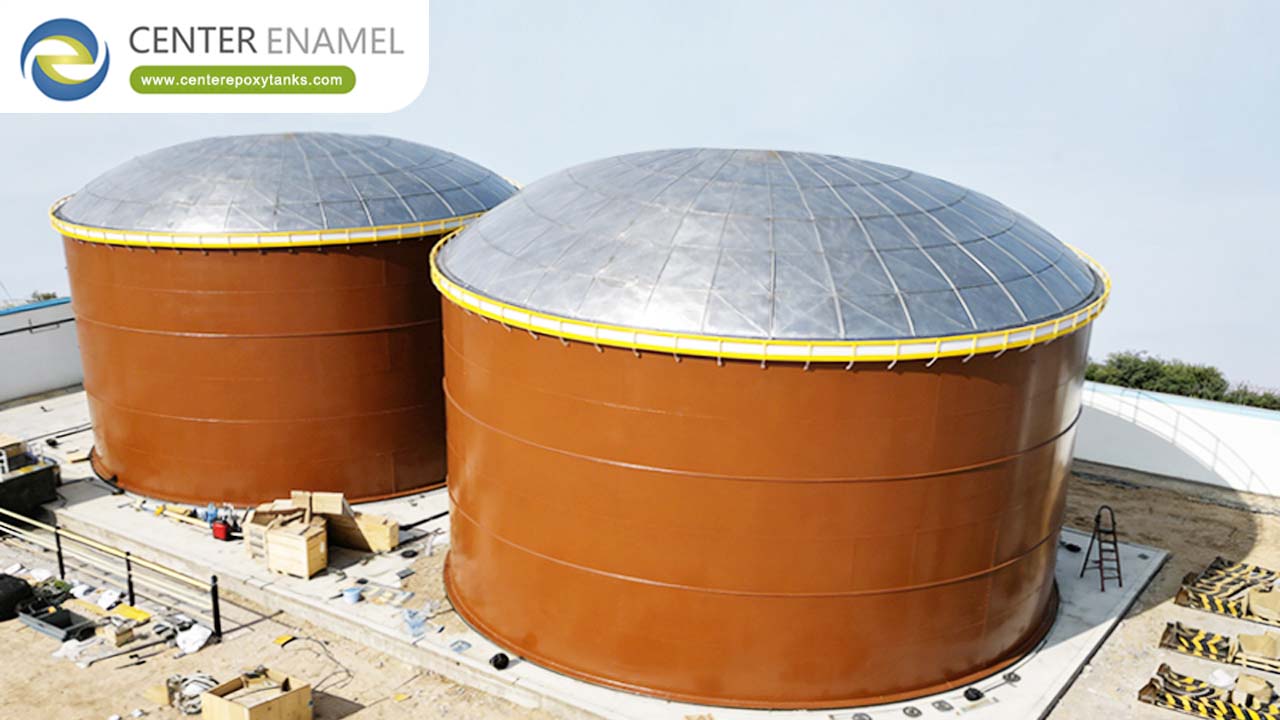
An Internal Floating Roof is a circular deck that rests on the liquid surface inside a closed-top storage tank. Unlike external systems, the IFR operates in a controlled environment protected by a fixed roof (often a steel cone or aluminum geodesic dome), insulating the roof from weather, wind, and debris.
API 650 Appendix H Compliance
The design and installation of IFRs are governed by API Standard 650, Appendix H. This standard dictates the essential requirements for:
● Buoyancy & Structural Integrity: Ensuring the roof can support its own weight plus designated live loads without sinking or binding.
● Seal Systems: Mandatory perimeter seals (primary and secondary) that maintain contact with the tank wall to prevent vapor leakage.
● Penetrations & Appurtenances: Strict specifications for drains, vents, and gauge poles to ensure the roof’s integrity is not compromised by necessary equipment.
2. Comparison Matrix: IFR vs. EFR and Fixed Roofs
Feature | Internal Floating Roof (IFR) | External Floating Roof (EFR) | Fixed Roof (No IFR) |
Emission Control | Excellent (90–99% reduction) | High | Poor (High evaporation) |
Weather Protection | High (Sheltered by fixed roof) | None (Exposed) | N/A |
Maintenance | Low (Internal protection) | Moderate (Weather degradation) | Low |
Fire Safety | High (Minimal vapor space) | Moderate (Rim seal risk) | Low |
Operational Scope | Volatile Liquids (Gasoline, Crude) | Large Crude Storage | Non-volatile (Water, Bunker) |
3. Core Advantages for Oil & Gas Operators
VOC & Environmental Compliance
As regulatory agencies tighten limits on hazardous air pollutants, IFRs provide the most cost-effective path to compliance. By eliminating the vapor space, they prevent the "breathing losses" that occur in standard fixed-roof tanks when ambient temperatures fluctuate.
Product Quality & Purity
Because the IFR acts as a physical barrier between the liquid and the atmosphere, it prevents product degradation. This is critical for storing refined fuels, aviation gasoline, and high-purity chemicals where contamination or oxidation can result in significant financial losses.
Safety & Fire Mitigation
The formation of flammable vapor-air mixtures is the primary cause of tank fires. By minimizing the volume of air trapped between the liquid and the roof, IFRs remove the "fuel" from the fire triangle, significantly enhancing the safety profile of the tank farm.
4. Frequently Asked Questions (FAQ)
Q: Can an IFR be retrofitted into an existing fixed-roof tank?
A: Yes. One of the primary advantages of IFR systems—especially aluminum-based modular designs—is that they can be retrofitted into existing tanks. This allows operators to upgrade their emission control capabilities without the cost of constructing a new vessel.
Q: What is the difference between primary and secondary seals?
A: A primary seal is the main barrier that contacts the tank wall to prevent vapor escape. A secondary seal is an additional "wiper" or "shoe" seal installed above the primary seal to provide a redundant layer of protection, further reducing emissions and meeting more stringent environmental standards.
Q: How do I choose between aluminum and steel for my IFR?
A: Aluminum IFRs are lightweight, corrosion-resistant, and easier to install, making them the standard for most modern applications. Steel IFRs may be preferred in highly specific chemical environments where aluminum is not compatible, though they require more frequent painting and maintenance.
Engineering Certainty for Your Tank Farm
Selecting an Internal Floating Roof is a critical investment in your facility’s environmental, safety, and operational performance. By adhering to API 650 Appendix H standards and utilizing modern, high-performance sealing systems, you ensure your tank farm operates at peak efficiency while meeting global emission standards.
Are you currently retrofitting an existing storage tank for emission compliance, or are you in the design phase for a new high-volatility fuel storage project?


