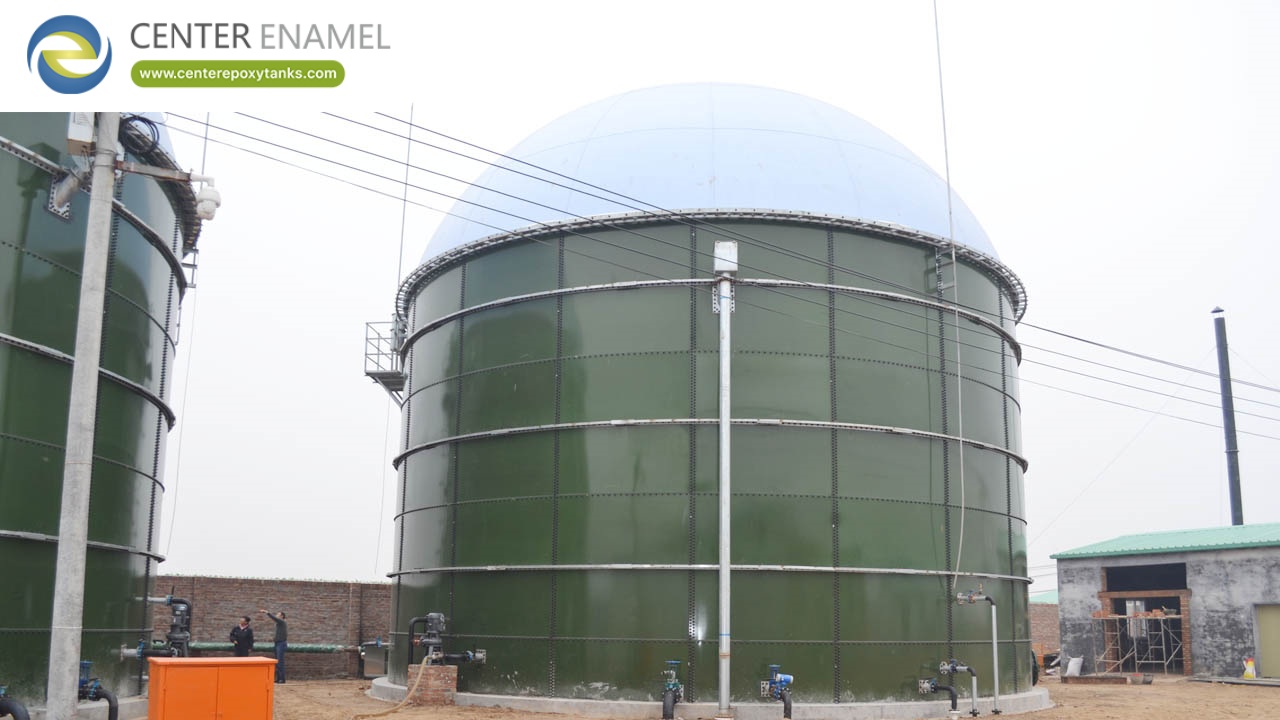
Bolted Steel Tanks as Digester Tanks: Advanced Solutions for Anaerobic Digestion and Biogas Production
As global industries and municipalities accelerate their transition toward carbon neutrality and circular bio-economies, efficient organic waste management has become a critical pillar of modern environmental infrastructure. Anaerobic digestion (AD) plays a pivotal role in this green shift, converting municipal sewage sludge, agricultural livestock waste, food processing byproducts, and industrial organic effluents into valuable bio-resources and clean, renewable energy.
At the center of any successful anaerobic digestion system lies the primary containment vessel: the digester tank. Operating an efficient digester requires navigating severe physical and chemical constraints, including biogenic sulfide corrosion, variable thermal ranges, and strict gas-tight sealing requirements. To meet these rigorous demands, asset owners and plant designers increasingly rely on Bolted Steel Tanks—specifically Glass-Fused-to-Steel (GFS) technology. As a pioneering global manufacturer with over three decades of expertise, Shijiazhuang Zhengzhong Technology Co., Ltd. (Center Enamel) delivers world-class bolted steel digester tanks engineered for maximum durability, structural safety, and long-term energy yields.
Engineering Requirements for High-Performance Digester Tanks
Anaerobic digestion is a biological process where microorganisms break down biodegradable material in an oxygen-free environment. This process generates nutrient-rich digestate and biogas—a methane-rich gas mixture utilized for heat and power generation. However, the internal environment of a commercial digester creates extreme stress on containment structures:
Aggressive Biogenic Corrosion: The biological decomposition of organic wastes releases moisture vapor, carbon dioxide (CO2), and hydrogen sulfide (H2S), creating a highly corrosive headspace that rapidly attacks unprotected carbon steel or unlined concrete.
Absolute Gas-Tight Integrity: Preventing fugitive methane leaks is paramount for maintaining maximum energy recovery, operational safety, and strict compliance with environmental regulations.
Thermal Stability: To sustain active methanogenic bacterial activity (whether operating in mesophilic or thermophilic temperature ranges), digester tanks must maintain stable internal conditions despite external ambient temperature fluctuations.
The Core Advantages of Center Enamel Bolted Steel Digester Tanks
Center Enamel's bolted steel tanks—available in both Glass-Fused-to-Steel (GFS) and advanced Fusion Bonded Epoxy (FBE) configurations—are engineered specifically to conquer the harsh conditions of anaerobic digestion:
Superior Corrosion Resistance: Glass-Fused-to-Steel technology fuses high-performance inorganic glass enamel to both interior and exterior steel surfaces at temperatures ranging from 820°C to 930°C. This creates an impermeable, chemically inert barrier that completely resists organic acids, sulfides, and abrasive sludge slurries.
Rapid Modular Erection: Unlike poured-in-place concrete basins that require weeks of formwork, pouring, and curing, Center Enamel's modular bolted tanks are prefabricated in an ISO 9001-certified factory. They are shipped in compact panels and rapidly erected on-site using specialized hydraulic jacks, drastically cutting construction time and labor costs.
Integrated Biogas Headspace Solutions: Center Enamel designs custom structural roof options, including aluminum geodesic domes and double-membrane gas holder roofs, ensuring airtight biogas containment and efficient gas-to-energy harvesting.
Long-Term Lifecycle Economy: With a proven service life exceeding 30 years, these tanks require minimal maintenance, eliminating the recurring recoating costs associated with traditional welded steel alternatives.
Data Table: Digester Tank Technology Comparison Matrix
Technical Parameter | Center Enamel Bolted Glass-Fused-to-Steel (GFS) Digesters | Traditional Field-Welded Steel Tanks | Poured-in-Place Concrete Digester Basins |
Surface Protection | Factory-fused inorganic glass enamel on both sides | Field-applied liquid paints or epoxy coatings | Unlined concrete or variable waterproofing membranes |
Corrosion Resistance | Exceptional resistance to biological acids, $H_2S$, and sludge abrasion | Moderate; vulnerable to pinhole corrosion in the headspace | High vulnerability to sulfate attack and concrete spalling |
Installation Speed | Rapid modular bolted assembly completed in weeks | Slow; requires intensive on-site welding and NDT testing | Extremely slow; multi-week formwork, pouring, and curing |
Gas-Tight Reliability | Engineered silicone seals and gaskets ensuring absolute methane containment | Dependent on field weld quality and continuous inspection | Prone to micro-cracking and joint gas leakage over time |
Governing Standards | AWWA D103-09, ISO 28765, ISO 9001 | API 650 / Standard industrial guidelines | ACI Structural Concrete Standards |
Global Applications across Municipal and Industrial Sectors
Center Enamel's bolted steel digester tanks are deployed worldwide across a diverse spectrum of waste-to-energy and waste management applications:
Municipal Wastewater Treatment Plants (WWTPs): Utilizing GFS tanks as primary and secondary sludge digesters to reduce sludge volume while harvesting methane.
Agricultural Biogas Plants: Processing animal manure and crop residues in Completely Stirred Tank Reactors (CSTR) to generate clean farm energy.
Food and Beverage Processing Facilities: Treating high-strength organic industrial wastewater and converting food waste slurry into usable biogas.
Frequently Asked Questions (FAQ)
Q: Why are bolted Glass-Fused-to-Steel tanks preferred for anaerobic digesters?
A: GFS tanks combine the high structural tensile strength of steel with the chemical inertness of glass. This dual-sided fusion provides exceptional resistance to corrosive biogenic gases (H2S and CO2) and abrasive sludge, ensuring a 30+ year operational lifespan with minimal upkeep.
Q: Can bolted steel digester tanks safely contain biogas without leaking?
A: Yes. Center Enamel's digester tanks are engineered with specialized industrial sealing systems and gas-tight roof configurations (such as double-membrane gas holders) to ensure absolute gas-tight integrity, preventing methane loss and maintaining safe operating pressures.
Q: How do bolted steel digesters compare to concrete tanks in terms of construction timeline?
A: Bolted steel tanks are prefabricated in a controlled factory setting and assembled modularly on-site, reducing construction time to a fraction of the weeks or months required for concrete formwork, pouring, and curing.
Q: What international standards do Center Enamel digester tanks comply with?
A: Center Enamel manufactures its bolted steel tanks in strict compliance with globally recognized engineering benchmarks, including AWWA D103-09, ISO 28765, and ISO 9001 quality management systems.


