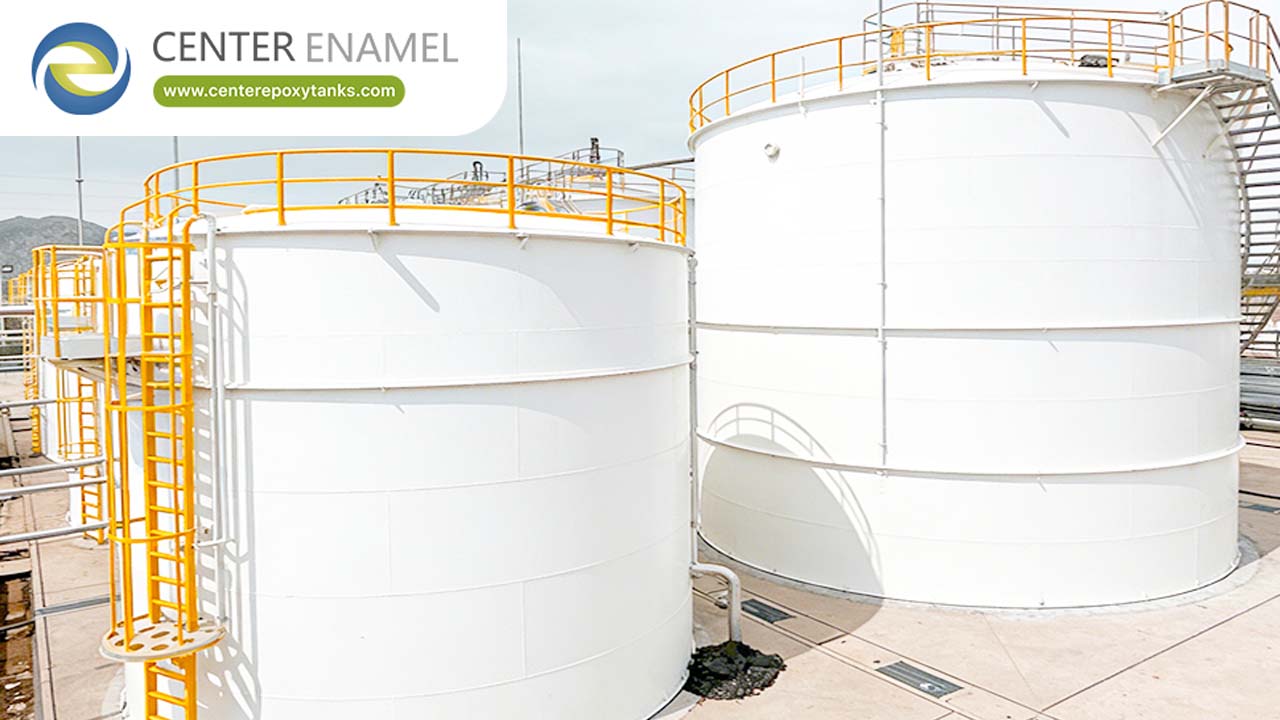
How Epoxy Linings Protect Industrial Fuel Storage Tanks
In the industrial storage sector, the containment of volatile fuels—such as diesel, aviation kerosene, and heating oil—is a high-stakes engineering challenge. While carbon steel provides the requisite structural strength to hold massive volumes of liquid, it is inherently reactive. Without internal protection, the aggressive combination of stored fuel, condensation, and biological contaminants creates a high-risk environment for structural failure.
Epoxy linings are the industry’s most effective defense against this degradation. As a global manufacturer, Center Enamel utilizes advanced epoxy coating technologies to ensure that our industrial fuel storage tanks remain impervious to the chemical and biological threats that compromise lesser storage systems.
The Threat: Why Unlined Tanks Fail
Fuel tank corrosion is rarely caused by the fuel itself. Instead, the damage stems from what accumulates under the fuel:
The "Water Bottom" Problem: Even in refined fuels, trace amounts of water are present. Through condensation caused by temperature swings, this water settles at the tank bottom. This creates a corrosive, oxygenated zone that rapidly attacks the steel floor and lower shell rings.
Microbially Influenced Corrosion (MIC): Fuel-water interfaces are breeding grounds for bacteria, fungi, and yeasts. These organisms consume hydrocarbons and secrete acidic byproducts. This acidic biofilm acts like a chemical "sponge," concentrating acids directly against the tank walls and causing accelerated pitting corrosion.
Chemical Separation: Additives in modern fuels and biofuels can cause chemical separation, leading to concentrated layers that corrode standard carbon steel faster than raw petroleum.
How Epoxy Linings Provide Protection
An industrial-grade epoxy lining acts as a multi-layered shield that fundamentally changes the chemistry of the tank’s internal surface.
1. Barrier Isolation
Epoxy resins form a cross-linked, thermosetting polymer layer that is essentially impermeable. By completely sealing the steel, the epoxy prevents water and acidic microbes from ever contacting the tank shell. No contact means no corrosion.
2. High Chemical Inertness
Unlike standard industrial paints, high-performance epoxies are specifically formulated to resist solvents, aromatic hydrocarbons (benzene, toluene), and the aggressive organic acids produced by microbial activity. They do not soften, bubble, or peel in the presence of fuels.
3. Superior Adhesion (The Anchor Profile)
Center Enamel’s application process involves grit-blasting the steel panels to create a precise surface profile before coating. This mechanical "anchor" ensures the epoxy bonds at a molecular level, preventing delamination—even when the tank undergoes thermal expansion or contraction.
Comparative Analysis: Tank Protection Strategies
Feature | Unlined Carbon Steel | Field-Applied Coating | Factory-Applied Epoxy (Center Enamel) |
Corrosion Resistance | Low (Rapid rusting) | Moderate (Risk of defects) | Extreme |
Quality Control | N/A | Variable (Weather/Site dependent) | High (Climate-controlled) |
Installation Speed | Fast | Slow (Curing times) | Fast (Bolted modular assembly) |
Lifespan | Short | Moderate | Long-term (20+ years) |
The "Factory-Applied" Advantage
The most significant differentiator in tank protection is where the lining is applied. Many storage solutions rely on field-sprayed coatings, which are prone to "holidays" (microscopic pinholes), uneven thickness, and contamination from on-site dust or humidity.
Center Enamel utilizes a modular, factory-applied epoxy approach:
Climate Control: Coating application occurs in a controlled indoor facility, eliminating moisture and dust interference.
Precision Thickness: Automated systems ensure a uniform coating across every inch of the steel panel.
Non-Destructive Testing: We perform high-voltage "holiday" testing on every panel before it leaves the factory to ensure 100% barrier integrity.
Frequently Asked Questions (FAQ)
Q: Does an epoxy lining prevent the need for tank cleaning?
A: No. While epoxy linings significantly reduce corrosion-related maintenance, industrial fuel tanks still require routine inspection and sludge removal to maintain fuel purity. However, the smooth surface of the epoxy makes the cleaning process significantly faster and more effective than cleaning a pitted, rusted steel surface.
Q: Are your epoxy linings compliant with API standards?
A: Yes. Center Enamel’s coating specifications are designed to align with API 652, the standard for the lining of aboveground petroleum storage tank bottoms. Our engineering team ensures all linings are compatible with the specific chemical profile of the fuel being stored.
Q: Can epoxy-lined tanks store biofuels like biodiesel?
A: Yes. Biofuels are often more hygroscopic (water-attracting) and prone to microbial growth than traditional diesel. Our epoxy linings are specifically tested for resistance to the organic acids found in biodiesel, making them an excellent choice for modern renewable fuel storage.
Q: How long will a factory-applied epoxy lining last?
A: Under normal operating conditions and with proper maintenance, a factory-applied epoxy lining can provide 20 to 30 years of protection, dramatically outperforming standard field-applied coatings and extending the overall structural lifespan of the tank.
Are you planning an industrial fuel storage project? [Contact Center Enamel’s technical team] today to request a coating specification sheet or a quote for your project.


