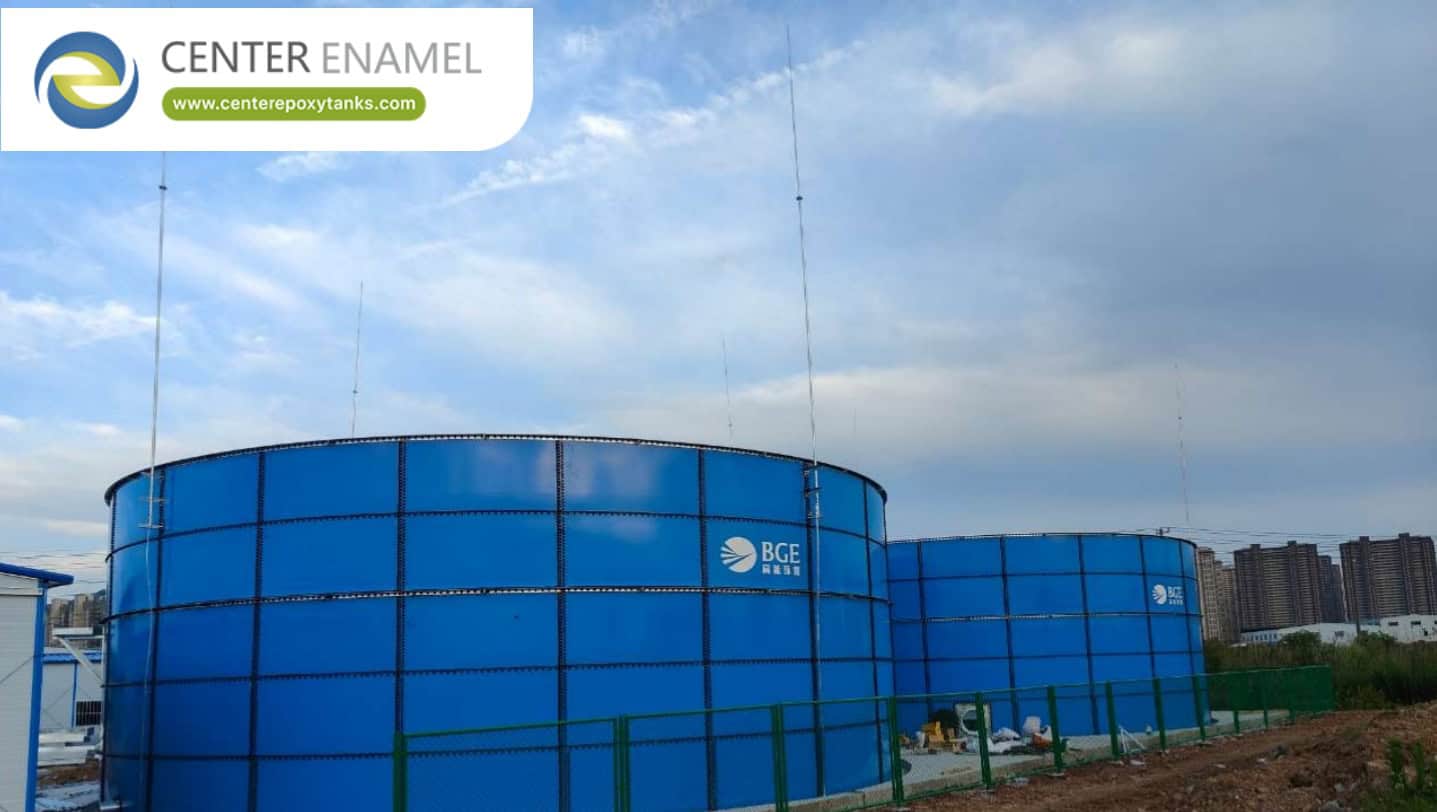
Epoxy Coated Steel Tanks for Livestock Wastewater Treatment Projects: Engineering Durability and Environmental Compliance
Intensive livestock farming operations—including large-scale dairy, swine, and poultry facilities—generate immense quantities of high-strength organic wastewater. Characterized by elevated chemical oxygen demand (COD), biological oxygen demand (BOD), high suspended solids, volatile fatty acids, and high concentrations of nitrogen and phosphorus, livestock effluent represents a severe containment challenge.
If stored or treated in substandard infrastructure, raw manure and flush water rapidly degrade containment walls, leading to groundwater contamination, noxious odor emissions, and severe environmental regulatory penalties. To ensure safe, long-term containment and efficient biological processing, modern agricultural operations increasingly rely on advanced epoxy coated steel tanks for livestock wastewater treatment, combining the tensile strength of industrial carbon steel with the inert protection of advanced thermoset polymer linings.
Core Operational Challenges in Livestock Wastewater Treatment
Designing storage and treatment tanks for agricultural effluent requires overcoming several aggressive chemical and physical hurdles:
High Biochemical Aggressiveness: As organic manure and washwater decompose, they generate organic acids, ammonia compounds, and trace hydrogen sulfide (H2S) gases. These byproducts create a corrosive internal matrix that quickly attacks unprotected metals and causes concrete spalling.
Sludge Accumulation and Abrasion: Settled solids, sand, and grit create abrasive scouring actions along tank floors and lower walls during mixing and withdrawal cycles, demanding exceptionally durable interior surface finishes.
Strict Environmental Mandates: Regulatory bodies enforce zero-leakage standards and rigorous secondary containment protocols to protect surrounding watersheds and agricultural ecosystems.
Engineering Superiority: Fusion Bonded Epoxy (FBE) Technology
To protect containment structures from chemical attack without incurring the prolonged timelines of civil construction, modern wastewater treatment facilities utilize factory-applied fusion bonded epoxy tanks:
Controlled Factory Application: High-tensile steel plates undergo rigorous abrasive grit-blasting followed by electrostatic powder spraying of specialized thermoset epoxy resins under strict, climate-controlled factory conditions.
Thermal Cross-Linking: The epoxy powder is baked at elevated temperatures to trigger an irreversible chemical cross-linking process, fusing the polymer directly into the steel substrate to create a smooth, non-porous, chemically inert barrier.
Enhanced Thickness and Holiday Testing: Specialized heavy-duty formulations (such as FBE-1500V systems) are engineered specifically for aggressive sewage and wastewater environments, undergoing 1500V high-voltage holiday spark testing to guarantee zero pinholes or coating voids.
Technical Performance Matrix: Livestock Wastewater Containment Solutions
Technical Parameter | Factory-Applied FBE Bolted Steel Tanks | Cast-in-Place Concrete Basins | Field-Welded Carbon Steel Tanks |
Corrosion & Effluent Resistance | High resistance to organic acids, manure slurries, and biological wastewater | Susceptible to concrete carbonation, chemical leaching, and manure-induced spalling | Prone to internal oxidation and weld-seam pitting without constant recoating |
Construction Velocity & Modularity | Rapid modular bolted assembly completed in weeks by local crews | Slow civil construction requiring extensive formwork and multi-week curing | Slow, labor-intensive field welding and weather-dependent coating inspections |
Structural Scalability & Relocation | Modular design allows easy panel addition, capacity upgrades, or future relocation | Permanent monolithic structure; impossible to modify, expand, or relocate easily | Fixed structure requiring complex cutting, hot work, and re-welding |
Maintenance & Lifecycle | Low ongoing upkeep; smooth surface resists solid accumulation and scaling | High repair costs if structural micro-cracking or settling occurs | High ongoing maintenance overhead for periodic sandblasting and repainting |
Frequently Asked Questions (FAQ)
Q: Why are epoxy-coated steel tanks ideal for livestock wastewater treatment projects?
A: Epoxy-coated steel tanks provide an optimal balance of structural strength and chemical durability. Their factory-applied fusion bonded epoxy coating forms an impermeable barrier against corrosive manure slurries, organic acids, and biological byproducts, ensuring a long operational lifespan with minimal maintenance.
Q: How do FBE coatings protect against hydrogen sulfide and organic acids in manure wastewater?
A: The thermoset epoxy coating is chemically inert and non-porous, completely isolating the underlying steel substrate from direct contact with corrosive gases like hydrogen sulfide (H2S), moisture, and volatile fatty acids generated during wastewater decomposition.
Q: Can epoxy-coated wastewater tanks be expanded if a livestock farm increases its herd size?
A: Yes. Because these tanks feature a modular bolted panel construction, facility operators can easily unbolt and add vertical rings or lateral panels to increase storage volume as farm capacity expands, avoiding the need to build an entirely new tank.
Q: What maintenance is required for epoxy-coated effluent storage and treatment tanks?
A: Maintenance is minimal compared to concrete or field-painted steel. Routine upkeep involves inspecting exterior bolt torque, checking perimeter seal integrity, and periodically clearing accumulated organic sludge from the tank floor to maintain optimal treatment capacity.


