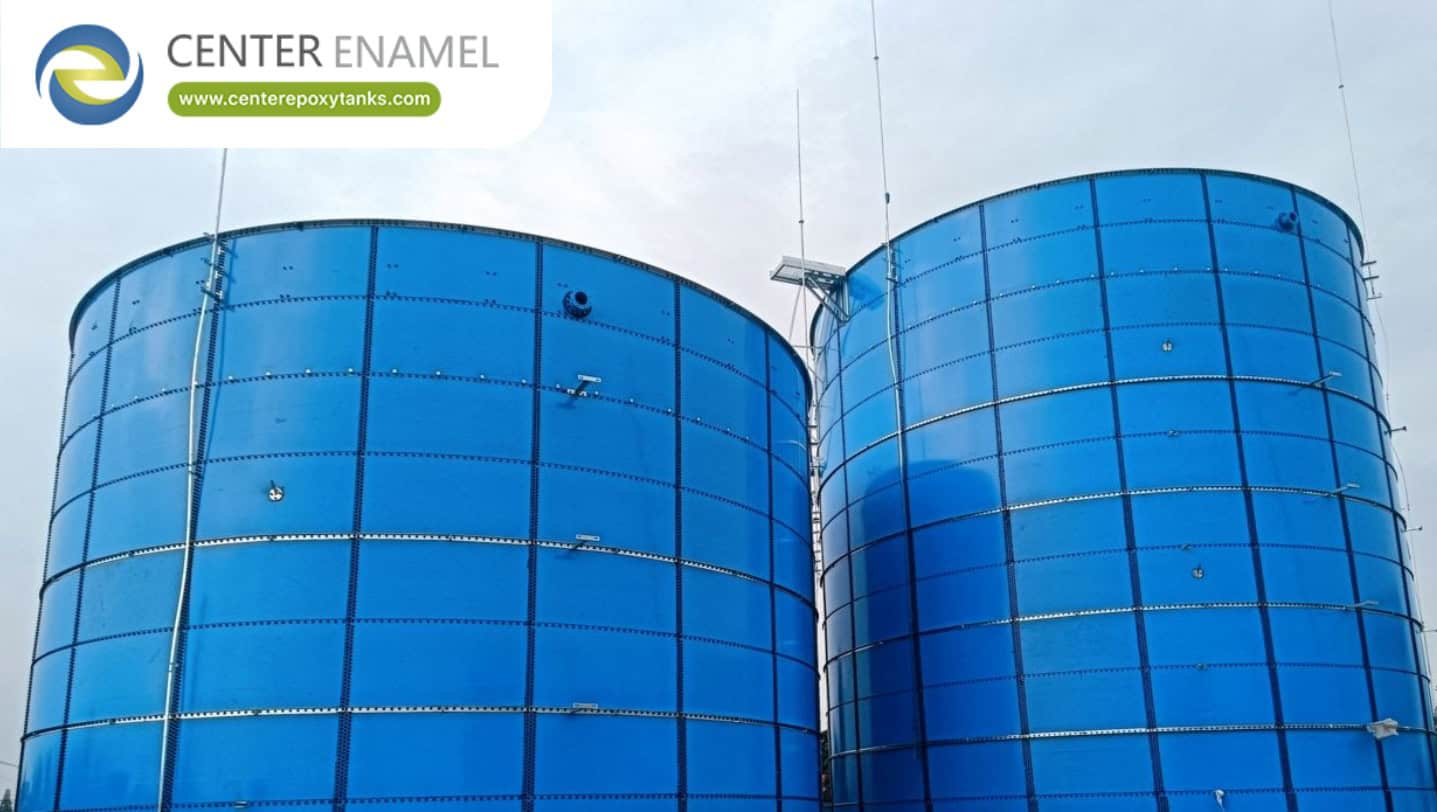
Epoxy Coated Steel Tanks for Efficient Irrigation Water Collection: Maximizing Agricultural Productivity and Water Security
In modern agricultural operations, water management serves as the absolute backbone of crop yields, livestock health, and long-term farm profitability. Whether managing harvested rainwater, surface runoff, river extraction, or treated agricultural wastewater, farms require reliable, high-capacity storage infrastructure capable of withstanding harsh environmental conditions.
Traditional storage options—such as unlined earthen ponds, degrading concrete basins, or fragile plastic tanks—often suffer from high evaporation rates, structural cracking, liner tears, and heavy algae growth. To eliminate these vulnerabilities, modern agricultural enterprises increasingly standardize on advanced epoxy coated steel tanks for irrigation water collection, combining the immense structural tensile strength of industrial steel with the inert chemical protection of specialized polymer coatings.
Core Engineering Advantages in Agricultural Water Storage
Irrigation water is rarely chemically neutral; it frequently contains dissolved minerals, residual fertilizers, organic particles, and varying pH levels that rapidly corrode untreated carbon steel or degrade porous concrete. Epoxy-coated bolted steel tanks resolve these challenges through precision manufacturing:
Factory-Controlled Fusion Bonding: Unlike field-applied paints vulnerable to ambient humidity and human error, high-performance epoxy coatings are applied via electrostatic spray processes and thermally cured in strict factory environments. This forms a smooth, non-porous, chemically inert barrier that completely isolates the steel from corrosive water agents.
Prevention of Biofilm and Algae Growth: The ultra-smooth inner finish inhibits microbial adhesion and algae accumulation, keeping stored irrigation water clean and preventing drip-irrigation emitter clogging.
High-Capacity Structural Resilience: Built to withstand millions of gallons of liquid weight without warping or structural fatigue, steel tanks ensure secure water reserves even during peak summer drought periods.
Technical Performance Matrix: Irrigation Storage Solutions
Technical Parameter | Factory-Applied Epoxy-Coated Bolted Steel Tanks | Cast-in-Place Concrete Basins | Flexible Plastic or Fiberglass Tanks |
Corrosion & Mineral Resistance | High resistance to dissolved minerals, fertilizers, and mild chemical treatments | Prone to concrete carbonation, leaching, and surface spalling over time | Vulnerable to UV degradation, thermal warping, and micro-cracking |
Construction Velocity | Rapid modular bolted assembly completed in days to weeks | Slow civil construction requiring extensive formwork and multi-week curing | Moderate setup speed, but limited in maximum volume capacity |
Structural Scalability & Relocation | Modular design allows easy panel addition, capacity expansion, or relocation | Permanent monolithic structure; impossible to expand or relocate | Fixed capacity; cannot be structurally expanded once manufactured |
Maintenance & Lifecycle | Low ongoing upkeep; smooth surface resists scaling and sediment buildup | High repair costs if structural micro-cracking or settling occurs | Prone to weathering, requiring frequent patch repairs or full replacement |
Operational Efficiency for Modern Farming Operations
Agricultural schedules operate under tight seasonal windows where water availability can dictate harvest success. Epoxy-coated steel tanks deliver distinct operational efficiencies:
Rapid Deployment: Prefabricated bolted panels ship efficiently to remote farming sites and assemble rapidly using lightweight mechanical equipment, drastically reducing construction downtime.
Scalable Architecture: As farm acreage or irrigation demands grow, modular steel tanks can be unbolted and expanded by adding vertical or horizontal panel rings.
Climate Adaptability: Engineered to withstand extreme temperature fluctuations, high wind loads, and seismic shifts without structural failure.
Frequently Asked Questions (FAQ)
Q: Why are epoxy-coated steel tanks ideal for agricultural irrigation water collection?
A: Epoxy-coated steel tanks combine high tensile strength with an impermeable, chemical-resistant polymer barrier. This prevents corrosion from dissolved minerals or fertilizers, inhibits algae growth, and provides secure, large-volume water storage that lasts for decades with minimal maintenance.
Q: Can epoxy-coated irrigation tanks prevent clogging in drip-irrigation systems?
A: Yes. The smooth, non-porous surface of factory-applied epoxy coatings prevents the buildup of biofilms, scaling, and algae. This ensures that water drawn from the tank remains clean, protecting sensitive drip-irrigation emitters and filters from particulate clogging.
Q: Are these modular steel tanks easy to install on remote agricultural land?
A: Absolutely. Because the tanks are prefabricated into modular bolted panels, they ship efficiently in standard containers and can be erected quickly by local crews using basic lifting equipment, avoiding the lengthy construction delays associated with concrete basins.
Q: Can an epoxy-coated irrigation tank be expanded if farm water demand increases?
A: Yes. One of the primary benefits of bolted steel tank construction is its modular nature. If farm operations expand, additional panels can be incorporated to increase the tank's height or diameter, offering long-term scalability.


