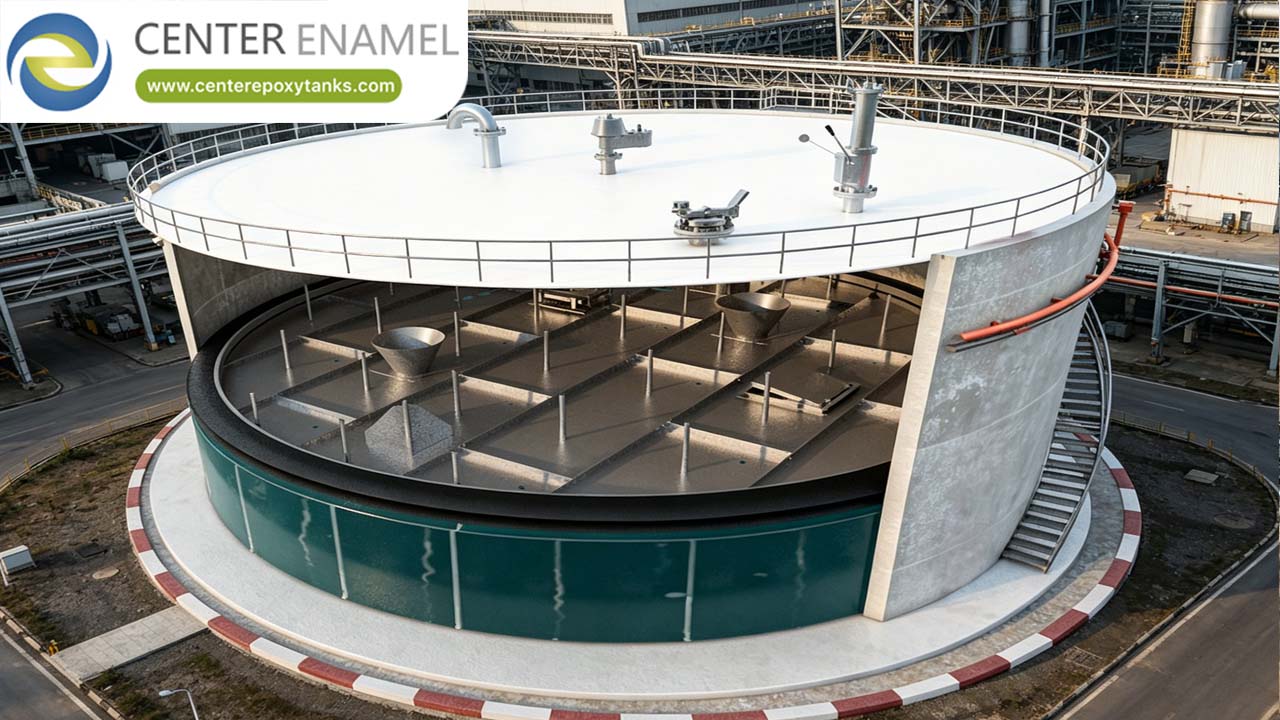
Floating Roof Tanks — Advanced Containment Solutions for Modern Storage Needs

floating_roof_tanks.jpg

Floating Roof Tanks Advanced Containment Solutions for Modern Storage Needs


In an era of rapid industrial growth, expanding municipal infrastructure, and increasingly stringent safety and environmental standards, selecting the right storage tank and roof configuration can make or break a project. Among the most critical components of modern storage systems especially for petroleum products, chemicals, and volatile liquids is the floating roof.


As a global supplier with over decades years of experience, Shijiazhuang Zhengzhong Technology Co., Ltd (Center Enamel) has been at the forefront of storage tank innovation. While globally recognized for its bolted tank systems and glass-fused-to-steel technology, Center Enamel also delivers engineered floating roof solutions that combine safety, performance, reliability, and cost-effectiveness.


This long-form global marketing article explores the technology, design principles, safety benefits, applications, global standards, and competitive advantages of floating roofs and reinforces how Center Enamel stands out as a preferred global partner for major storage infrastructure projects.


1. Understanding Floating Roof Systems

Floating roof tanks are storage tanks equipped with a roof that rises and falls with the liquid level inside the tank. This type of roof is widely used for storing volatile liquids such as crude oil, gasoline, jet fuel, and petrochemical products where vapor emissions must be minimized.


Unlike fixed roofs, which remain stationary, floating roofs move up and down along with the liquid level, creating a direct interface with the stored product. This reduces vapor space and prevents exposure to air, thereby significantly reducing volatile organic compound (VOC) emissions and fire hazards.


There are two main types of floating roofs:

Internal Floating Roofs (IFR) located inside a fixed outer roof tank

External Floating Roofs (EFR) cover open tanks without a fixed outer roof

Center Enamel specializes in engineered floating roof systems designed to meet diverse industrial requirements worldwide.


2. Why Floating Roofs Matter

The importance of floating roofs in modern storage infrastructure cannot be overstated. They address three major challenges:


2.1 Vapor Emissions & Environmental Compliance

Floating roofs reduce the vapor space above the liquid, minimizing the amount of volatile organic compounds (VOCs) released into the atmosphere. VOC emissions are linked to air pollution, health risks, and regulatory non-compliance if not properly controlled. By decreasing vapor formation, floating roofs play a critical role in meeting environmental regulations such as:


EPAs NSPS Subpart Kb (USA)

European VOC Directive standards

Local environmental emissions regulations worldwide


2.2 Fire & Explosion Risk Reduction

Open vapor spaces in fixed roof tanks pose a higher fire risk because vapors can accumulate and ignite. Floating roofs significantly reduce vapor volume, lowering ignition risk and increasing safety for personnel and infrastructure.


2.3 Operational Efficiency & Cost Savings

Floating roofs lower evaporation losses meaning more product stays in the tank and less is lost to the atmosphere. This not only reduces environmental impact but also enhances operational efficiency and improves profitability over time.


3. Floating Roof Design Principles

Floating roof performance depends on precise engineering and robust structural design. The primary components of a floating roof system include:

Deck Structure the platform that floats on the liquid surface

Pontoons/Buoyancy Modules provide the flotation force

Seals maintain contact between the floating roof and the tank shell to prevent vapor loss

Guides and Pins ensure stable vertical movement

Access Systems ladders, walkways, and safety railings


Center Enamels floating roof designs adopt advanced engineering practices that maximize durability, minimize leakage, and ensure reliable performance in a wide range of applications.


4. Floating Roof Types and Configurations

Depending on product type, tank size, and project requirements, floating roofs can be adapted into various configurations:


4.1 Pontoon Floating Roofs

Pontoon floating roofs utilize sealed hollow pontoons to provide buoyancy. These pontoons may be arranged:


Perimeter pontoon design


Internal pontoons

Combination of perimeter and internal pontoons

Perimeter pontoons provide excellent stability and are commonly used for larger diameter tanks with higher wind loads.


4.2 Double Deck Floating Roofs

Often used for storing lighter products like gasoline and petrochemicals, double deck roofs have an upper and lower deck with internal buoyancy compartments offering enhanced safety and vapor control.


4.3 Triple Deck Floating Roofs

Triple deck roofs are engineered with three structural layers and increased pontoon volume for heavy-duty applications or large capacity tanks. This type offers superior buoyancy, higher structural load resistance, and long-term reliability in demanding environments.


5. Floating Roof Seals: The Key to Performance

Proper sealing is fundamental to floating roof effectiveness. The seal system fills the gap between the floating roof edge and the tank shell to prevent vapor loss and limit air ingress. Common seal designs include:


Mechanical Shoe Seals

Liquid Mounted Seals

Double Skirt Seals

Center Enamel employs high-performance seal materials with excellent resistance to abrasion, chemicals, and environmental exposure. Seals are rigorously tested to ensure:

Minimal vapor leakage

Long service life

Stable performance over temperature variations


6. Materials and Corrosion Protection

Floating roofs are exposed to harsh environments, including:

Corrosive vapors

Moisture and condensation

Temperature cycling


Chemical exposure

To ensure long-term durability, Center Enamel floating roofs utilize advanced materials and protective coatings. These may include:

Fusion bonded epoxy coatings

Corrosion-resistant steel alloys

High-performance seal materials

Coating systems are selected based on application needs and service conditions, balancing corrosion protection with lifecycle value.


7. Safety Features and Regulatory Compliance

Safety is paramount in floating roof design. Center Enamel floating roofs are engineered to comply with major international safety and design standards, including:

API 650 (Welded Tanks for Oil Storage)

API 653 (Tank Inspection, Repair, Alteration, and Reconstruction)

NFPA (Fire Safety Standards)


Local codes and regulatory requirements

Additional safety features may include:

Emergency venting systems

Fire mitigation devices

Anti-splash curtains

Access platforms with safety railings


Lightning protection

These features ensure compliant performance for both new installations and retrofit projects.


8. Installation Methods and Global Execution Capability


Center Enamels project teams are experienced in delivering floating roof solutions globally including:


Latin America

Middle East

Southeast Asia

Africa

North America

Europe

Our installation services include:

Detailed engineering and design support

Material supply and logistics

On-site supervision and quality assurance

Installation training for local workforces

Whether working with EPC contractors, consulting engineers, or direct clients, Center Enamel supports projects from initial concept to commissioning.


9. Applications Across Industries

Floating roof tanks serve a wide range of industries:

Petroleum & Energy

Crude oil storage

Refined fuels (gasoline, diesel)

Jet fuel reserves

Asphalt and bitumen storage

Chemical & Petrochemical

Solvents

Reactive liquids

Specialty chemicals

Process intermediates

Municipal and Industrial Utilities

Large water reservoir ventilation control

Wastewater and industrial discharge systems

Agriculture

Fertilizer storage

Liquid feedstock tanks

Irrigation reserves


10. Integrating Floating Roofs with Overall Tank Systems


A floating roof must work harmoniously with the overall storage tank system. Center Enamel provides complete tank solutions including:

Glass-Fused-to-Steel Tanks

Fusion Bonded Epoxy Tanks

Stainless Steel Tanks

Galvanized Steel Tanks

Aluminum Dome Roofs

EPC Technical Services

By engineering floating roofs that integrate seamlessly with these systems, Center Enamel ensures:

Structural compatibility

Optimized safety systems

Efficient construction and reduced engineering conflicts

Reliable performance over the entire lifecycle


11. Project References A Global Footprint

Center Enamels floating roof solutions have been successfully delivered in numerous international projects, including:

Major petroleum storage facilities

Petrochemical export terminals

Municipal water and wastewater programs

Industrial fuel depots

Large-capacity agricultural reserves


These projects demonstrate Center Enamels ability to adapt to varied environmental and regulatory contexts, including high-temperature climates, seismic regions, and coastal installations.


12. Floating Roof Value: Performance and Economics

When evaluating the effectiveness of floating roof systems, owners and engineers typically consider:


Safety performance

Environmental impact

Maintenance requirements

Lifecycle cost

Regulatory compliance

Operational efficiency

Center Enamels floating roof solutions deliver on all fronts:


Safety First

Minimized vapor space significantly reduces fire and explosion risks, protecting personnel and infrastructure.


Environmental Responsibility

Reduced vapor emissions lower environmental impact and help meet global regulatory requirements for air quality and emissions control.


Operational Reliability

With robust engineering and quality materials, floating roofs operate consistently over long service lives with minimal downtime.


Cost Effectiveness

Lower maintenance, reduced vapor loss, and extended service life yield significantly better lifecycle economics compared to fixed-roof alternatives.


13. Quality Assurance and Certifications

Center Enamel adheres to strict quality control throughout design, manufacturing, and construction:

ISO 9001 Quality Management System

Third-party inspections and testing

Fabrication documentation and traceability

Material certificates

Factory and site acceptance testing

These controls ensure that every floating roof meets international standards and performs as intended under real-world service conditions.


14. Engineering Support and Technical Services

Center Enamel offers a full suite of engineering services to support floating roof projects:

Structural analysis and design optimization

Seismic and wind load calculations

Finite element modeling

Installation planning

On-site supervision and training

This level of support ensures projects are delivered on time, on budget, and with the highest levels of safety and performance.


15. Project Management and Global Logistics

Executing major floating roof tank projects requires careful coordination of:

Material procurement

Global logistics

Customs and documentation

Local labor coordination

Quality assurance

Center Enamels global team has deep experience managing complex logistics and ensuring that materials and engineering resources are delivered efficiently to project sites worldwide.


16. Future Trends in Floating Roof Technology

As industries adopt advanced analytics, digital monitoring, and green initiatives, floating roof systems are evolving with:

Remote monitoring and sensors

Digital safety systems

Enhanced sealing technologies

Improved materials for extreme environments

Center Enamel is actively exploring these innovations to ensure clients benefit from next-generation performance and data-driven asset management.


17. Choosing Center Enamel as Your Floating Roof Partner

With more than 15 years in the tank industry and a global footprint in more than 100 countries, Center Enamel delivers:

Proven engineering excellence

International code compliance

Global project experience

Comprehensive technical support

High-quality fabrication and materials

Strong focus on safety and environmental performance


Whether for new projects or retrofits of existing infrastructure, Center Enamels floating roof solutions provide reliability, efficiency, and long-term value.


18. Case Study Examples

Petroleum Terminal Expansion Middle East

A major petroleum storage terminal required floating roof tanks to expand their capacity while meeting strict environmental standards. Center Enamel provided engineered floating roof systems that:

Met API 650 and local regulatory requirements

Included high-performance seal systems

Delivered vapor control below target emissions

Met project schedule with on-site quality support


Industrial Chemical Plant Southeast Asia

An industrial facility storing volatile organic compounds needed floating roofs with enhanced safety features:

Anti-splash curtains

Emergency vents

Fire mitigation systems

Advanced seals

Center Enamels tailored design ensured highest safety compliance and operational reliability.


19. Environmental Responsibility and Sustainability

Center Enamel places a strong emphasis on environmental stewardship. Floating roofs contribute to sustainability goals by:

Reducing VOC emissions

Enhancing energy efficiency by lowering product loss

Minimizing maintenance waste

Supporting eco-friendly infrastructure development

These performance benefits make floating roof systems a preferred choice for environmentally conscious projects.


20. Final Thoughts A Strategic Investment

Floating roof technology is not just an engineering selection it is a strategic investment in long-term safety, environmental compliance, and operational excellence.


With decades of expertise, global project experience, and a commitment to innovation, Shijiazhuang Zhengzhong Technology Co., Ltd (Center Enamel) is positioned as a trusted partner for floating roof solutions across industries and continents.


By choosing engineered floating roof systems from Center Enamel, project owners gain:

Deep technical support

Industry compliance

Enhanced safety margins

Lower lifecycle costs

Proven global performance


From petroleum terminals to municipal systems, chemical plants to agricultural reserves, floating roof tanks provide the performance, safety, and value that modern infrastructure demands.

Chat with us


