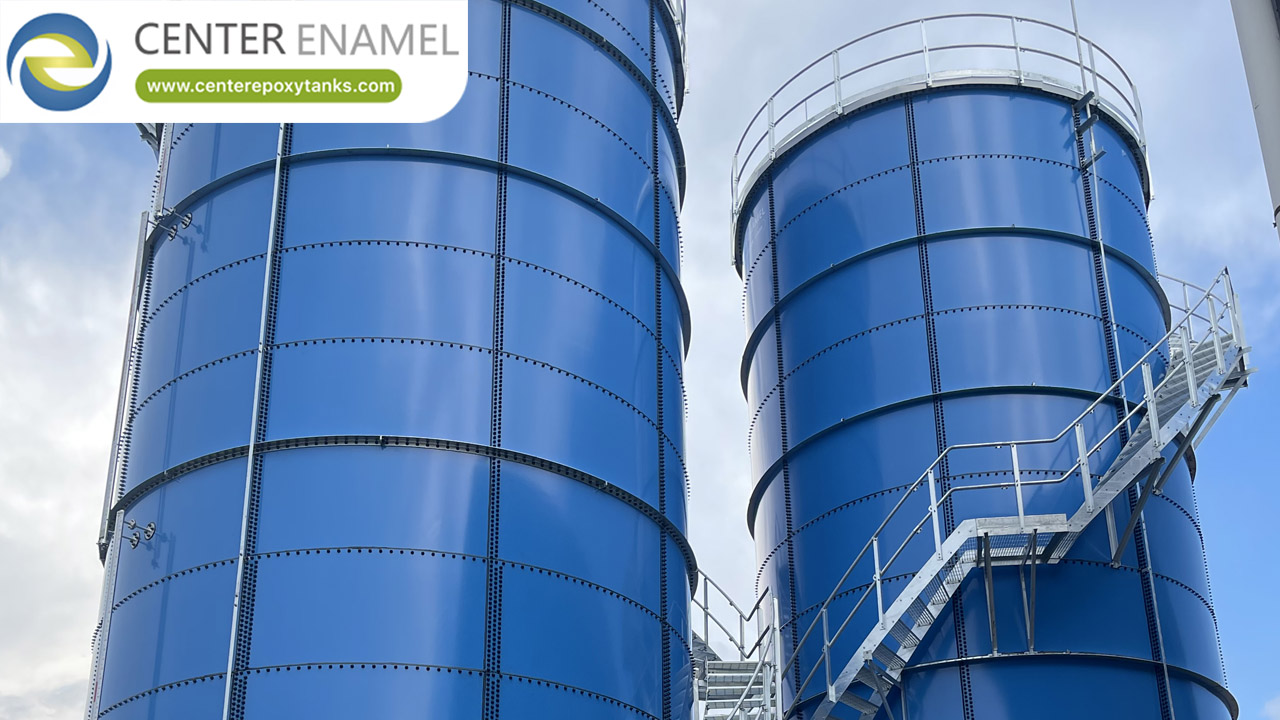
Epoxy Coated Bolted Tanks for Municipal Wastewater Storage: Engineering Resilience and Long-Term Value
In municipal infrastructure, managing wastewater efficiently and safely is vital to public health and environmental protection. Municipal wastewater treatment facilities handle diverse effluent streams—including raw sewage, storm runoff, industrial discharges, and biological sludges—that create aggressive, corrosive operating environments. Protecting primary clarifiers, equalization basins, and sludge holding tanks against chemical breakdown requires robust containment solutions.
The preferred structural solution for modern municipal utilities is the epoxy coated bolted tank. Combining the high-tensile structural strength of precision-fabricated carbon steel panels with advanced factory-applied fusion-bonded epoxy (FBE) technology, these modular tanks deliver exceptional corrosion resistance, rapid construction timelines, and long-term cost efficiency.
Core Engineering Principles and Coating Technology
The structural longevity and protective performance of epoxy-coated bolted tanks rely on advanced metallurgical processing and rigorous manufacturing controls:
Factory-Controlled Fusion-Bonded Epoxy (FBE): Unlike field-applied paints that cure via solvent evaporation, professional-grade epoxy tanks utilize a thermal-curing process. Steel panels are grit-blasted to near-white standards, electrostatically coated with thermosetting epoxy powder, and baked in industrial ovens to create a permanent, chemically cross-linked polymer matrix.
Modular Bolted Precision: Panels are manufactured to strict tolerances and assembled on-site using high-tensile hardware and engineered elastomeric sealants. This modular approach eliminates complex field-welding requirements, reduces installation footprints, and allows construction to proceed rapidly with minimal heavy equipment.
Headspace and Immersion Defense: Municipal wastewater headspaces frequently accumulate hydrogen sulfide ($H_2S$) and moisture, which oxidize standard metals. High-performance epoxy coatings provide an inert barrier that resists chemical attack across both submerged liquid zones and vapor phases.
Data Table: Comprehensive Comparison of Municipal Wastewater Storage Options
Technical Parameter | Fusion-Bonded Epoxy (FBE) Bolted Tanks | Cast-in-Place Concrete Basins | Traditional Field-Welded Steel Tanks |
Coating & Surface Quality | Factory-controlled thermal fusion ensuring uniform thickness and zero pinholes | Relies on manual concrete finishing and porous surface matrices | Field-applied liquid paint vulnerable to weather delays and human error |
Corrosion Resistance in Wastewater | Superior resistance to municipal sewage, organic acids, and moisture | Vulnerable to concrete spalling, rebar corrosion, and chemical permeation | High susceptibility to blistering, peeling, and weld corrosion over time |
Installation Speed & Labor | Rapid modular bolting completed in weeks with minimal heavy equipment | Slow civil construction requiring weeks of framing and concrete curing | Complex field welding, crane staging, and on-site coating work |
Modularity & Capacity Expansion | High; bolted panel design allows straightforward future capacity expansion | Permanent monolithic structure; impossible to expand without rebuilding | Rigid welded structure; difficult to alter or modify safely |
Frequently Asked Questions (FAQ)
Q: What are epoxy coated bolted tanks used for in municipal wastewater systems?
A: They are utilized across various stages of wastewater treatment, including equalization basins, primary and secondary clarifiers, storm retention tanks, sludge holding vessels, and industrial effluent storage.
Q: How do epoxy coatings protect against hydrogen sulfide ($H_2S$) corrosion?
A: The chemically cross-linked thermoset epoxy barrier is completely inert to hydrogen sulfide gas and sulfuric acid formations commonly found in municipal wastewater headspaces, preventing the degradation that destroys unprotected steel.
Q: Why are bolted epoxy tanks often preferred over concrete for wastewater plants?
A: Bolted epoxy tanks offer significantly faster installation times, predictable factory quality control, lower lifecycle maintenance overhead, and the unique flexibility to expand or modify tank capacity as the municipality grows.
Q: What is the expected service life of an epoxy-coated bolted municipal wastewater tank?
A: When engineered to strict international standards (such as AWWA D103 or ISO 28765) and subjected to routine maintenance and inspection, high-quality fusion-bonded epoxy tanks typically provide 20 to 30+ years of reliable service.


