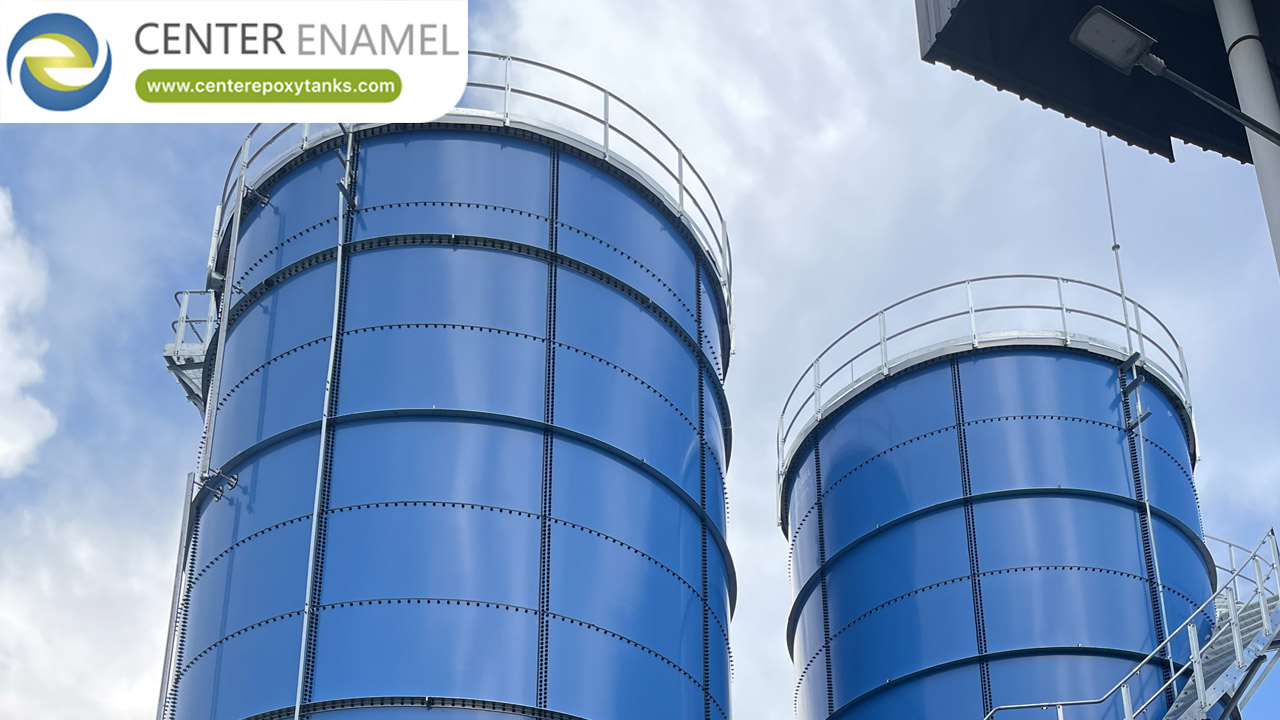
Epoxy Coated Bolted Tanks for Industrial Wastewater Storage: A Complete B2B Engineering Guide
Epoxy coated bolted steel tanks are premium, modular containment systems engineered for industrial wastewater storage. Utilizing high-strength carbon steel panels electrostatically coated with fusion-bonded or liquid epoxy resin and thermally cured, these tanks deliver outstanding corrosion resistance across a pH range of 3 to 11. Designed to comply with global engineering standards like AWWA D103-09 and ISO 9001:2015, they present a highly cost-effective, rapidly deployable, and low-maintenance alternative to traditional concrete and welded steel tanks.
What is an Epoxy Coated Bolted Tank?
An epoxy coated bolted tank is constructed from individual, factory-finished steel panels that are bolted together on-site using high-grade fasteners and specialized synthetic sealants.
The defining feature of these tanks is their factory-applied epoxy coating system. Rather than painting or coating the steel in the field—where environmental conditions can compromise adhesion—the coating is applied in a controlled factory environment.
The Electrostatic Powder Spraying Process
High-quality manufacturers utilize an advanced electrostatic powder coating process:
Surface Preparation: Raw steel plates undergo sandblasting to a white metal finish (SP10/NACE No. 2 standard) to remove all mill scale and oxides.
Powder Application: Electrostatically charged epoxy powder is sprayed uniformly onto the grounded steel sheets.
Thermal Curing: The sheets are baked in high-temperature ovens (typically between 180°C and 210°C). This causes the epoxy molecules to cross-link, forming a highly durable, continuous polymer barrier.
Quality Testing: The cured coating undergoes strict holiday detection testing (often at 1500V) to ensure zero microscopic pores or defects exist in the lining.
The resulting coating has a dry film thickness (DFT) typically ranging between 200 and 400 microns, ensuring a tough, impact-resistant shield against chemical attacks.
Crucial Advantages in Industrial Wastewater Storage
Industrial wastewater is a complex, aggressive soup of organic compounds, suspended solids, heavy metals, corrosive acids, and varying pH levels. Managing this effluent safely requires containment structures that offer high-tier chemical resistance and long-term mechanical reliability.
1. Broad Chemical Compatibility and Corrosion Resistance
Epoxy linings act as an impermeable barrier that protects the structural steel backing from aggressive chemicals. This makes epoxy bolted tanks highly effective for storing:
Industrial sewage and municipal wastewater
Landfill leachate (which is highly corrosive and variable)
Agricultural run-off and food processing waste
Sludge holding and anaerobic digestion processes
Process water and RO (Reverse Osmosis) reject stream storage
2. Rapid Installation with Zero On-Site Welding
Welded steel tanks require extensive on-site hot work, certified welding crews, and favorable weather for field painting. Bolted tanks eliminate these bottlenecks:
Modular Construction: Panel-by-panel assembly requires only simple jacking systems and hand/impact tools.
Minimal Footprint: Because they are assembled from the top down using specialized jacks, they require very little staging area on busy industrial sites.
All-Weather Assembly: Installation can proceed in extreme cold, high humidity, or light rain—conditions that completely halt welded tank fabrication.
3. Lower Lifecycle and Maintenance Costs
Because the epoxy coating is cured in a highly controlled factory setting, it is significantly more resilient than field-applied coatings. This translates to an expected service life of 30+ years, requiring minimal upkeep. If mechanical damage does occur to a single panel, it can be unbolted and replaced, or repaired locally with a field-applied epoxy kit without taking the entire tank out of commission for long periods.
Technical Comparison: Epoxy Bolted vs. Competing Technologies
When selecting a containment solution for industrial wastewater, engineers typically evaluate three primary technologies. The table below outlines how they compare across critical metrics:
Engineering Metric | Epoxy Coated Bolted Steel | Glass-Fused-to-Steel (GFS) | Concrete Tanks | Field-Welded Steel |
Primary Coating / Material | Thermally Cured Epoxy | Molten Glass / Silicate | Raw or Lined Concrete | Field-Applied Polyurethane/Epoxy |
pH Range Tolerated | pH 3 – 11 | pH 1 – 14 (Premium) | pH 6 – 9 (Unlined) | pH 4 – 10 |
Installation Speed | Fast (Modular, No Welding) | Fast (Modular, No Welding) | Slow (Curing required) | Very Slow (Hot work & curing) |
Structural Footprint Required | Minimal | Minimal | Large staging area | Extensive staging area |
Risk of Leaks / Cracking | Extremely Low | Extremely Low | High (Thermal cracking) | Medium (Weld defects) |
Initial Capital Expense (CAPEX) | Moderate | Moderate-High | High | Moderate-High |
Maintenance Frequency | Low | Extremely Low | High (Joint sealing) | Medium-High (Repainting) |
While Glass-Fused-to-Steel (GFS) remains the ultimate choice for highly acidic or caustic liquids (pH 1–14), Epoxy Coated Bolted Tanks represent the most cost-effective and structurally optimized solution for standard-to-moderately corrosive industrial wastewaters (pH 3–11), yielding a rapid return on investment (ROI).
Global Manufacturing Standards and Compliance
For industrial wastewater projects to receive engineering approval, tanks must conform to rigorous design and material standards. When sourcing epoxy bolted tanks, ensure they meet:
AWWA D103-09: The American Water Works Association standard for factory-coated bolted carbon steel tanks for water storage.
ISO 9001:2015: Quality management systems governing the factory fabrication, blasting, and coating processes.
NSF/ANSI 61: Standard for drinking water system components (essential if the wastewater treatment loop feeds back into process water reclamation).
EN ISO 28781: European standard defining testing protocols and quality requirements for glass and porcelain enamels and organic coatings.
Engineering Design and Customization Options
Every wastewater treatment plant has distinct process requirements. Modern epoxy bolted tanks can be customized with various structural components to match these needs:
Roof Configurations: Select from double-membrane roofs (for biogas harvesting in anaerobic digestion), aluminum dome roofs (for odor control and weather proofing), or simple flat roofs.
Ancillary Equipment: Integrations for side-entry mixers, liquid level indicators, internal baffles, heating jackets, and custom nozzle orientations (ANSI/DIN flanges).
Fastener Upgrades: High-tensile bolts capped with synthetic corrosion-resistant heads, paired with specialized EPDM or Viton gaskets to match the chemical composition of the stored wastewater.
The Verdict: Why Epoxy Bolted Tanks Win
For modern industrial facilities, Epoxy Coated Bolted Tanks offer the perfect intersection of rapid deployment, chemical robustness, and capital efficiency. By removing the unpredictable variables of field-applied paint and the structural cracking risks of concrete, they provide a highly predictable, reliable, and durable storage solution that keeps wastewater treatment systems compliant and operational for decades.


