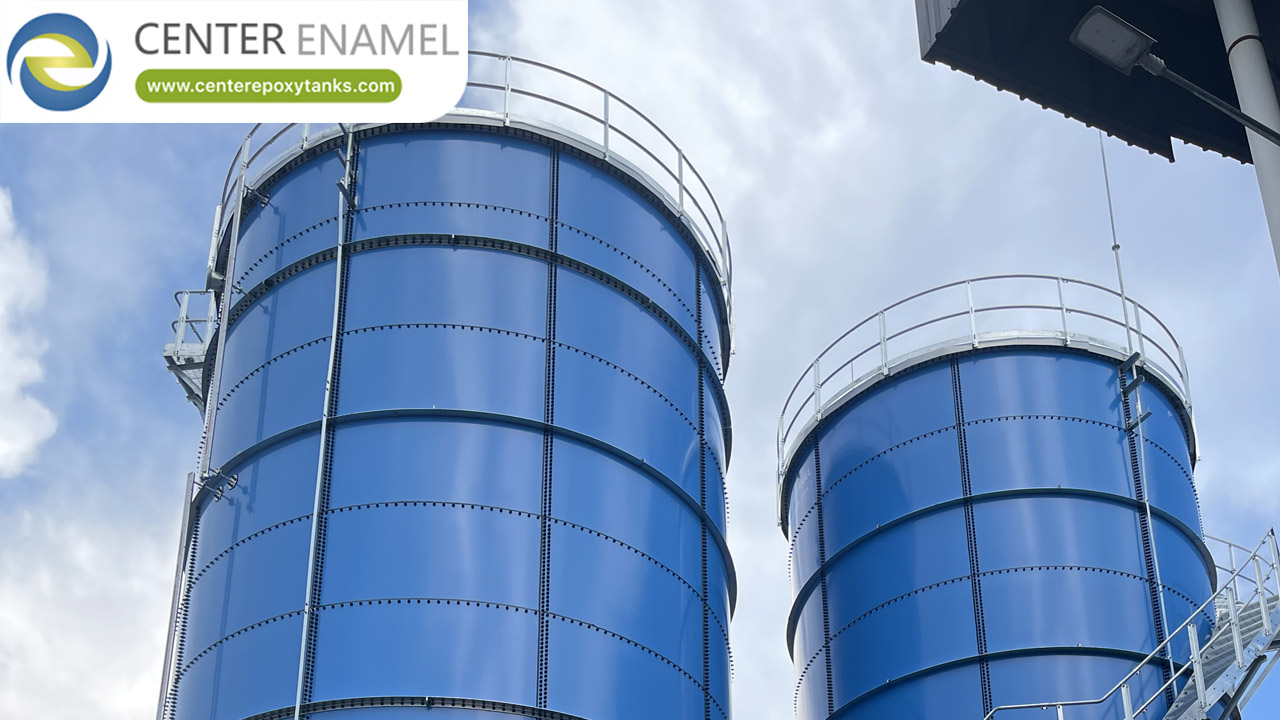
Durable Epoxy Coated Steel Tanks for Industrial Fire Protection Systems
In high-stakes industrial, commercial, and manufacturing facilities, the reliability of a fire suppression water reserve is a non-negotiable safety requirement. When an emergency strikes, fire pumps must have immediate, unimpeded access to thousands of gallons of clean, debris-free water. Traditional storage solutions, such as unlined concrete basins or field-welded carbon steel tanks, frequently suffer from structural cracking, internal wall oxidation, and costly maintenance cycles.
To eliminate these risks, epoxy-coated steel tanks have become the preferred standard for industrial fire protection systems. Utilizing advanced factory-applied coatings and modular bolted engineering, these tanks deliver exceptional corrosion resistance, rapid deployment speed, and strict compliance with global safety benchmarks.
The Engineering Advantage: Fusion-Bonded Epoxy (FBE)
Unlike standard field-applied paints, professional-grade fire water tanks utilize Fusion-Bonded Epoxy (FBE) or advanced factory-baked thermoset powder coatings. This manufacturing process thermally fuses the epoxy powder to precision-engineered steel panels at high temperatures, creating an unbreakable molecular bond.
Absolute Corrosion and Rust Prevention: The non-porous epoxy barrier prevents oxidation, stopping rust flakes and sediment from accumulating in the tank. This ensures that water lines, check valves, and sprinkler heads remain clear of debris during high-pressure activation.
Seismic and Structural Resilience: Bolted steel panel configurations offer inherent structural flexibility, allowing the tank to absorb seismic ground shear forces far better than brittle concrete structures.
Compliance with NFPA 22 and AWWA D103: Engineered strictly to meet National Fire Protection Association (NFPA 22) standards for private fire protection and American Water Works Association (AWWA D103) standards for bolted steel tanks, these systems guarantee predictable structural performance under extreme hydrostatic loads.
Technical Performance Matrix: Fire Water Storage Solutions
Technical Parameter | Epoxy-Coated Bolted Steel Tanks | Reinforced Concrete Reservoirs | Field-Welded Carbon Steel Tanks |
Construction Velocity | Rapid modular assembly using hand tools; completed in days | Extremely slow; requires intensive civil formwork, rebar tying, and multi-week concrete curing | Slow; demands extensive field plate rolling, welding, and X-ray testing |
Corrosion Resistance | Superior; chemically inert, non-porous factory-baked FBE coating | Moderate; prone to concrete carbonation, cracking, and rebar oxidation over time | Low; highly vulnerable to internal vapor-space pitting, requiring frequent field repainting |
Lifecycle Maintenance | Minimal routine maintenance; eliminates recurring interior recoating cycles | Moderate; requires periodic crack injection and structural waterproofing | High; demands continuous exterior and interior coating touch-ups |
Scalability & Relocation | Highly scalable; bolted panels allow future capacity expansion or relocation | Permanent structure; impossible to expand or relocate | Rigid structure; extremely difficult to modify post-construction |
Essential Fire Protection Appurtenances and Accessories
An industrial fire water storage tank is only as effective as its integrated safety appurtenances. Fully compliant epoxy-coated systems feature factory-engineered accessories designed to satisfy local Authority Having Jurisdiction (AHJ) mandates:
Anti-Vortex Plates: Installed over the suction discharge outlet in compliance with NFPA 22 guidelines to prevent air intake and pump cavitation during high-volume flow.
Atmospheric Vents with Insect Screens: Positioned above maximum water levels to neutralize vacuum suction pressures during rapid tank draining or filling.
Freeze Protection Systems: In cold climates where ambient temperatures drop below freezing, integrated immersion heaters, internal water circulation loops, or insulated shells maintain water temperatures above 40 degrees Fahrenheit.
Frequently Asked Questions (FAQ)
Q: Why choose an epoxy-coated bolted steel tank over a welded tank for fire protection?
A: Bolted steel tanks offer faster installation timelines, factory-controlled coating quality that eliminates field application errors, and lower overall freight and construction costs, especially in remote industrial sites.
Q: Do epoxy-coated fire protection tanks comply with NFPA 22 standards?
A: Yes. High-performance epoxy-coated steel tanks are specifically engineered and manufactured to meet or exceed NFPA 22 (Standard for Water Tanks for Private Fire Protection) and AWWA D103 standards.
Q: Can an existing epoxy-coated bolted steel fire tank be expanded later?
A: Yes. One of the primary advantages of bolted modular construction is scalability; if a facility expands and requires greater fire suppression capacity, additional steel rings or panels can be added to increase tank volume.
Q: How do epoxy coatings hold up against harsh environmental weather and UV exposure?
A: The exterior surfaces of industrial fire tanks feature UV-resistant topcoats combined with high-durability fusion-bonded epoxy, ensuring resistance to intense solar radiation, salt spray in coastal zones, and severe industrial weathering.


