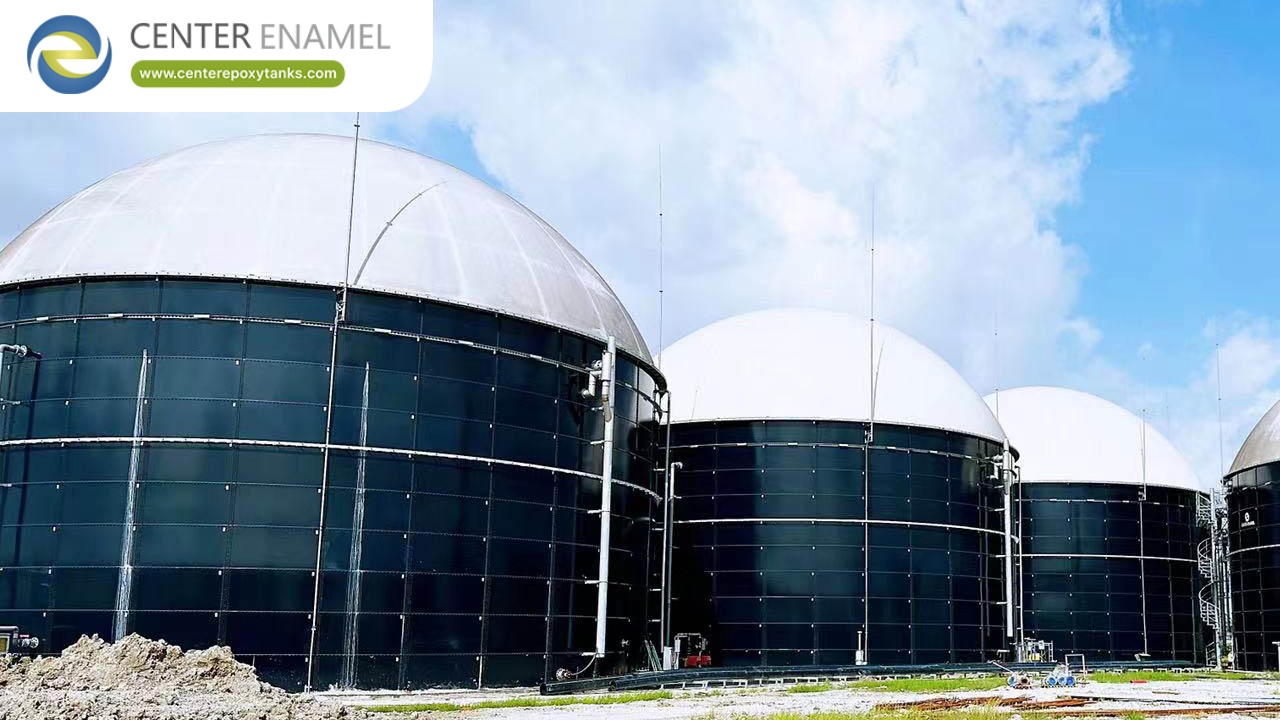
What is a Double Membrane Roof? Design, Functionality, and Applications
In modern environmental engineering, wastewater treatment, and renewable energy generation, containment structures require advanced overhead covers that do more than simply block out the weather. When dealing with biological processes like anaerobic digestion—where organic waste generates continuous streams of valuable biogas—tank covers must also serve as functional gas holders.
A double membrane roof is an engineered dual-layer fabric structure mounted atop industrial tanks, wastewater basins, or anaerobic digesters. It functions simultaneously as a weather-resistant structural roof and an integrated low-pressure gas storage system, eliminating the need for separate, standalone gas containment tanks.
How Does a Double Membrane Roof Work?
The structural ingenuity of a double membrane roof lies in its multi-tier fabric architecture and automated pressure control mechanism:
Inner Membrane (Gas Containment): Sealed gas-tight to the upper perimeter of the tank or digester wall, the inner membrane hangs loosely inside the tank headspace. As anaerobic bacteria or industrial processes generate gas, this flexible layer expands upward, securely containing the biogas volume while keeping it isolated from atmospheric oxygen.
Outer Membrane (Weather Protection & Aerodynamics): The outer membrane forms the aerodynamic, weather-resistant exterior shell of the roof. It protects the entire system against heavy wind loads, rain, snow, and UV solar radiation.
Active Air-Blower and Pressure Balancing System: An automated air blower system continuously pumps air into the sealed inter-membrane space between the inner and outer layers. A constant-pressure control valve regulates this air volume, exerting a uniform downward force on the inner gas chamber. This ensures that stored gas is delivered to downstream combined heat and power (CHP) engines or boilers at a stable, reliable working pressure.
High-Tenacity Fabric and Chemical Defense: Because industrial headspaces are frequently saturated with moisture and corrosive trace gases like hydrogen sulfide (H2S), the membranes are manufactured from specialized, high-tenacity polyester fabrics coated with heavy-duty PVC/PVDF polymers that resist chemical attack, micro-cracking, and biological degradation.
Data Table: Comprehensive Comparison of Tank Roof Systems
Technical Parameter | Double Membrane Roofs | Rigid Steel Dome Roofs | Cast-in-Place Concrete Fixed Roofs |
Primary Function | Dual-function: structural tank cover and integrated gas storage holder | Structural cover only; requires a separate standalone gas holder | Structural cover only; heavy mass requiring reinforced tank walls |
Corrosion Defense | High-grade PVC/PVDF membranes completely immune to H2S and moisture attack | Carbon steel vulnerable to rapid corrosion from wet biogas without costly internal coatings | Prone to concrete carbonation, micro-cracking, and acid spalling in aggressive headspaces |
Gas Storage Capability | Integrated volumetric storage buffering daily production surges or fluid displacement | None; requires external gas containment vessels | None; fixed structural roof with no gas holding capacity |
Installation & Maintenance | Lightweight modular installation with near-zero long-term coating upkeep | Requires heavy crane lifts, field welding, and periodic sandblasting/repainting | Slow, labor-intensive civil construction with high curing times |
Frequently Asked Questions (FAQ)
Q: What is a double membrane roof?
A: It is an engineered dual-layer fabric membrane system mounted on top of a tank or digester that acts simultaneously as a weather-tight structural roof and an integrated gas storage holder.
Q: Why are double membrane roofs used in anaerobic digestion and wastewater plants?
A: They provide a dual-purpose solution—capping the tank to prevent odor emissions and weather infiltration while safely storing and regulating the pressure of the biogas produced during digestion.
Q: How is constant gas pressure maintained beneath a double membrane roof?
A: An automated blower system maintains a regulated air cushion between the inner and outer membranes. This air pressure exerts a steady, uniform downward force on the inner gas containment membrane to keep delivery pressure consistent.
Q: How do double membrane roofs withstand corrosive gases like hydrogen sulfide (H2S)?
A: The membranes are constructed from high-strength polyester fabrics coated with specialized PVC/PVDF formulations that are completely inert to moisture and trace hydrogen sulfide, preventing the degradation that destroys unprotected steel roofs.


