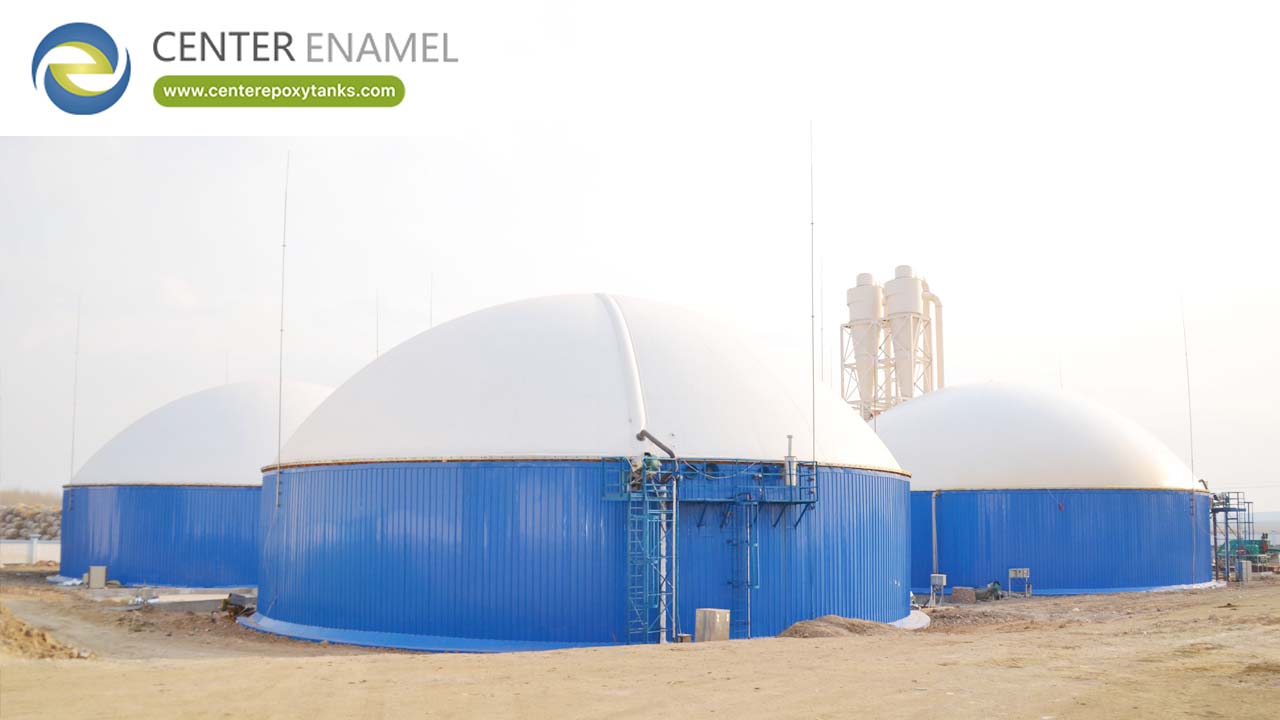
Double Membrane Roofs for Biogas Tanks: Efficient Storage & Protection
A Double Membrane Roof (or double membrane gas holder) is an integrated storage solution that serves as both the roof of an anaerobic digester and a variable-volume gas storage vessel. It consists of an inner membrane that expands and contracts based on gas volume, and an outer membrane that maintains a constant shape and pressure to protect the system from environmental elements. These roofs are the industry standard for modern biogas plants because they eliminate the need for separate, bulky gas tanks, provide superior corrosion resistance against H₂S, and drastically increase overall energy capture efficiency.
Why Industry Leaders Transition to Double Membrane Systems
In the biogas industry, efficiency is measured by gas capture and operational uptime. Traditional fixed-roof designs (steel or concrete) are static—they do not allow for the accumulation of gas, nor do they protect themselves from the aggressive, sulfur-rich atmosphere inside a digester.
Double membrane systems address these limitations through three core functionalities:
Integrated Gas Storage: By utilizing an expandable inner membrane, the roof acts as a buffer. This allows the plant to store gas produced during peak biological activity and consume it during energy production cycles, maximizing the utilization of CHP (Combined Heat and Power) units.
Corrosion Immunity: The headspace of an anaerobic digester is one of the most corrosive industrial environments due to Hydrogen Sulfide (H₂S). High-quality membranes—typically made from PVDF or PVC-coated polyester—are chemically inert. Unlike steel, they do not require constant recoating and cannot be "eaten away" by gas-borne acids.
Pressure Regulation: A dedicated air-inflation unit maintains the outer membrane at a constant pressure. This structural rigidity protects the digester from wind, snow, and rain, while the internal pressure remains stable, ensuring consistent gas flow to downstream equipment.
Comparative Overview: Digester Roof Technologies
Feature | Double Membrane Roof | Fixed Steel Roof | Concrete Roof |
Gas Storage | Integrated (Variable Volume) | None | None |
Weight | Lightweight | Heavy | Very Heavy |
Corrosion Resistance | Excellent (Inert Materials) | Low (Needs Painting) | Moderate (Needs Liners) |
Installation Time | Rapid (Modular) | Slow | Very Slow |
Maintenance | Low (Minimal) | Moderate | High (Crack repairs) |
Technical Engineering: Material & Design Benchmarks
When specifying a double membrane system, engineering teams prioritize performance metrics that guarantee a 15–20 year service life:
Material Science: Premium systems utilize PVDF (Polyvinylidene Fluoride) coated polyester fabric. This specific coating provides high tensile strength, UV radiation resistance (preventing chalking), and self-cleaning properties.
Weld Integrity: Leading manufacturers utilize high-frequency (RF) welding for seams. This method creates a weld that is stronger than the base fabric, ensuring zero gas leakage—a critical requirement for ATEX/explosion-proof safety standards.
Safety Integration: The system must include redundant safety features, including automated over-pressure relief valves (PVRV), vacuum relief valves, and radar-based volume sensors that feed real-time gas level data back to the plant’s SCADA system.
Frequently Asked Questions (FAQ)
Q: Are double membrane roofs safe against fire and explosion?
A: Yes. Modern biogas membranes are engineered to meet strict international fire safety standards (such as DIN 4102-B1). Their design specifically prevents the formation of an explosive air-gas mixture, provided the pressure control system is managed correctly.
Q: Can these roofs be retrofitted to existing tanks?
A: Yes. Because membrane systems are significantly lighter than traditional steel or concrete covers, they can often be retrofitted onto existing tanks without requiring major structural foundation reinforcements.
Q: How do they handle extreme cold or heat?
A: The membrane materials are formulated to operate between $-30^circtext{C}$ and $+70^circtext{C}$. The air gap between the inner and outer membranes acts as a thermal insulator, helping maintain stable digester temperatures in harsh climates.
Partnering for Efficient Biogas Infrastructure
The integration of a double membrane roof is a strategic choice to increase the ROI of any anaerobic digestion project. By maximizing gas capture, reducing maintenance costs associated with corrosion, and ensuring structural longevity, these roofs become the "engine room" of the biogas facility.
Are you developing a new anaerobic digester or looking to upgrade your existing roof structure?
Contact our technical engineering team today for a structural load analysis, gas volume capacity assessment, and a technical proposal tailored to your daily biogas yield requirements.


