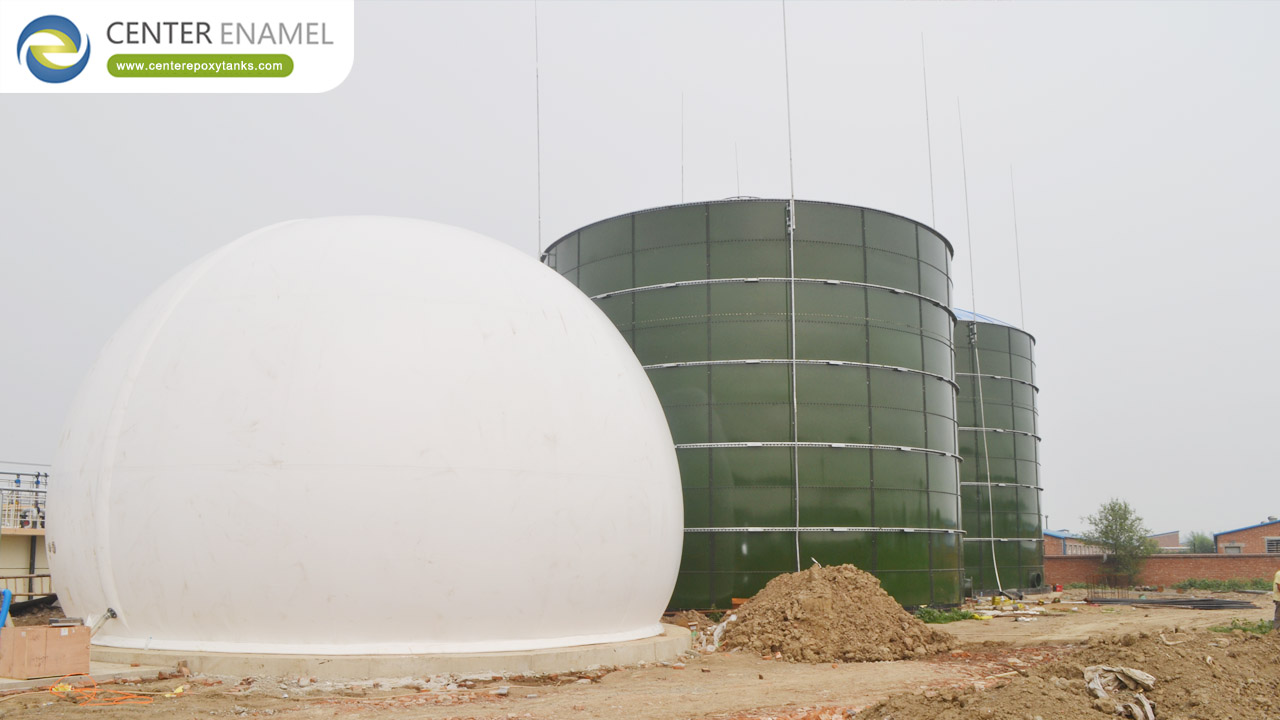
Double Membrane Roofs for Agricultural Anaerobic Digestion Tanks: A Technical Guide
For modern agricultural biogas plants, the roof is more than a cover; it is a critical component of the storage and pressure management system. Double Membrane Roofs have become the industry standard for anaerobic digestion (AD) tanks, replacing rigid concrete or steel covers. By utilizing a dual-layer, pressurized system, these roofs offer a dynamic, gas-tight solution that adjusts to fluctuating biogas volumes, reduces capital expenditure, and provides inherent weather protection.
1. How the Double Membrane System Works
The system operates on a "variable volume" principle, effectively turning the top of your digester into a dynamic gas holder.
● The Outer Membrane (Weather Protection): This layer is constantly inflated by an air blower system. Its primary role is to provide a rigid, dome-shaped structural shell that withstands wind, snow, and rain, while maintaining a constant pressure against the inner membrane.
● The Inner Membrane (Gas Storage): This flexible layer sits inside the tank, in direct contact with the biogas. As your digester produces gas, the inner membrane expands, displacing the air between the two layers. When gas is consumed, the inner membrane retracts, maintaining stable pressure.
● The Air Buffer: The air space between the membranes provides thermal insulation and acts as a pressure buffer, ensuring that the biogas system remains at a consistent, safe operating pressure.
2. Key Technical Advantages for Agriculture
Feature | Double Membrane Roof | Concrete/Steel Fixed Roof |
Gas Storage | Integrated (Variable capacity) | External gas holder required |
Installation | Rapid (Modular/Textile) | Slow (Civil construction) |
Odour Control | High (Hermetically sealed) | Moderate (Risk of leaks) |
Corrosion Resistance | High (Inert polymers) | Low (Constant maintenance) |
Cost-Efficiency | Superior (Lower CAPEX) | Higher (Labor/Material intensive) |
Performance Benefits:
● Integrated Storage: By using the headspace of the digester for gas storage, you often eliminate the need for a separate, expensive external gas holder.
● Pressure Stability: The automated blower and valve system maintains a steady pressure (typically 1–3 mbar), which is critical for consistent operation of CHP (Combined Heat and Power) engines.
● Corrosion Immunity: Unlike metal covers, specialized PVC-coated polyester fabrics are resistant to the high-sulfur (H₂S) and acidic environments typical of manure and organic waste digestion.
3. Structural & Operational Specifications
To ensure compatibility with existing agricultural infrastructure, membrane roofs are engineered to specific standards:
● Material Construction: High-frequency welded PVC-coated polyester fabric. These membranes are designed to be UV-resistant, flame-retardant (B1/DIN 4102), and slurry-resistant.
● Operational Pressure: Standard designs typically operate between 0.5 mbar and 3 mbar, customizable to the specific inlet pressure requirements of your gas utilization equipment.
● Design Life: Modern high-strength textile membranes provide a service life of 15–20 years for the outer layer, with inner membranes often lasting significantly longer due to the protected, anaerobic environment.
● Scalability: Systems can be retrofitted to existing steel or concrete tanks with diameters ranging from 10m to 50m+, depending on the site requirements.
4. Frequently Asked Questions (FAQ)
Q: Can a double membrane roof be installed on an existing concrete tank?
A: Yes. Double membrane roofs are frequently used for retrofitting existing tanks to improve gas storage capacity and odor management. They feature stainless steel clamping systems that create a gas-tight seal on existing wall crowns.
Q: How does the system handle extreme weather?
A: The outer membrane is engineered to meet regional structural load standards for snow and wind. The constant air pressure maintained by the blower system ensures the dome retains its shape and load-bearing capacity even in heavy weather.
Q: What maintenance does a membrane roof require?
A: Maintenance is minimal compared to rigid covers. It primarily involves routine inspections of the blower air-inlet filters, pressure sensors, and the condensate removal system to ensure the gas remains dry.
Engineering Your Biogas Future
Integrating a double membrane roof is one of the most effective ways to modernize an agricultural anaerobic digestion plant. It combines safety, storage, and structural integrity into a single, cost-effective package. By decoupling gas storage from the digester’s rigid structure, you gain operational flexibility and longevity that traditional materials cannot match.
Are you currently in the design phase for a new digester, or are you looking to retrofit an existing storage tank to improve gas collection efficiency?


