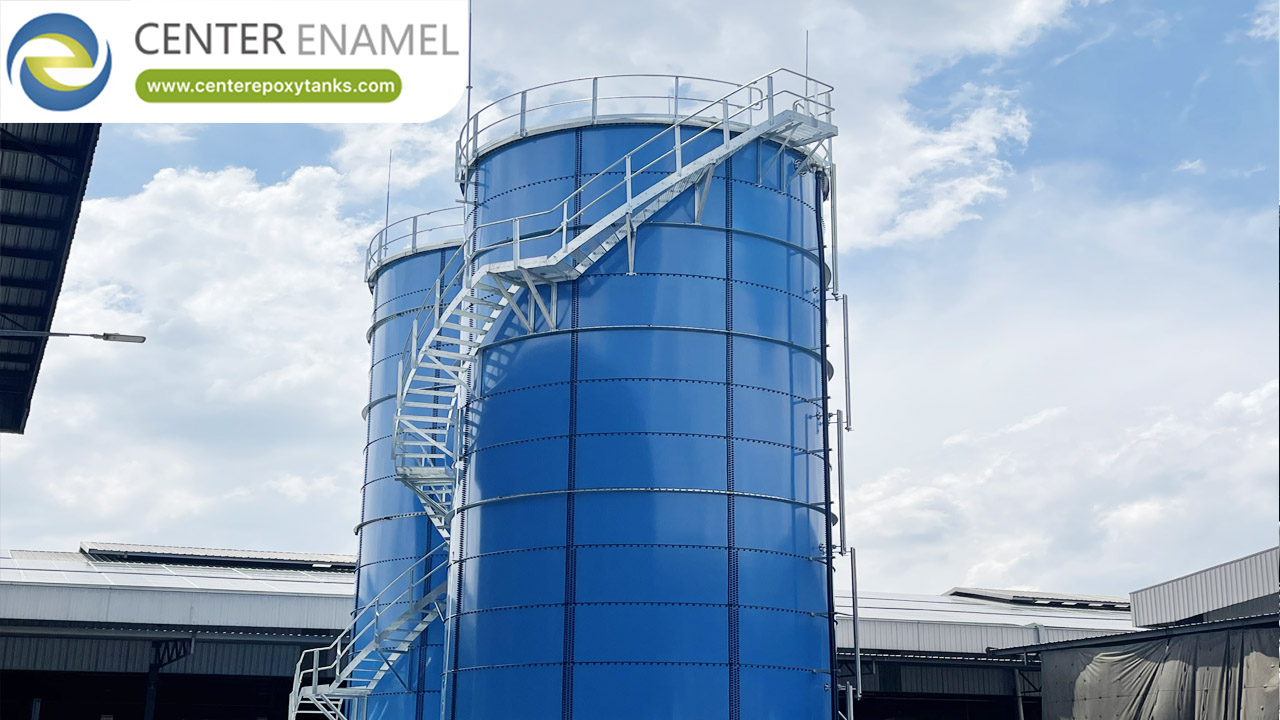
Epoxy Coated Steel Tanks for Wastewater Storage: High-Integrity Containment Solutions
Managing industrial effluent, municipal sewage, and process wastewater presents severe corrosion challenges. Aggressive chemical compounds, variable pH levels, heavy organic loads, and abrasive sludge rapidly degrade untreated carbon steel and vulnerable concrete basins, leading to structural seepage, environmental contamination, and costly repairs. To meet strict regulatory environmental frameworks and ensure long-term operational continuity, wastewater treatment plants require containment infrastructure engineered for absolute chemical inertness and mechanical resilience.
Epoxy coated steel tanks—manufactured using advanced factory-applied fusion-bonded epoxy (FBE) technology—provide an optimal, high-integrity solution for modern wastewater storage projects. Combining the structural strength of industrial carbon steel with an advanced thermoset polymer barrier, these modular bolted systems deliver decades of reliable, low-maintenance performance.
1. Advanced Manufacturing and Fusion-Bonded Polymer Technology
The longevity and chemical resilience of epoxy-coated wastewater tanks stem from a highly controlled factory manufacturing process that eliminates the inconsistencies of field-applied paints:
Rigorous Surface Preparation: Steel plates are grit-blasted to a clean "white metal" profile, establishing a deep mechanical anchor pattern necessary for superior polymer adhesion.
Electrostatic Powder Curing: High-purity thermoset epoxy powder is electrostatically sprayed across panel surfaces and thermally cured in automated tunnel ovens at elevated temperatures, triggering cross-linking molecular bonds that exceed standard adhesive thresholds.
100% High-Voltage Holiday Testing: Every individual panel undergoes strict spark testing $(ge 1100text{V})$ prior to shipment, verifying that the protective coating is entirely free of pinholes, micro-cracks, or structural defects.
Data Table: Wastewater Storage Tank Technology Comparison Matrix
Technical Parameter | Epoxy Coated Bolted Steel (AWWA D103) | Cast-in-Place Concrete Basins | Traditional Welded Steel Tanks |
Corrosion Resistance | High (Inert cross-linked thermoset polymer barrier) | Variable (Prone to cracking, chemical spalling, and rebar corrosion) | Moderate (Requires frequent field touch-ups and recoating) |
Installation Speed | Rapid: Assembled via mechanical bolting in 2–4 weeks | Extremely Slow: Requires formwork, pouring, and multi-week curing | Slow: Requires extensive on-site welding and NDT testing |
Seismic & Structural Flexibility | High: Steel panels flex elastically under seismic loads without cracking | Moderate: Prone to cracking and joint separation during ground shifts | Moderate: Rigid welded shells can fracture along stress lines |
Lifecycle Maintenance | Minimal: Long service life with simple inspections | High: Requires structural crack injection and waterproofing patches | High: Demands periodic sandblasting and complete repainting |
Governing Standards | AWWA D103, ISO 28765, NSF/ANSI 61 | ACI Structural Standards | API 650 / AWWA D100 |
2. Key Operational Advantages for Wastewater Treatment Facilities
Deploying modular epoxy-coated tanks across municipal and industrial wastewater networks offers distinct engineering and economic advantages:
Versatile Effluent Handling: Engineered to tolerate broad pH ranges and moderate chemical concentrations, these tanks safely store municipal sewage, industrial washwater, treated effluent, and biological sludge.
Modular Scalability: Because the structure consists of precision-engineered bolted panels, plant operators can easily expand tank capacity by adding additional panel tiers or dismantle and relocate the system if facility requirements evolve.
Reduced Total Cost of Ownership (TCO): Factory prefabrication minimizes on-site labor requirements, weather delays, and heavy machinery dependency, resulting in a lower initial capital expenditure and minimal lifecycle upkeep.
Frequently Asked Questions (FAQ)
Q: Why are epoxy-coated steel tanks well-suited for wastewater storage?
A: They combine high-strength structural steel with a factory-cured, non-porous fusion-bonded epoxy barrier that resists chemical attack, prevents rust, and withstands the aggressive environments typical of municipal and industrial wastewater treatment.
Q: How does fusion-bonded epoxy differ from standard field-applied paint?
A: Unlike field-applied paints that can peel or degrade under chemical exposure, FBE powder is thermally fused to steel plates in a controlled factory environment, creating an unbreakable molecular bond with superior impact and chemical resistance.
Q: How long does it take to install a modular bolted epoxy wastewater tank?
A: Because the panels are pre-drilled and pre-coated off-site, mechanical erection requires no welding or curing time, allowing most tanks to be fully assembled in just 2 to 4 weeks.
Q: Do epoxy-coated wastewater tanks comply with international engineering standards?
A: Yes. High-performance epoxy storage tanks are engineered in strict compliance with global benchmarks such as AWWA D103, ISO 28765, and NSF/ANSI quality frameworks.


