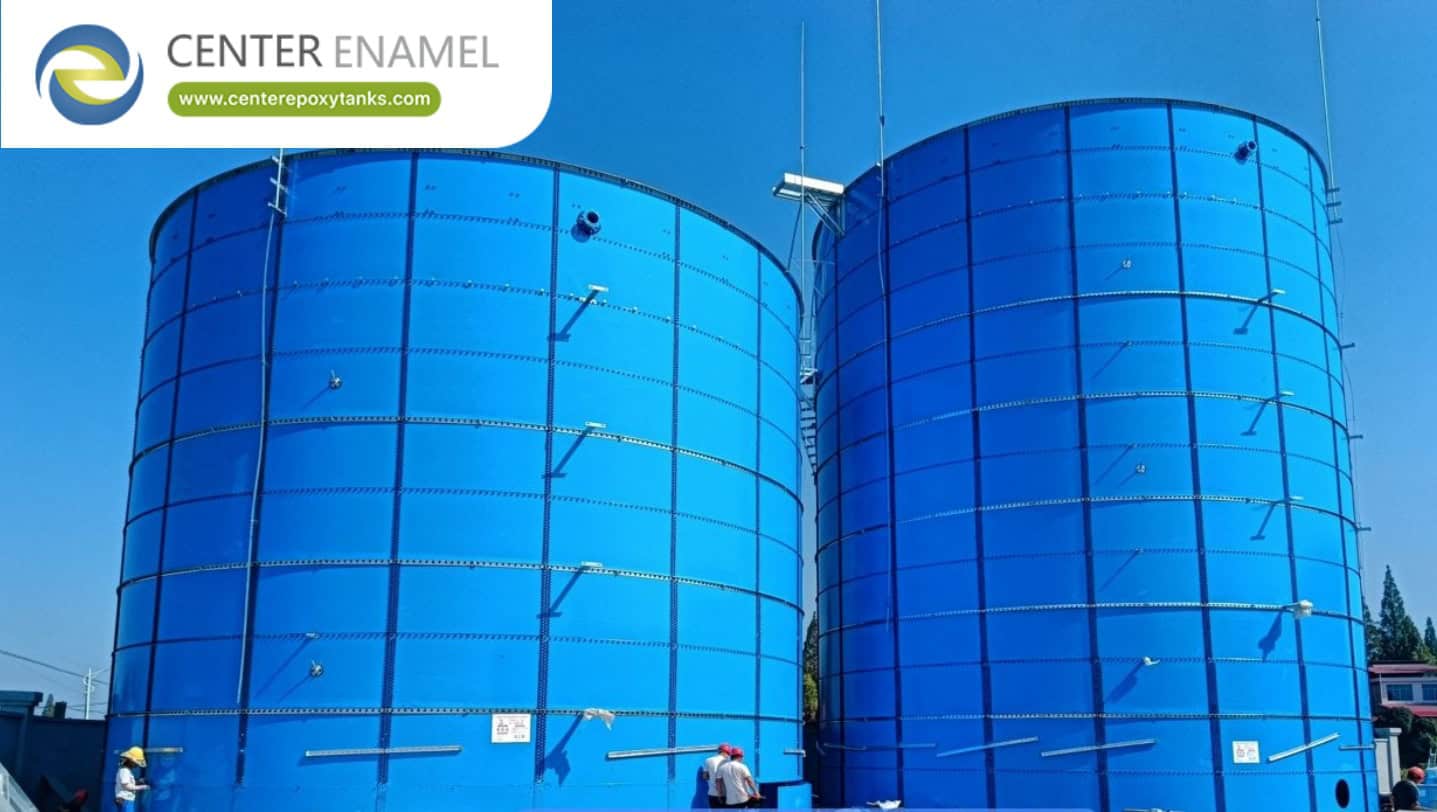
Choose Easy-to-Install Epoxy Coated Steel Tanks for Your Drinking Water Needs
Infrastructure projects are often defined by the "Triple Constraint": time, cost, and quality. When it comes to municipal potable water storage, Epoxy Coated Bolted Steel Tanks resolve these constraints by shifting the construction burden from the job site to the factory. By choosing a factory-finished, modular design, you can significantly reduce on-site labor, eliminate heavy welding requirements, and ensure a higher standard of interior coating quality, ultimately delivering a safer, more reliable water supply.
1. Why "Easy to Install" is an Engineering Priority
In modern water infrastructure, speed is not just about convenience; it is about risk mitigation. Traditional site-built methods (like poured concrete or field-welded steel) expose your project to variables that cause delays: weather, skilled labor shortages, and complex onsite coordination.
Minimized On-Site Construction: Because panels are pre-fabricated and coated in a climate-controlled factory, the "build" on-site becomes an "assembly" process.
No Heavy Equipment Dependencies: Many bolted tank designs can be erected using simple, modular jacking systems. This eliminates the need for massive cranes or extensive staging areas, making them ideal for remote or difficult-to-access sites.
Reduced Safety Risk: Removing high-intensity field welding and large-scale pouring reduces the number of specialized contractors and safety hazards on-site, simplifying project management and compliance.
2. The Material Advantage: Fusion Bonded Epoxy (FBE)
Choosing "easy to install" does not mean compromising on durability or water safety. FBE coatings, when applied correctly, are the gold standard for long-term potable water containment.
Factory Control vs. Field Application: Field-applied paints are subject to humidity, dust, and temperature fluctuations. Factory-applied FBE is thermally fused to the steel, creating an impermeable, high-adhesion barrier that field-applied solutions cannot replicate.
NSF/ANSI 61 Compliance: This is the non-negotiable benchmark. Trusted manufacturers ensure their FBE coatings are independently certified to meet NSF/ANSI 61 standards for drinking water contact, guaranteeing that no VOCs or toxic heavy metals leach into your municipality’s water supply.
3. Comparison Matrix: Installation & Lifespan
For procurement officers and project planners, the choice of storage material dictates the lifecycle budget.
Feature | Epoxy Coated Bolted Steel | Field-Welded Steel | Poured Concrete |
Installation Time | Fast (Weeks) | Slow (Months) | Very Slow (Months/Year) |
Labor Skill Required | Moderate (Assembly) | High (Welding/Cert) | High (Civil/Formwork) |
Coating Quality | Superior (Factory) | Variable (Field) | Low (Needs Lining) |
Maintenance | Minimal | High (Recurrent Painting) | High (Cracking Repair) |
Expansion Capability | High | Low | None |
4. FAQ: Addressing Common Procurement Concerns
A: Yes. Modern bolted tanks use high-grade, NSF-61 certified EPDM gaskets and precision-engineered seals at every lap joint. When installed according to factory specifications, they are fully watertight and pressure-tested.
A: One of the most significant advantages of bolted steel construction is modularity. Because the tank is a collection of factory-finished panels, it can be dismantled and relocated to a new site, protecting your infrastructure investment.
Q: How do we verify the quality of the "easy" installation?
A: A trusted manufacturer will provide a dedicated supervisor or comprehensive 3D assembly guides. Always request a project-specific quality control plan that includes bolt-torque testing and holiday testing for the coating joints.
Choosing easy-to-install, epoxy-coated steel tanks is a strategic decision that favors efficiency, safety, and long-term asset value. By moving away from slow, manual-heavy construction methods, project managers can accelerate commissioning timelines while ensuring a higher quality of drinking water protection. Prioritize manufacturers who offer end-to-end support—from factory-certified FBE coatings to assembly expertise—to ensure your project remains on time and on budget.


