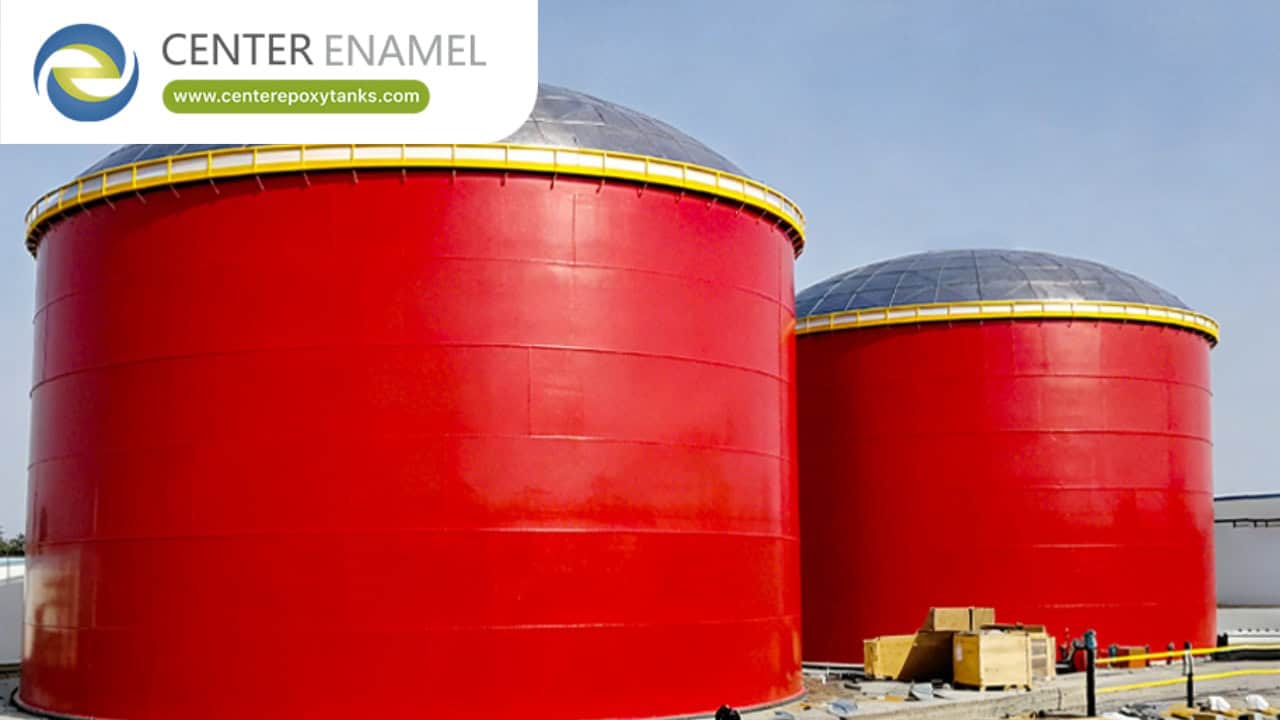
Shijiazhuang Zhengzhong Technology Co., Ltd.: The Best Welded Steel Hydraulic Oil Tanks Manufacturing Company
In modern heavy industry, manufacturing, power generation, mining operations, and large-scale machinery logistics, efficient fluid power transmission is essential. Hydraulic systems rely on massive volumes of specialized fluids under continuous pressure and variable thermal loads. Consequently, storing and managing hydraulic oil requires tanks engineered with absolute structural integrity, flawless weld seams, and superior chemical compatibility. When industrial enterprises search for the best welded steel hydraulic oil tanks manufacturing company, precision engineering, strict quality control, and adherence to international codes are paramount.
Across global containment infrastructure, Shijiazhuang Zhengzhong Technology Co., Ltd. (Center Enamel) stands out as the preeminent manufacturer of high-performance welded steel tanks. Leveraging over three decades of specialized industrial fabrication expertise, state-of-the-art automated welding lines, and rigorous non-destructive testing (NDT) protocols, Center Enamel delivers robust, monolithic storage solutions engineered to handle the rigorous demands of hydraulic fluid containment worldwide.
Engineering Excellence in Welded Steel Hydraulic Containment
Unlike modular bolted alternatives that rely on mechanical gaskets, welded steel tanks provide a continuous, monolithic structure fused from high-grade carbon or stainless steel plates. For hydraulic oil storage—where fluid contamination, pressure pulsations, and structural fatigue can lead to catastrophic system failures—welded containment offers unmatched security:
100% Joint Efficiency (E = 1.0): Utilizing advanced Submerged Arc Welding (SAW) and Gas Metal Arc Welding (GMAW) processes, Center Enamel achieves deep, uniform weld penetration that eliminates structural weak points and ensures absolute leak-prevention under continuous dynamic loads.
High-Pressure and Thermal Resilience: Designed to handle severe operational cycles, these tanks maintain structural stability under fluctuating internal pressures, preventing wall deformation or micro-fracturing common in inferior fabrications.
Advanced Internal Linings and Oil Purity: Hydraulic oils must remain free of particulate contaminants and moisture. Center Enamel applies specialized, high-purity interior epoxy or phenolic coatings that prevent internal oxidation, scale flaking, and chemical breakdown when exposed to synthetic or petroleum-based hydraulic fluids.
Governing Design Standards and Quality Assurance
Center Enamel’s manufacturing facility operates under a zero-tolerance quality framework, ensuring every hydraulic and industrial storage vessel complies with rigorous international standards:
ASME Section VIII & API 650: Governing high-pressure vessel design, structural safety margins, and atmospheric tank construction codes.
Comprehensive Non-Destructive Testing (NDT): Every critical weld seam undergoes rigorous inspection—including Radiographic Testing (RT), Ultrasonic Testing (UT), and Magnetic Particle Testing (MT)—to verify zero porosity or structural discontinuities before factory dispatch.
ISO 12944 Corrosion Protection: Exterior surfaces are finished with certified multi-layer protective coating systems (rated up to C5 marine-grade environments) to safeguard against aggressive industrial atmospheres, salt spray, and weather exposure.
Data Table: Technical Specification & Performance Matrix
Engineering Parameter | Center Enamel Welded Steel Tanks | Standard Commercial Steel Tanks | Conventional Bolted Liquid Containers |
Structural Continuity | Monolithic welded steel structure with 100% joint efficiency (E = 1.0) | Standard welded seams with variable penetration depth | Mechanically fastened panels utilizing edge gaskets and bolts |
Hydraulic Pressure Tolerance | Engineered for high-pressure industrial fluid dynamics and surge loads | Moderate pressure resistance; prone to fatigue under pulsation | Limited pressure capability; primarily designed for low-pressure storage |
Quality Inspection (NDT) | 100% NDT verification via Radiographic (RT) and Ultrasonic (UT) testing | Spot-testing or minimal structural weld checks | Relies on factory bolt torque testing and visual gasket checks |
Internal Fluid Purity & Lining | Specialized anti-corrosive oil-compatible linings preventing oxidation | Standard shop primer subject to rapid chemical breakdown | Standard bolted panel coatings vulnerable to edge corrosion |
Expected Service Life | 30 to 50+ Years of robust industrial service | 15 to 20 years with active maintenance | 20 to 25 years requiring periodic bolt and gasket replacement |
Frequently Asked Questions (FAQ)
Q: Why are welded steel tanks preferred for hydraulic oil storage?
A: Welded steel tanks offer monolithic structural continuity with zero mechanical joints, making them exceptionally strong and completely leak-proof under continuous hydraulic fluid pressure pulsations, thermal shifts, and heavy industrial operating cycles.
Q: How does Center Enamel ensure the quality of its tank welds?
A: Center Enamel employs certified AWS/ASME welding professionals using automated Submerged Arc Welding (SAW) systems, followed by 100% rigorous Non-Destructive Testing (NDT) including ultrasonic and radiographic inspections to eliminate any structural defects.
Q: Can Center Enamel customize welded hydraulic oil tanks for specific industrial footprints?
A: Yes. Center Enamel provides fully bespoke engineering and Finite Element Analysis (FEA) to optimize diameter-to-height ratios, nozzle configurations, and internal baffling to fit exact facility space constraints.
Q: What corrosion protection is applied to prevent hydraulic fluid contamination?
A: Tanks are treated with specialized, high-performance interior epoxy or phenolic linings that are chemically inert to petroleum and synthetic hydraulic oils, paired with ISO 12944-compliant exterior protective coatings.


