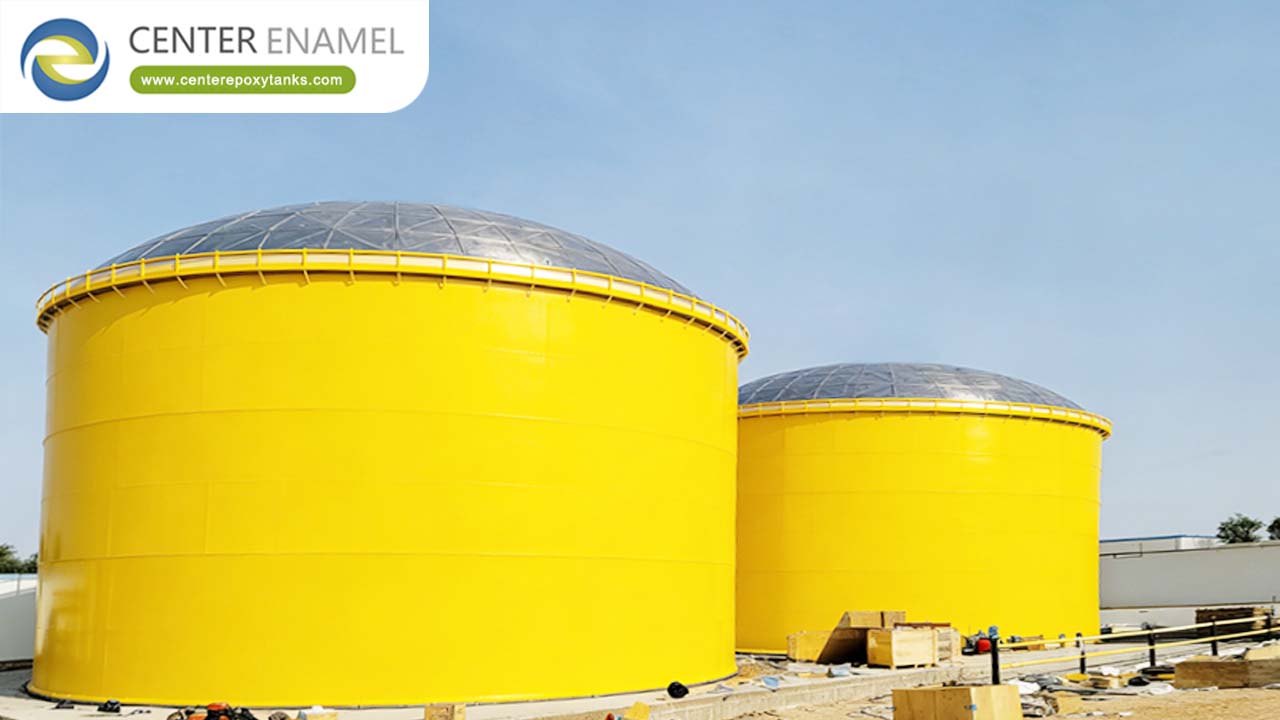
Welded Carbon Steel Dry Bulk Storage Tanks: Engineering & Procurement Guide
Welded carbon steel dry bulk storage tanks are the premier choice for large-scale, high-density industrial material storage, including cement, grain, fly ash, and mineral ores. Unlike modular bolted options, welded steel tanks provide a completely monolithic, leak-proof structure with superior structural rigidity and longevity. Leading Chinese manufacturers fabricate these tanks using precision automated welding techniques, adhering to international standards such as API 650, ASME, and GB/T codes. For projects requiring high-volume throughput and permanent on-site installation, these tanks offer the best balance of structural strength, load-bearing capacity, and long-term cost-efficiency.
The Industrial Requirement: Why "Welded" is the Standard
When managing massive volumes of dry bulk materials, structural failure or material contamination is not an option. Industrial facilities utilize welded carbon steel silos for three defining reasons:
Monolithic Integrity: Welding creates a single, unified vessel. There are no gaskets, seals, or bolts that can vibrate loose or fail over time, ensuring zero leakage of fine powders (like fly ash or cement).
High Stress Tolerance: Carbon steel possesses excellent tensile strength, allowing for the construction of tall, massive silos capable of supporting heavy roofs, conveyors, and complex aeration systems without structural fatigue.
Custom Engineering: Welded fabrication allows for highly customized geometry, including non-standard hoppers, complex internal discharge mechanisms, and integrated support skirt structures that would be difficult to achieve with modular/bolted designs.
Comparative Overview: Bulk Storage Technologies
Feature | Welded Carbon Steel | Bolted Steel | Concrete (RCC) |
Structural Integrity | Monolithic (Strongest) | Modular (High) | High (But prone to cracks) |
Leak-Proofing | Guaranteed (100%) | Sealant Dependent | Porous |
Installation | Field/Shop Welded | Modular Assembly | Slow Civil Build |
Customization | High | Limited by Panel Size | High (But expensive) |
Maintenance | Low (Corrosion protection) | Moderate (Bolt checks) | High (Structural repairs) |
Quality Assurance in Chinese Manufacturing
For global procurement managers, the primary concern with welded tanks is the quality of the weld seam. Top-tier Chinese manufacturers now employ advanced quality assurance (QA) protocols that meet or exceed Western engineering standards:
Non-Destructive Testing (NDT): 100% of critical structural welds are verified using X-ray, Ultrasonic Testing (UT), or Magnetic Particle Inspection (MPI) to identify subsurface defects.
Automated Welding: Utilization of Submerged Arc Welding (SAW) and Gas Metal Arc Welding (GMAW) robots ensures consistent bead depth, penetration, and tensile strength, eliminating the variability inherent in manual welding.
Surface Preparation: Post-fabrication, tanks are typically sandblasted to SA 2.5 standard, followed by the application of multi-layer epoxy or polyurethane coatings to provide long-term protection against atmospheric corrosion.
Technical Specifications for Dry Bulk Handling
To ensure the silo functions correctly with your material, manufacturers engineer specific systems into the welded structure:
Aeration/Fluidization: Integrated aeration pads or cones prevent "bridging" or "rat-holing" of fine bulk materials, ensuring consistent flow.
Venting & Dust Control: Top-mounted dust collectors and pressure relief valves are standard to manage the pneumatic loading processes common in bulk transport.
Load Management: Finite Element Analysis (FEA) is conducted to verify the tank's response to high-density static loads, wind shear, and seismic activity based on the installation site's location.
Frequently Asked Questions (FAQ)
Q: How do you transport large welded silos from China?
A: Depending on the diameter, manufacturers use two strategies. For smaller tanks (up to ~4m diameter), they are fabricated in the factory and shipped as complete units. For large-scale industrial silos, the tank shell is fabricated in large "canned" segments (rings) which are then welded together on-site by certified teams.
Q: What is the lifespan of a welded carbon steel tank?
A: With a proper protective coating system (sandblasting + high-grade epoxy) and regular maintenance, a welded carbon steel tank typically remains in service for 30 to 50 years.
Q: Can you match international design codes (API/ASME)?
A: Yes. Trustworthy Chinese manufacturers have extensive experience exporting to the US, Europe, and Australia. They maintain comprehensive engineering files, including material test reports, weld maps, and NDT reports that allow your local third-party inspectors to sign off on the installation.
A Trusted Partner for Industrial Infrastructure
Selecting a welded tank manufacturer is an infrastructure decision. By partnering with firms that prioritize certified NDT testing, automated fabrication, and rigorous surface preparation, you ensure your bulk storage system remains the reliable engine of your facility’s production line.
Are you evaluating a new bulk storage project or upgrading your current material handling system?
Contact our technical engineering team to receive a feasibility study, weld specification data, and a custom tank design proposal tailored to your material density and site-specific load requirements.


