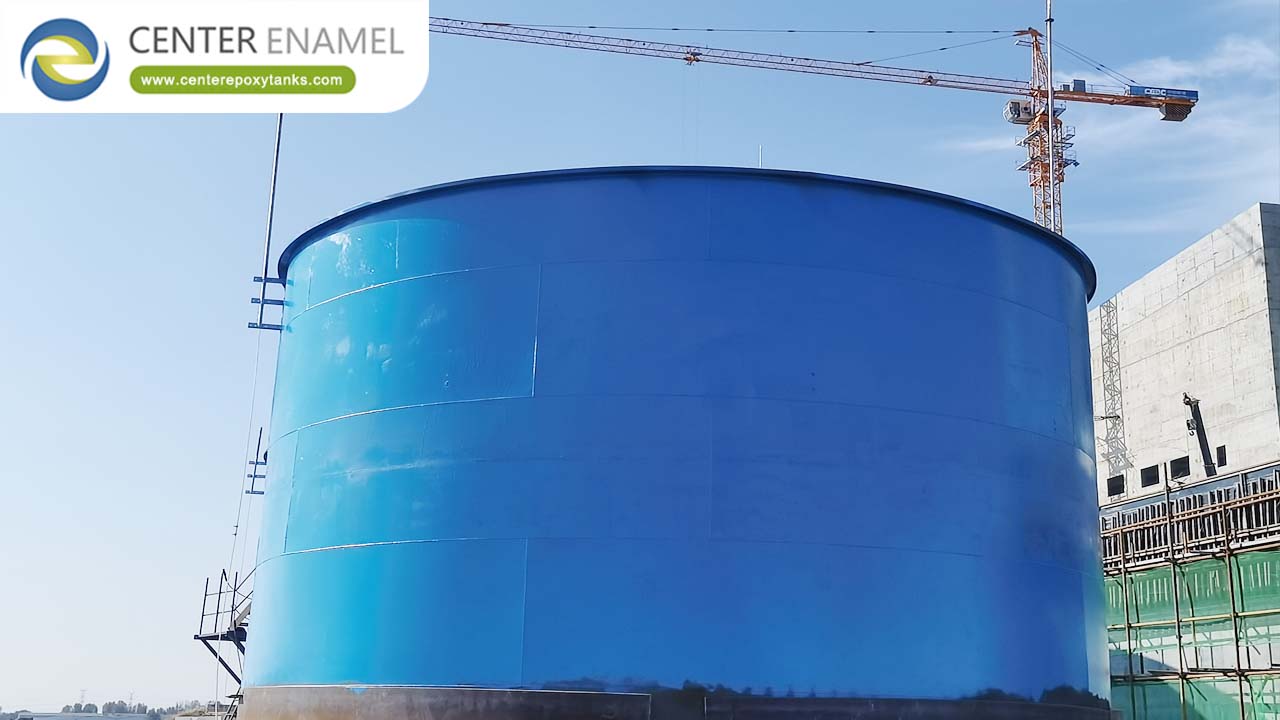
Single Layer Carbon Steel Storage Tanks: Industrial Procurement & Engineering Guide
Single-layer carbon steel storage tanks remain the backbone of heavy industrial containment due to their superior cost-efficiency, high structural strength, and versatility. As global infrastructure demand grows—projected to reach nearly USD 50 billion in the storage tank market by 2034—industrial buyers are increasingly looking to China’s sophisticated manufacturing landscape for high-capacity, engineered-to-order solutions.
Whether for oil and gas, process water, or chemical storage, selecting the right partner requires balancing mechanical specifications with rigorous quality verification.
1. Why Carbon Steel for Industrial Storage?
While stainless steel offers inherent corrosion resistance, carbon steel (often referred to in the industry as "black steel") provides a unique set of mechanical advantages:
● Structural Robustness: Higher tensile strength per dollar, allowing for the construction of larger-diameter, high-volume tanks capable of withstanding significant hydrostatic and external mechanical loads.
● Economic Scalability: Material and fabrication costs are significantly lower than exotic alloys, making them the most viable choice for vast petrochemical tank farms or municipal water reservoirs.
● Thermal Performance: Excellent mechanical integrity across extreme temperature ranges, easily accommodating heating or cooling jackets for process fluids.
● Customization: Highly ductile and easy to weld, allowing for rapid fabrication of bespoke nozzle configurations, agitator mounts, and manways.
2. Engineering Compliance: The API 650 Standard
For any industrial-grade tank, adherence to API 650 (the global standard for welded atmospheric storage tanks) is non-negotiable. Leading Chinese manufacturers design these tanks based on:
● Design Pressure: Atmospheric (up to 2.5 psig).
● Calculation Methods: Utilization of the "One-Foot Method" or "Variable-Design-Point Method" for shell thickness to ensure structural safety while optimizing material weight.
● Corrosion Allowance (CA): Integration of additional steel thickness specifically calculated to account for the expected loss of material over the tank’s operational service life.
● Material Grades: Use of high-yield carbon steels (e.g., Q345R or ASTM A36) to ensure durability.
Crucial Note: Because carbon steel is naturally prone to oxidation, the tank's lifespan is entirely dependent on the applied protective systems. Procurement must specify the correct internal lining (e.g., epoxy, phenolic, or resin-based) and external coating (e.g., zinc-rich primers, polyurethane topcoats) based on the stored product’s chemical aggressiveness.
3. Vetting Chinese Manufacturers: A 4-Step Verification Framework
To mitigate supply chain risks and ensure the tank meets international life-safety requirements, utilize this professional vetting framework:
Verification Step | Action Item |
Business License | Cross-reference the Unified Social Credit Code on the Chinese government's NECIPS/GSXT database. |
Quality Systems | Demand current ISO 9001 (Management) and verify certifications with the issuing body (e.g., TÜV, SGS). |
Technical Capability | Request the WPS (Welding Procedure Specification) and PQR (Procedure Qualification Record) to ensure weld integrity. |
Physical Audit | Conduct an on-site or third-party factory audit to confirm production capacity, equipment (e.g., automatic submerged arc welders), and QC testing stations. |
4. Operational Best Practices
To maximize the ROI of your carbon steel storage asset, implement these management strategies:
● Non-Destructive Testing (NDT): Ensure all primary welds undergo radiographic (X-ray) or ultrasonic inspection during fabrication.
● Cathodic Protection: For tanks placed in corrosive soils (underground) or environments, include an impressed current or sacrificial anode system to augment the coating's protection.
● Regular Inspections: Follow API 653 guidelines for periodic maintenance, which includes utilizing Remote Operated Vehicles (ROVs) for internal inspections to avoid costly tank draining.
Frequently Asked Questions (FAQ)
Q: Can a single-layer carbon steel tank be used for food or drinking water?
A: Generally, no. While high-grade, food-safe epoxy linings exist, stainless steel is typically the industry preference due to its inherent hygiene and low surface roughness. Carbon steel is best suited for process water, fuel, oil, and industrial chemical storage.
Q: How are these large tanks transported?
A: Leading manufacturers use modular fabrication. The shell plates are rolled and finished in the factory, then "nested" for efficient container shipping, significantly reducing logistics costs. On-site assembly is then performed by local or manufacturer-provided welding teams.
Q: What is the lead time for a custom-engineered tank?
A: Lead times vary based on capacity and complexity. A standard, pre-engineered tank might take 4–8 weeks, while custom-designed large-scale projects involving FEA (Finite Element Analysis) may require 12–20 weeks including raw material procurement and fabrication.


