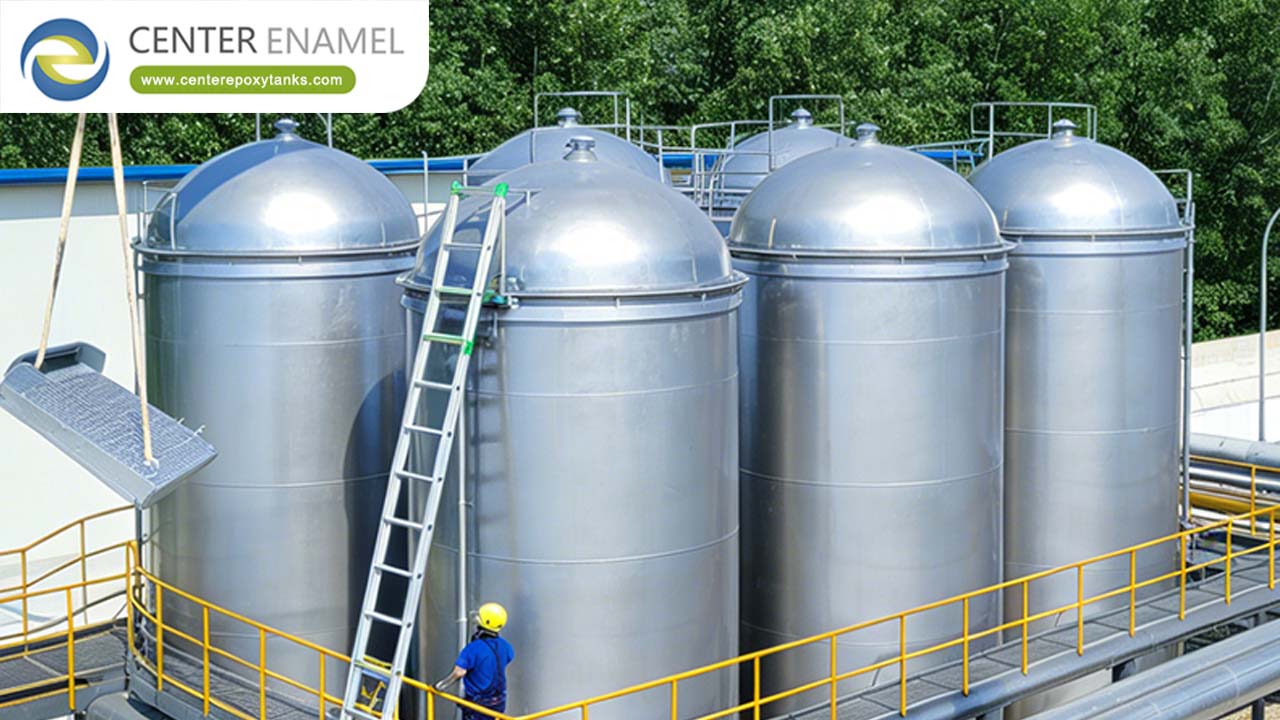
Selecting a Top-Tier China Industrial Oil Tank Manufacturer: A Procurement Guide
Selecting a reputable industrial oil tank manufacturer in China requires a rigorous evaluation process that extends beyond simple price comparison. In the global energy and industrial infrastructure sector, your tank is a long-term capital asset. Partnering with a manufacturer that adheres to international standards—such as API 650 and ASME—is the primary safeguard against environmental liability, product loss, and structural failure.
1. Technical Benchmarks: What Defines a "Top-Tier" Manufacturer?
Not all fabrication shops are equipped for industrial oil storage. To ensure your investment is built to last, verify that your manufacturer meets these four critical pillars of industrial competence:
A. API 650 Compliance (The Industry Standard)
The API 650 standard is the global benchmark for welded, aboveground, flat-bottomed storage tanks. A manufacturer must be able to demonstrate:
● Design Calculations: Ability to perform site-specific seismic and wind load analyses.
● Material Traceability: Full documentation (Mill Test Reports) for every steel plate, ensuring thickness and chemical composition meet the standard.
● Weld Procedures: Strict adherence to qualified welding procedures (WPS) and welder certifications.
B. Automated Fabrication Precision
Modern tank fabrication has moved away from manual labor toward machine-assisted precision.
● Automated Welding: Look for Submerged Arc Welding (SAW) for critical shell seams. This reduces human error and heat-affected zones (HAZ), resulting in stronger, more consistent joints.
● CNC Cutting: Computer Numerical Control plasma cutting ensures that steel plates fit perfectly, minimizing the need for "forcing" plates together, which causes structural stress.
C. Rigorous Testing Protocols (NDT)
A top-tier manufacturer treats quality control as an engineering process, not an afterthought.
● Non-Destructive Testing (NDT): Standard procedures should include Radiographic Testing (RT) for weld intersections, Ultrasonic Testing (UT) for plate integrity, and Vacuum Box Testing for bottom plate leaks.
● Hydrostatic Testing: The final confirmation of structural integrity. A "hydro-test" fills the tank with water to simulate full operational pressure, ensuring no leaks exist before shipping.
2. Comparison Matrix: Procurement Strategy
Facility managers must distinguish between a generic fabricator and an industrial engineering partner.
Procurement Factor | Generic Fabricator | Top-Tier Manufacturer (e.g., Center Enamel) |
Standards | "Built to Request" | Strictly API 650/ASME Certified |
Material Quality | Commodity Steel | Traceable, Mill-Certified Steel |
Fabrication | Manual/Hand-Welding | Automated SAW/CNC Precision |
Documentation | Minimal/Incomplete | Full QA/QC Packages & Engineering Stamps |
Support | Transactional (Shipped & Done) | Lifecycle/Engineering/Installation Support |
3. Why Global Procurement Managers Choose Center Enamel
Shijiazhuang Zhengzhong Technology Co., Ltd (Center Enamel) has bridged the gap between large-scale manufacturing capacity and rigorous engineering compliance. We are not just a "factory"; we are an infrastructure partner.
● Global Export Expertise: We understand the nuances of international logistics and code compliance, from seismic-prone regions to corrosive coastal environments.
● Turnkey Engineering: Our technical team assists in the design phase, providing structural calculations and CAD modeling that integrate seamlessly with your project's environmental requirements.
● Multi-Standard Versatility: While we specialize in API 650 welded steel, we also offer bolted GFS (Glass-Fused-to-Steel) solutions for secondary storage and firewater, providing a "one-stop" resource for your entire industrial facility storage needs.
4. Frequently Asked Questions (FAQ)
Q: Does Center Enamel support third-party inspections?
A: Absolutely. We encourage our clients to engage third-party inspection firms (e.g., SGS, Bureau Veritas, or Intertek) at any point during fabrication. Transparency in quality control is the foundation of our manufacturing philosophy.
Q: What documents should I expect at the end of the project?
A: You should receive a comprehensive Data Book containing material test certificates (MTRs), welder qualification records, NDT inspection reports, dimensional accuracy logs, and a final certificate of compliance against the agreed-upon standards.
Q: Can you handle custom tank designs for specific hazardous liquids?
A: Yes. We work closely with your engineering team to determine the necessary corrosion allowance, lining materials, and auxiliary nozzle requirements based on the chemical properties of your stored product.
Engineering Certainty for Your Infrastructure
Choosing an industrial tank manufacturer is a decision that impacts the safety and reliability of your facility for the next 20 to 30 years. By prioritizing manufacturers that invest in API-compliant automation, stringent testing, and end-to-end documentation, you safeguard your assets and your reputation.
Are you currently sourcing tanks for an upcoming refinery or industrial project, or do you need assistance drafting the technical specifications for an upcoming tender?


