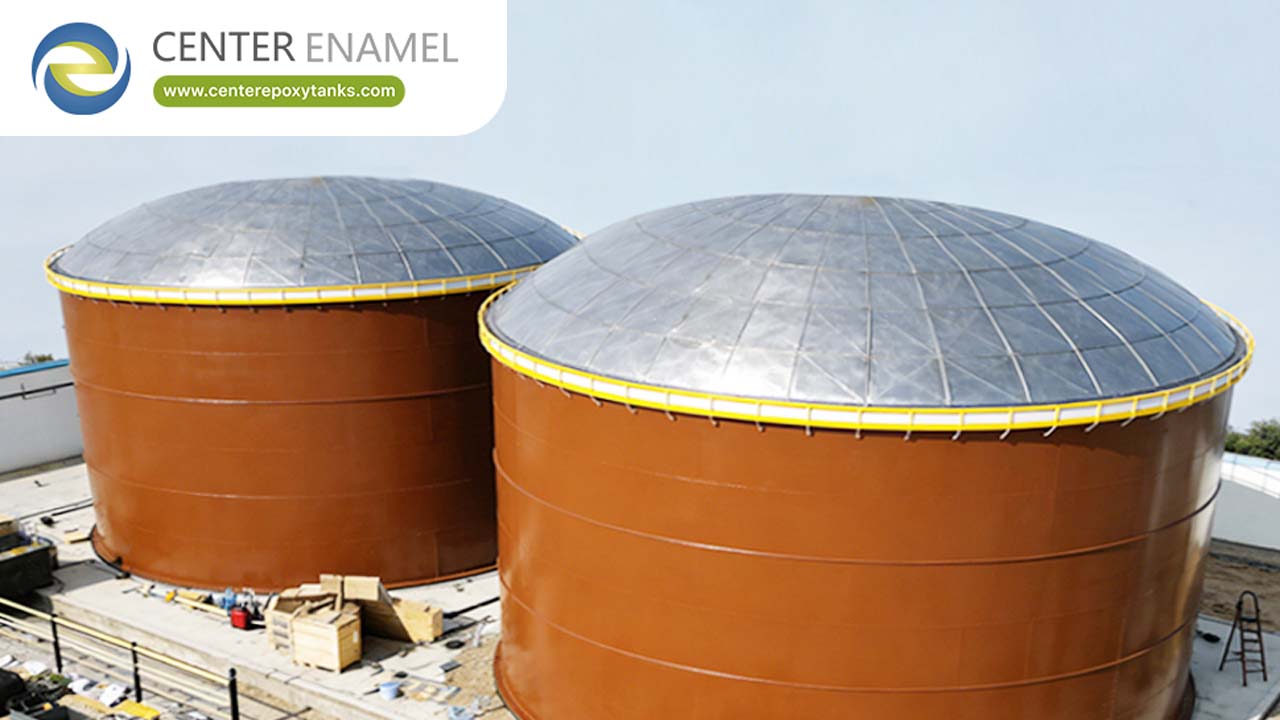
China Diesel Storage Tanks: Engineering, Material Science & Global Sourcing Guide
Bulk diesel containment demands robust structural assets engineered to mitigate unique operational risks: fuel degradation, moisture accumulation, environmental leaching, and structural deformation. Whether deploying aboveground storage tanks (ASTs) for mining operations and remote generator sets, or subterranean configurations for commercial fueling networks, selecting an industrial storage partner involves strict compliance validation.
As global supply chains lean into high-capacity fabrication, sourcing from a leading China diesel storage tank manufacturer requires a meticulous technical audit. International buyers must look past standard volumetric pricing to evaluate structural engineering typologies, double-wall containment frameworks, specific weld qualities, and compliance with certifications like API 650 and UL 142.
1. Structural Engineering & Stress Deflection Dynamics
Industrial diesel storage tanks are subject to continuous hydrostatic pressure fields exerted by the high specific gravity of fuel oils ($sim 0.85 text{ kg/L}$). Aboveground vertical cylindrical tanks rely on engineered shell-plate gradients to withstand maximum localized hoop stress at the bottom-most plate ring.
The Variable-Design-Point Variable Stress Equation
For field-erected bulk distribution terminals built to API 650 standards, top-tier Chinese engineering firms calculate the required design shell plate thickness ($t_d$) for each vertical ring using advanced stress deflection modeling:
Without these precise structural calculations, thin-walled generic carbon steel shells face high risks of axial compressive buckling or localized "elephant's foot" deformation along the bottom shell-to-floor boundary joints.
2. Material Science & Anti-Corrosion Linings
Modern diesel fuel blends—specifically Ultra-Low Sulfur Diesel (ULSD) and biodiesel mixtures—are highly hygroscopic. They readily absorb water from atmospheric moisture condensation cycles. This water phase-separates, settling at the absolute base of the tank and creating a breeding ground for anaerobic microbial colonies (such as Cladosporium resinae). These colonies metabolize fuel hydrocarbons and excrete aggressive organic acids, triggering severe Microbiologically Induced Corrosion (MIC).
Substrate Metallurgies
Premium Chinese fabricators utilize high-performance structural steels that ensure mechanical tenacity:
● Q235B & Q345R / Q420: Standard high-strength carbon steels common in domestic Chinese heavy manufacturing, offering an excellent yield-to-tensile ratio for fuel containment applications.
● ASTM A36 / A516 Grade 70: Deployed regularly by export-oriented manufacturers to fulfill strict Western structural procurement requests.
● 304/316L Stainless Steel: Specified for critical transport elements, specialized sumps, or multi-fuel filtration vessels demanding intrinsic resistance to rust and microbial biofilms.
Industrial Inner Linings & External Coatings
To insulate carbon steel substrates from MIC and environmental weathering, modern tanks receive rigorous surface treatments:
● Internal Lining: High-build, amine-cured novolac epoxy liners applied at a dry film thickness (DFT) of 300m. This smooth, non-porous finish prevents sludge adhesion and withstands acidic water layers.
● External Shell Coating: Heavy-duty polyurethane or epoxy-polysiloxane topcoats applied over a commercial blast-cleaned surface (Sa 2.5 classification). This maximizes UV deflection and prevents atmospheric corrosion in humid or coastal environments.
3. Core Tank Architecture Typologies
Depending on site space limitations, environmental regulations, and specific fuel throughput velocities, buyers choose between distinct mechanical structural profiles.
Engineering Vector | UL 142 Double-Wall AST (Aboveground) | SF Double-Wall UST (Underground) | API 650 Bulk Field-Erected Tank |
Primary Capacity Range | 1,000 to 150,000 Liters | 20,000 to 100,000 Liters | 200,000 to 50,000,000+ Liters |
Structural Design | Skid-mounted horizontal or vertical shop-fabricated steel cylinders. | Subterranean horizontal configuration with external reinforcement ribs. | Multi-tier vertical cylindrical tank with fixed cone or floating roof. |
Secondary Containment | Integral self-contained steel outer wrap providing 110% containment. | Primary steel tank enclosed within a rugged outer fiberglass (FRP) wrap. | Concrete ring-wall foundation with external dikes or geosynthetic clay liners. |
Leak Detection Interface | Interstitial monitoring via visual sight glass or vacuum sensors. | 1.2mm continuous interstitial clearance linked to electronic fluid sensors. | Under-floor leak detection channels routed to specialized perimeter sumps. |
4. Manufacturing Quality Control & Verification Matrix
The primary structural indicator of an expert China diesel storage tank manufacturer is the inclusion of highly automated, non-destructive testing (NDT) protocols during shell fabrication.
Automated Submerged Arc Welding (SAW)
Manual stick welding introduces human error, which can cause internal slag inclusions or microscopic root porosity. Tier-1 manufacturers utilize automated SAW rigs to complete all long-seam and girth-seam welds. This provides a continuous, high-penetration bead contour with minimal thermal stress distortion.
Rigorous NDT Inspection Protocols
Before any asset leaves the factory floor or passes field-erection benchmarks, it must undergo strict QA/QC loops:
● Radiographic Testing (RT): 100% X-ray verification of all critical T-joints and longitudinal shell welds to confirm complete penetration and zero internal voids.
● Vacuum Box Testing: Applying a specialized transparent suction box over soap-coated floor-lap weld joints to identify any microscopic pressure leaks.
● High-Voltage Holiday Testing: Utilizing a spark-testing wand across internal epoxy linings to verify that the coating is completely continuous and free of pinholes.
Frequently Asked Questions (FAQ)
Q: What is the main difference between UL 142 and API 650 standard tanks?
A: UL 142 governs shop-fabricated, steel aboveground tanks for flammable and combustible liquids, typically limited to smaller sizes that can be completely assembled in-factory and shipped via standard flatbeds or containers. API 650 governs large-scale, atmospheric vertical storage tanks that must be shipped as pre-cut, nested plates and field-welded directly on-site by certified crews.
Q: How do China manufacturers protect underground diesel tanks from soil corrosion?
A: Underground tanks utilize an SF (Steel-Reinforced Fiberglass) design. The inner primary tank is built from high-strength carbon steel to handle structural fuels, while the outer shell layer is a thick wrap of fiber-reinforced plastic (FRP). This outer coating provides excellent electrical insulation and complete protection against aggressive soil chemistries, moisture, and stray galvanic currents.
Q: Can these tanks safely store biodiesel or ethanol-blended diesel fuels?
A: Yes, provided the internal lining is specified correctly. Standard bare carbon steel can undergo accelerated pitting when exposed to biodiesel blends due to moisture retention and microbial activity. Specifying an internal amine-cured novolac epoxy lining or utilizing high-grade stainless steel components ensures complete fuel compatibility.


