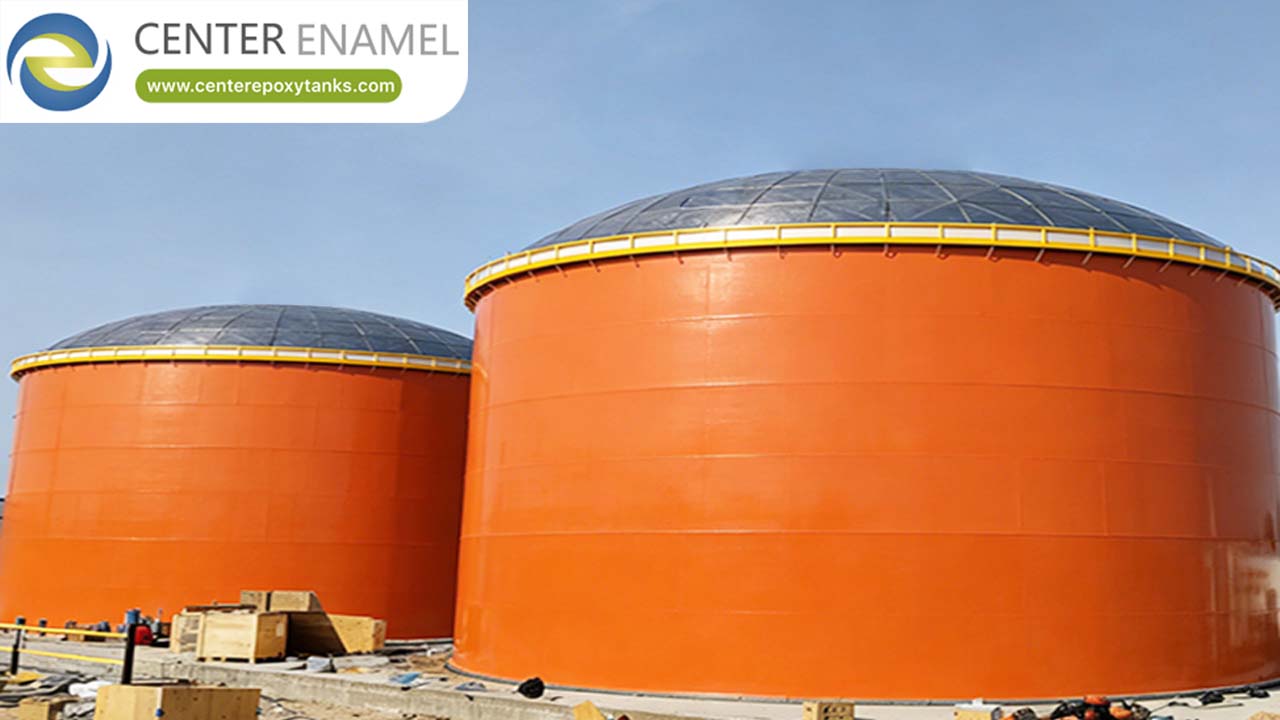
Carbon Steel Lubricating Oil Storage Tanks: Engineering & Maintenance Guide
Lubricating oil is the "lifeblood" of industrial machinery, yet its performance is highly sensitive to environmental factors. Unlike bulk crude oil, where volume is the primary metric, lubricating oil storage demands absolute purity. Contamination by water, particulates, or oxidation significantly degrades additive packages and base oil integrity. Carbon steel, when properly engineered with internal lining systems and atmospheric controls, remains the most cost-effective and structurally robust solution for bulk lubricant storage. This guide outlines the engineering specifications required to maintain "like-new" oil quality from receipt to machine fill.
1. Engineering the "Pure" Storage System
Storing lube oil in carbon steel requires a departure from standard fuel storage practices. Because carbon steel can shed iron oxide (rust) flakes over time, and because lubricants are highly susceptible to moisture-induced degradation, the design must prioritize three pillars: Sealing, Lining, and Filtration.
● Internal Lining Integrity: Standard carbon steel surfaces are not inert. To prevent rust-related particulate contamination, tanks must be finished with factory-applied, oil-compatible epoxy or phenolic linings. These create an impermeable barrier that prevents iron oxidation and ensures the lubricant never contacts the base metal.
● Atmospheric Control (Desiccant Breathers): Lube oil is hygroscopic (it attracts moisture). Standard tank vents are insufficient. Premium installations utilize desiccant breathers on all vents, which remove moisture and particulates from incoming air, maintaining the "dry" head-space required to prevent additive precipitation.
● Filtration Integration: Bulk tanks should be designed with dedicated "kidney loop" filtration ports. This allows for continuous or periodic offline filtration (polishing) of the oil to meet specific ISO cleanliness codes (e.g., ISO 4406: 18/16/13) before the oil is dispensed into equipment.
2. Procurement Matrix: Industrial Lube Tank Specifications
When sourcing or specifying a lubricating oil tank, avoid "commodity" fuel tank configurations. Use the following matrix to ensure your procurement meets industrial maintenance standards.
Component | Industrial Lube Specification | Why it Matters |
Internal Lining | Food-grade/Oil-compatible Phenolic | Prevents rust flakes; inert to oil additives. |
Venting | Integrated Desiccant Breathers | Prevents moisture/particulate ingress. |
Sampling Points | Dedicated sample ports (mid-tank) | Allows for accurate representative oil analysis. |
Drainage | Sloped floor + Bottom Sump | Enables removal of any settled water/sediment. |
Level Control | Ultrasonic/Radar (Non-contact) | Accurate volume tracking without potential leak points. |
3. Best Practices for Lube Oil Longevity
The design of the tank is only half the battle; the operational lifecycle dictates the oil's efficacy.
● Thermal Stability: Lubricants are sensitive to extreme heat and cold. Bulk tanks should ideally be housed indoors or within climate-controlled enclosures. If outdoor storage is necessary, insulate the tank shell to dampen the effects of diurnal temperature cycling, which drives moisture condensation inside the tank.
● The FIFO Strategy: Implement a "First-In, First-Out" inventory system. Lube oil has a shelf life; the additive package can settle or degrade over long periods. Your tank layout should support easy rotation and access to older stock.
● Bottom Sump Management: Even with desiccant breathers, trace water can accumulate. Periodic checks of the bottom sump—and scheduled drainage—are essential to ensure that water never reaches the pumping intake.
4. Frequently Asked Questions (FAQ)
Q: Why choose carbon steel instead of stainless steel for lube oil?
A: Carbon steel is the industry standard for bulk storage due to its exceptional structural strength-to-cost ratio. While stainless steel offers inherent corrosion resistance, its cost is often prohibitive for large-volume tanks. When carbon steel is paired with high-performance, factory-applied epoxy linings, it provides the same purity protection as stainless steel at a fraction of the capital expenditure.
Q: Can I retrofit an old fuel tank for lubricating oil?
A: Generally, no. Fuel tanks often have internal sediment and residue that are nearly impossible to clean to the standard required for lubricating oil. Furthermore, fuel tanks rarely feature the dedicated breather/filtration ports necessary for oil purity. It is almost always more cost-effective to install a purpose-built tank than to attempt to remediate a legacy vessel.
Q: How often should I test the oil in the tank?
A: For bulk storage, a quarterly oil analysis (viscosity, water content, and particle count) is recommended. This verifies that your filtration and breather systems are performing as intended and ensures that the oil is ready for use in critical equipment.
The storage of lubricating oil is a critical component of a plant's reliability program. By moving away from commodity-grade steel vessels and toward purpose-engineered, internally-lined carbon steel tanks with integrated filtration and desiccant systems, facilities can significantly reduce contamination-related failures and extend the service life of their machinery.
Are you currently specifying bulk storage for your facility’s lubrication program, and would you like to review the technical datasheet for our high-chemical-resistance epoxy internal linings?


