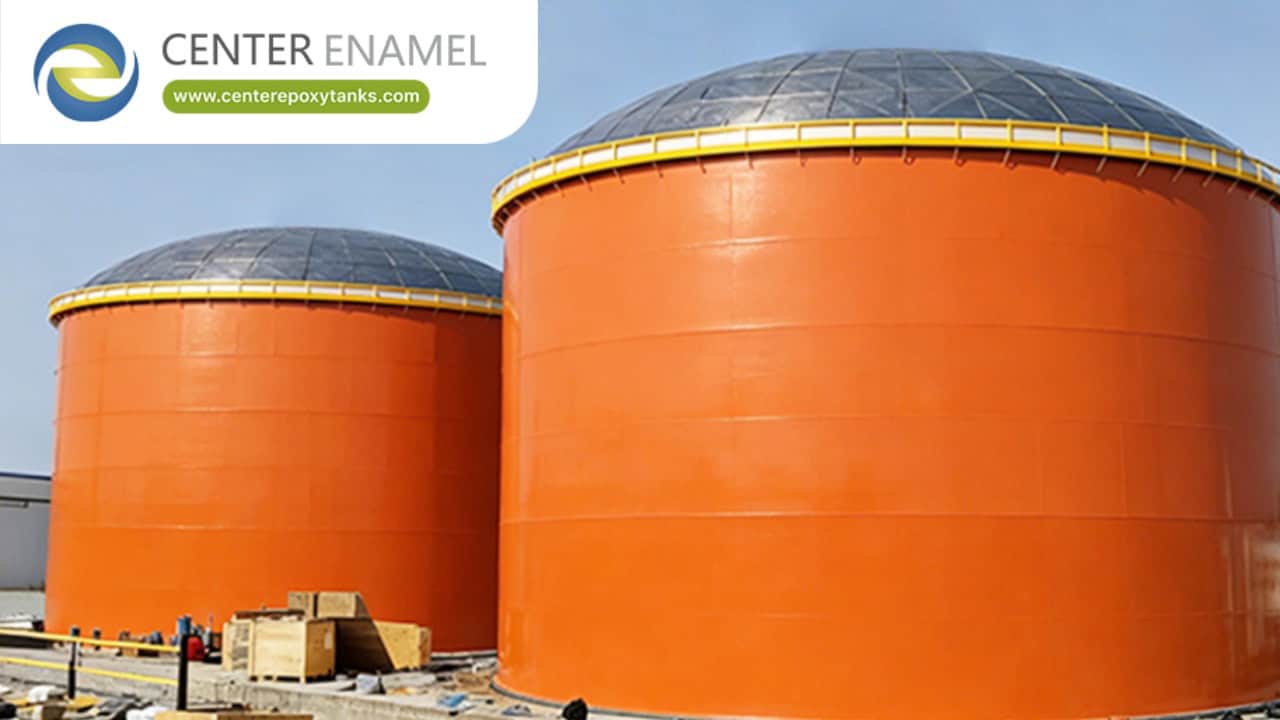
Aluminum Geodesic Dome Roofs: Engineering & Procurement Guide for Storage Tanks
In the oil, gas, and water treatment industries, the transition from traditional fixed steel roofs to aluminum geodesic dome roofs has become the gold standard for long-term asset management. These structures offer a clear-span, corrosion-resistant, and maintenance-free solution for large-diameter storage tanks. For global EPC contractors and procurement managers, sourcing these roofs from high-end Chinese manufacturers offers significant advantages in manufacturing precision, logistical efficiency, and cost-effectiveness, provided the manufacturer adheres to rigorous international design standards like API 650 and AWWA D108.
1. Why Geodesic Domes? Technical Advantages
Unlike traditional flat or cone roofs, the geodesic dome utilizes a triangular lattice framework that provides an exceptional strength-to-weight ratio.
● Self-Supporting (Clear-Span): The triangulated geometry is inherently stable. It requires no internal support columns, rafters, or trusses. This eliminates internal corrosion sites and maximizes the usable storage volume of the tank.
● Corrosion Resistance: Fabricated from high-strength, marine-grade aluminum alloys, these roofs are naturally immune to oxidation. They eliminate the need for periodic painting or epoxy recoating—a major O&M cost for steel roofs.
● Emission Control: When paired with internal floating roofs (IFRs) or used as a standalone cover, the dome acts as a "gasketed shield," significantly reducing VOC (Volatile Organic Compound) emissions and preventing environmental contaminants like rain or snow from entering the tank.
● Thermal Regulation: Aluminum’s high solar reflectivity reduces the heat gain of the stored medium, minimizing evaporative losses ("breathing losses") in petroleum products and preventing thermal stratification in water reservoirs.
2. Global Engineering Compliance
A manufacturer is only as good as their design standards. When reviewing a bid or Request for Proposal (RFP), ensure the manufacturer operates in strict accordance with these benchmarks:
Standard | Application | Engineering Requirement |
API 650 Appendix G | Petroleum & Chemical Storage | Defines the structural, material, and design requirements for aluminum domes on welded storage tanks. |
AWWA D108 | Water & Wastewater Tanks | Specifies the structural design of aluminum dome roofs for water storage applications. |
ASCE 7 / IBC | Environmental Loads | Mandates the calculation of wind, snow, and seismic loads specific to the tank's geographic location. |
ISO 9001 | Quality Management | Ensures consistent fabrication, traceability, and documentation of all components. |
3. Procurement Vetting Matrix: How to Evaluate Manufacturers
Sourcing from China offers immense scale and production capabilities, but buyers must differentiate between "commodity fabricators" and "industrial engineering partners." Use the following criteria for your vetting process:
A. Design Capabilities
● Software: Does the manufacturer utilize professional 3D CAD/FEA (Finite Element Analysis) software to simulate load-bearing scenarios?
● Seismic Analysis: Can they provide a specific structural analysis report showing how the dome handles the seismic acceleration of your project site?
B. Production & Quality Control
● CNC Precision: Geodesic domes consist of thousands of individual struts and nodes. High-quality manufacturers use fully automated CNC (Computer Numerical Control) machining to ensure millimeter-level accuracy. If the parts don't fit perfectly at the factory, they won't fit on the tank.
● Traceability: Demand mill test certificates for the aluminum alloys used. Low-grade aluminum can suffer from stress corrosion cracking; verify that the supplier uses 6061-T6 or 6005A-T6 series alloys.
C. Logistics & Installation
● Modular "Flat-Pack" Design: The dome should be shipped as pre-fabricated, compact, high-density pallets. This significantly reduces ocean freight costs.
● Installation Support: Does the manufacturer provide an installation supervisor to guide your local team? A "jack-and-assemble" method is standard, allowing the dome to be built at the tank base and lifted into place, eliminating the need for complex internal scaffolding.
4. Frequently Asked Questions (FAQ)
Q: Can aluminum geodesic domes be retrofitted onto old steel tanks?
A: Yes. This is a common upgrade for aging tank farms. The dome can be built at the tank base and lifted onto the existing shell, often without requiring the tank to be taken out of service for long periods.
Q: How does the aluminum dome react with steel tank shells?
A: To prevent galvanic corrosion, all connection points between the aluminum dome and the steel tank shell must be isolated using high-density dielectric gaskets, washers, or coatings. Professional manufacturers provide these isolation kits as part of the standard dome package.
Q: Is the dome truly maintenance-free?
A: In most environments, yes. Because aluminum forms a passive oxide layer, it does not rust. Beyond occasional inspections of the perimeter seal and bolt torque, these domes are considered a "fit-and-forget" infrastructure asset.
Sourcing an aluminum geodesic dome roof from a qualified Chinese manufacturer is an engineering-driven decision that offers superior ROI through reduced maintenance, extended asset life, and environmental compliance. By insisting on API 650/AWWA D108 adherence and validating the manufacturer’s structural analysis capabilities, you ensure that your storage infrastructure remains robust, compliant, and efficient for decades.
Are you currently evaluating a project requiring clear-span tank covers, and do you need assistance comparing material specifications or seismic load parameters for your site?


