China’s Premium Single Membrane Roof Supplier for Biogas Tanks | Center Enamel
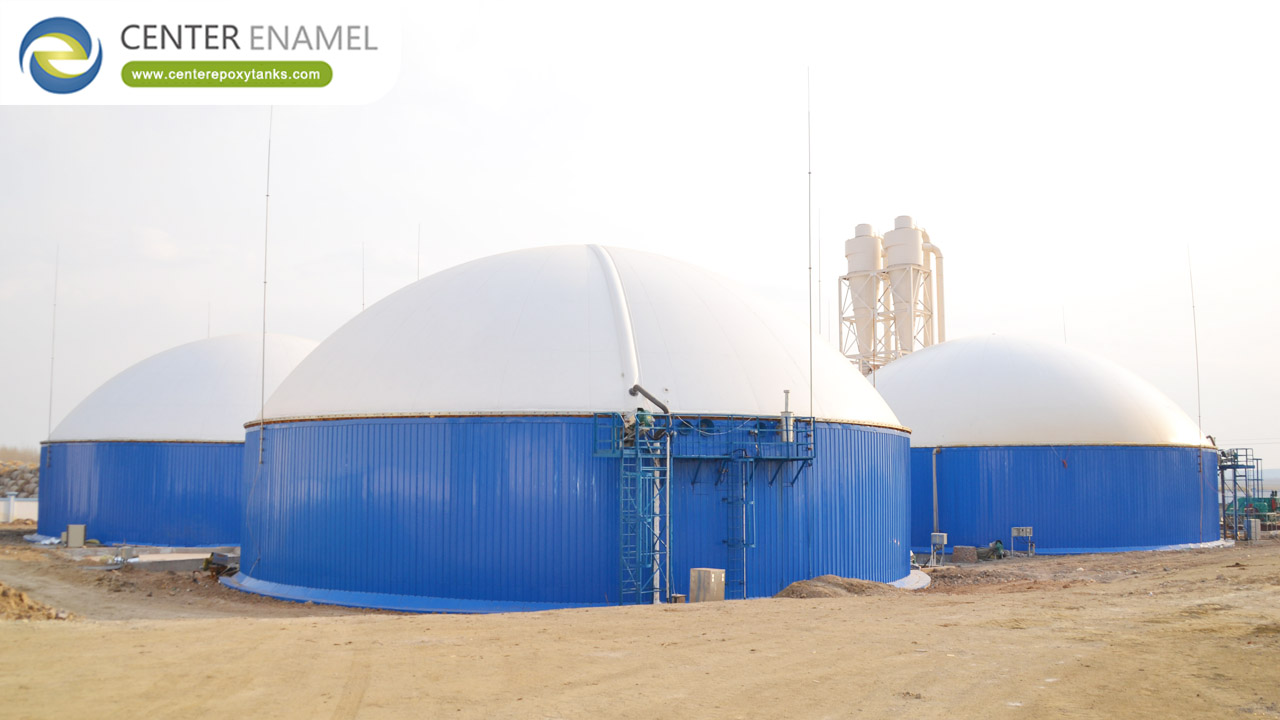
A Single Membrane Roof (often referred to as a single-layer tension cover) is an industrial-grade, weather-resistant cover engineered to shield anaerobic digesters and storage tanks from environmental elements. Unlike double membrane gas holders, which are designed for pressurized gas storage, the single membrane roof focuses on odour containment, preventing rainwater intrusion, and protecting the digester contents from UV degradation and wind loads. Center Enamel (Shijiazhuang Zhengzhong Technology) manufactures these roofs using high-tenacity, chemically resistant polymer fabrics (such as PVC-coated polyester or PVDF) that are welded to provide a monolithic, airtight, and waterproof seal, making them a cost-effective solution for facilities that do not require integrated gas storage volumes.
The Engineering Purpose: Why a Single Membrane Roof?
In many biogas and wastewater treatment configurations, the facility already has a centralized gas storage system or uses direct-combustion engines. In these cases, installing a complex double-membrane system is unnecessary. A single membrane roof provides the necessary "barrier" function without the complexity of pressure control.
Core Engineering Advantages:
Odor Mitigation: By sealing the headspace of a digester, the membrane prevents the escape of hydrogen sulfide ($H_2S$) and other volatile odors, ensuring compliance with environmental regulations.
Waterproofing: The membrane keeps rainwater out of the digester, preventing the dilution of the substrate and reducing the operational load on wastewater treatment systems.
UV & Weather Shielding: The specialized fabric coatings prevent sunlight from triggering algae growth in the tank and protect the structure from extreme wind and snow accumulation.
The Center Enamel Manufacturing Advantage
Procuring large-scale membrane systems from China requires a supplier that understands the intersection of polymer science and structural mechanics. Center Enamel integrates these through:
High-Frequency Welding: Rather than relying on simple gluing or stitching (which create leak points), Center Enamel uses high-frequency welding to fuse membrane panels. This creates a molecular bond that is as strong as the base fabric itself, ensuring absolute gas and liquid tightness.
Material Customization: Not all biogas environments are the same. Center Enamel engineers select membrane formulations based on the specific chemical atmosphere of your tank. For environments with high exposure to aggressive sulfur compounds, they utilize specialized PVDF or high-grade TPU-coated fabrics for enhanced longevity.
Modular Engineering: Their design team creates custom fitments for existing tank diameters. Whether you are retrofitting a concrete tank or upgrading a steel bolted tank, the membrane is cut and tensioned precisely to the tank's geometry.
Strategic Comparison: Single Membrane vs. Double Membrane
For project managers, selecting the right membrane type is a critical budget and operational decision.
Feature | Single Membrane Roof (Cover) | Double Membrane Gas Holder |
Primary Function | Odor control, weather protection | Gas storage & pressure management |
Storage Volume | None (Static) | Variable (Expands/Contracts) |
Operational Complexity | Low (Minimal maintenance) | Moderate (Requires air blower system) |
Cost | Budget-efficient | Higher (Includes storage system) |
Typical Use Case | Storage tanks, secondary digesters | Primary biogas digesters |
Frequently Asked Questions (FAQ)
Q: Does the single membrane roof need to be inflated?
A: No. A single membrane roof is typically tensioned using a central pole, a truss system, or a netting support grid. It does not require continuous air pressure to maintain its shape, making it a "passive" system compared to the "active" double membrane holder.
Q: How do you ensure the membrane doesn't tear under high winds?
A: The membrane is engineered with high-tensile strength polyester reinforcement. The design includes a perimeter clamping system—often a stainless steel or galvanized steel tension ring—that anchors the membrane to the tank wall. This ensures the load is distributed evenly, allowing it to withstand high wind speeds.
Q: Is the material resistant to the biogas atmosphere?
A: Yes. The fabrics used by Center Enamel are explicitly formulated to be inert. They are resistant to the corrosive effects of biogas, including $H_2S$ and moisture, which would otherwise rot standard tarpaulins or canvas.
Q: Can these membranes be used on existing concrete tanks?
A: Yes. Because they are lightweight, they are the preferred solution for covering existing concrete tanks to fix odor issues without needing to structurally reinforce the tank walls for the weight of a heavy roof.
Strategic Procurement Note
To secure a fast, accurate proposal from Center Enamel’s engineering team, your RFQ should include the diameter of the tank, the maximum wind load/snow load in your region, the chemical nature of the headspace (is it high $H_2S$?), and the preferred anchor type (if you have specific mounting requirements). This allows them to verify the structural compatibility of the membrane system immediately.
To ensure I provide the most helpful guidance, are you currently looking to cover a new tank build, or are you retrofitting an existing wastewater or biogas storage tank?


