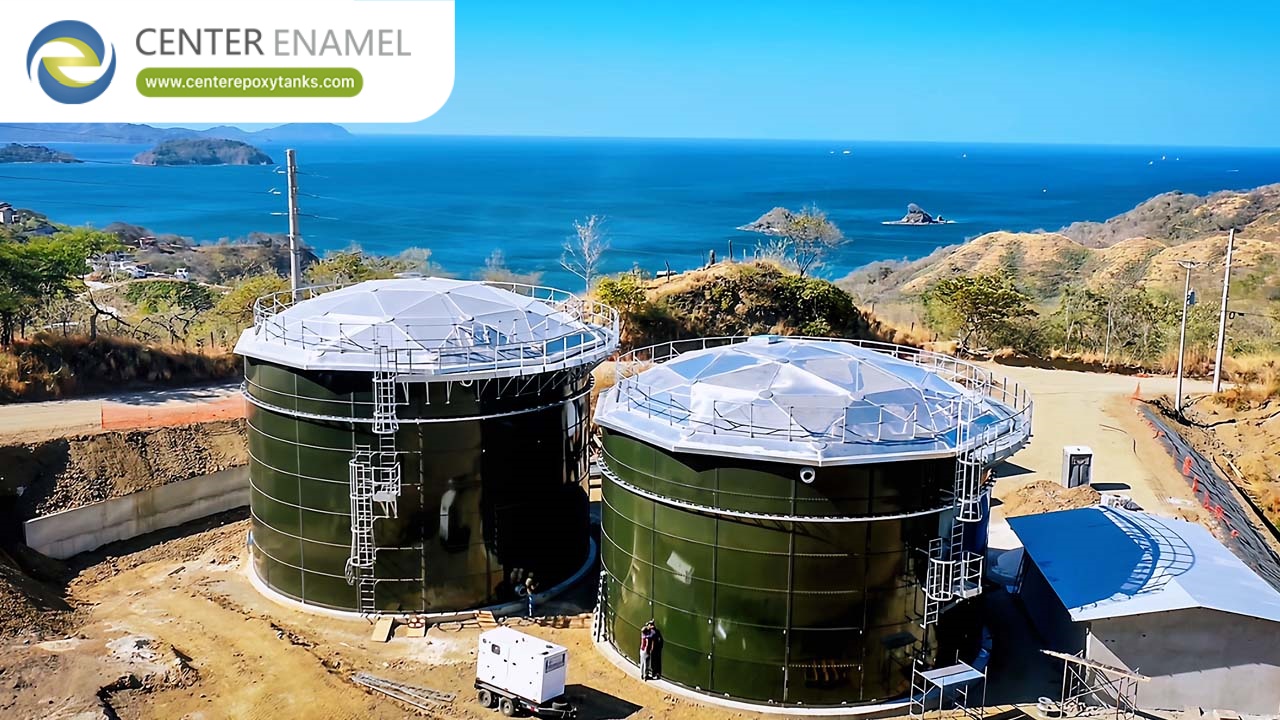
Coated Steel Tanks for Hazardous Waste Storage: Advanced Containment and Regulatory Compliance
In industrial manufacturing, chemical processing, petrochemical refining, and municipal waste management, the safe and secure containment of hazardous waste is a paramount legal and environmental responsibility. Storing corrosive acids, toxic solvents, oily sludges, and hazardous leachate requires rigorous engineering. A containment failure can lead to catastrophic environmental contamination, severe regulatory penalties, and significant operational liabilities.
Among modern containment technologies, coated steel tanks for hazardous waste storage—specifically engineered carbon steel structures protected by advanced factory-applied fusion-bonded epoxy (FBE) or specialized chemical-resistant polymer linings—have become the industry standard. These systems combine the high tensile strength of heavy structural steel with impermeable, chemically inert surface barriers designed to withstand aggressive waste chemistry.
The Engineering Mechanics of Hazardous Waste Containment
Storing hazardous materials demands containment systems that go far beyond standard industrial liquid storage. Coated steel tanks are engineered to address strict operational parameters:
Chemically Inert Internal Barriers: Hazardous waste streams often feature extreme pH levels, ranging from highly acidic to caustic alkaline solutions. Specialized high-performance epoxy and phenolic lining systems protect the carbon steel substrate from chemical attack, pitting, and structural degradation.
Monolithic Structural Integrity: Fabricated in strict accordance with rigorous design codes (such as AWWA D103 or API 650), high-strength steel panels provide superior tensile resilience, ensuring the tank maintains structural integrity under dynamic hydrostatic loads and seismic forces.
Comprehensive Quality Assurance and Testing: Every individual coated panel undergoes rigorous non-destructive testing (NDT), including high-voltage holiday spark testing, to guarantee a 100% pinhole-free surface before field assembly.
Technical Performance Matrix: Hazardous Waste Storage Solutions
Technical Parameter | Factory-Coated Steel Tanks (FBE / Polymer Lined) | Cast-in-Place Concrete Basins | Uncoated Plastic or Composite Tanks |
Chemical & Acid Resistance | Superior; highly cross-linked polymer barriers resist a wide range of aggressive solvents and acids | Vulnerable to concrete carbonation and chemical leaching over time | Prone to chemical permeation, structural softening, and UV degradation |
Regulatory Compliance (EPA/RCRA) | Fully compliant with secondary containment and strict leak-detection parameters | Requires intensive internal elastomeric coating membranes to prevent seepage | Limited structural capacity for heavy industrial hazardous waste volumes |
Installation Velocity & Agility | Rapid modular bolting; quick deployment on prepared foundation pads | Extremely slow civil construction, concrete pouring, and multi-week curing | Limited to smaller manufactured capacities; heavy civil support required |
Maintenance & Inspection | Low-maintenance design with straightforward internal inspection protocols | Difficult to inspect for subsurface micro-cracking and chemical seepage | High risk of stress cracking and environmental weathering fatigue |
Ensuring Regulatory Compliance and Environmental Safety
When designing hazardous waste storage infrastructure, facility operators must adhere strictly to environmental protection regulations, such as the Resource Conservation and Recovery Act (RCRA) enforced by the Environmental Protection Agency (EPA), alongside international ISO safety standards.
Secondary Containment Integration: Coated steel hazardous waste tanks are frequently paired with secondary containment rings or double-wall interstitial monitoring systems to ensure that any primary wall anomaly is instantly detected and contained.
Leak Detection and Monitoring: Advanced sensor ports, level indicators, and automated monitoring systems can be integrated seamlessly into coated steel tank designs, ensuring continuous operational oversight and minimizing spill risks.
Frequently Asked Questions (FAQ)
Q: What makes coated steel tanks suitable for hazardous waste storage?
A: Coated steel tanks combine the high structural strength of carbon steel panels with advanced, factory-applied fusion-bonded epoxy (FBE) or chemical-resistant polymer linings. This dual-layer approach provides high tensile resilience against heavy loads and complete chemical immunity against corrosive waste streams.
Q: Are coated steel hazardous waste tanks compliant with EPA and RCRA regulations?
A: Yes. When engineered, coated, and installed in accordance with recognized industrial standards and equipped with appropriate secondary containment systems, these tanks meet the stringent environmental protection and structural integrity mandates established by regulatory bodies like the EPA.
Q: How do you prevent chemical undercutting or coating delamination in aggressive waste environments?
A: High-performance tanks utilize rigorous surface preparation (such as abrasive grit-blasting to white metal standards) followed by electrostatic powder application and thermal curing. This creates a permanent molecular cross-linked bond that prevents chemical undercutting.
Q: Can coated steel tanks store both acidic and alkaline hazardous waste streams?
A: Yes, provided the specific formulation of the internal polymer or epoxy lining is matched to the chemical composition of the waste. Manufacturers conduct chemical resistance evaluations to ensure the selected coating withstands the specific pH and solvent profile of the stored material.


