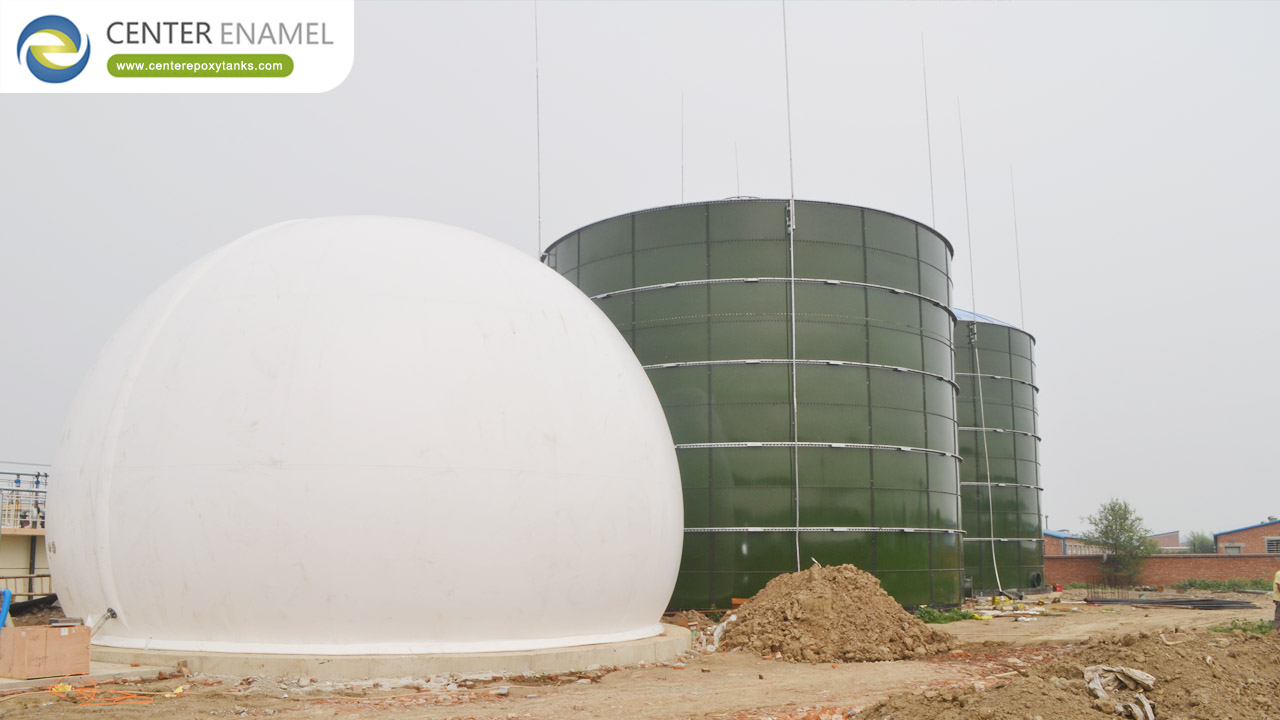
Biogas Balloons For Bio-CNG Plants: Storage, Buffering And Biomethane Production
A bio-CNG plant is a chain: digestion produces biogas, storage buffers it, upgrading refines it, and the grid or the vehicle fleet takes the product. The buffer is the link that decides whether the chain runs continuously — and the balloon holder is the buffer format that installs fastest at the lowest capital cost.
This article covers biogas balloons for bio-CNG plants: the buffering duty, the volume sizing, the pressure management and the safety systems that keep the storage between digestion and upgrading.
The Bio-CNG Gas Train
The gas train runs from the digester gas outlet to the biomethane outlet. Digestion produces continuously; upgrading consumes at its design rate; the utilization point takes product on its own schedule. The storage between them absorbs the mismatch at every stage.
The train also carries the conditioning steps — dewatering, desulphurisation, sometimes siloxane removal — and the holder sits downstream of the gas cleanup so the stored gas is dry and treated.
What Balloon Holders Do
A balloon holder stores gas in a flexible membrane at low pressure. The volume varies with the gas inventory — the membrane rises as gas accumulates and settles as it is drawn — so the storage is inherently variable-volume without moving mechanical parts.
The format’s advantages are installation speed, capital cost and the tolerance to dirty gas: no internal mechanism to corrode, no rigid structure to erect, and the membrane replaces as a wear item rather than the whole storage asset.
Sizing The Buffer Volume
The buffer volume is sized from the gas production profile against the upgrading consumption. The production side is the digester fleet’s daily output with its variability; the consumption side is the upgrading unit’s design rate with its downtime allowance.
The sizing calculation carries the downtime events: the longest planned upgrading outage and the longest credible production peak both set volume, and the design takes the larger. An undersized buffer flares gas the plant paid to produce; an oversized one is capital doing nothing.
Sizing Input | Basis | Effect On Volume |
Daily gas production | Feedstock loading and digester yield | Sets the base storage turnover |
Upgrading consumption rate | Design capacity of the upgrading unit | Sets the drawdown rate |
Planned downtime allowance | Maintenance and service intervals | Sets the outage storage requirement |
Production peak events | Feedstock surges and temperature swings | Sets the peak accumulation volume |
Pressure Management
Pressure management is the balloon holder’s core control. The operating band is low — typically a few hundred pascals to a few kilopascals depending on the membrane and the blower set — and the control keeps the gas within that band as the inventory changes.
The control loop covers three directions: the blower pushes gas into storage, the pressure relief protects the membrane from overpressure, and the vacuum relief protects the membrane from collapse when the blower draws faster than the digester produces.
Integration With Upgrading Equipment
The upgrading interface is a pressure and flow interface. The blower set between holder and upgrading delivers the gas at the pressure the upgrading membranes require, and the control coordinates the holder pressure with the blower duty so neither starves.
The interface also covers the safety interlocks: the upgrading unit’s shutdown state feeds the holder control so the storage does not overfill during a downstream outage, and the flare takes the excess the buffer can no longer hold.
Safety Systems For Gas Holders
The safety set covers overpressure, underpressure, flame propagation and gas detection. The pressure and vacuum reliefs are the mechanical protection; the flame arrestors stop a flame travelling back to the digester; the gas detection covers the holder enclosure and the blower room.
The safety philosophy is layered: the control system prevents the excursion, the relief protects the hardware if the control fails, and the detection alarms the condition before it becomes an incident.
Balloon Versus Rigid Storage
The format choice is a capital-versus-lifecycle decision. Balloon holders install in weeks, tolerate gas variability without mechanical parts, and replace the membrane on a wear cycle; rigid holders — double-membrane gas holders on a tank, or dedicated gas storage vessels — deliver higher pressure and longer replacement intervals.
The selection also follows the pressure requirement: where the upgrading unit or the gas grid demands storage pressure beyond the balloon band, the rigid format or a compressor stage between storage and utilization is required.
Parameter | Balloon Holder | Rigid Storage |
Operating pressure | Low pressure band | Higher pressure capability |
Installation period | Weeks on a prepared base | Months including structure |
Moving parts in gas space | None | Seals and internal components |
Replacement cycle | Membrane wear item | Structure with longer interval |
Material And Membrane Durability
The membrane is the wear item and the specification focus. The material selection follows the gas composition — the sulphur compounds, the moisture carryover and the UV exposure — and the specification states the expected service life and the inspection regime that confirms it.
The durability regime is inspection, not assumption: scheduled visual inspection of the membrane surface, the weld seams and the anchor points, with the repair or replacement decision made against recorded condition rather than age alone.
Installation And Commissioning
Installation covers the base preparation, the membrane deployment, the anchor and ballast system, and the connection to the gas train. The balloon format’s advantage is that none of it is heavy construction — the critical path is preparation, not erection.
Commissioning proves the control and safety chain: the pressure band, the relief settings, the interlocks and the detection alarms are all function-tested before gas is admitted, and the test record is the storage asset’s baseline.
Operation And Monitoring
Operation is monitoring: the pressure, the volume, the blower duty and the gas quality readings tell the operator whether the buffer is doing its job. The trends show the production profile, the upgrading consumption and the storage turnover.
The monitoring data also drives the maintenance schedule: the membrane inspection interval, the blower service and the relief device testing all reference the operating record rather than a fixed calendar.
Center Enamel Biogas Balloon Engineering
Center Enamel supplies biogas balloon holders engineered for bio-CNG and RNG service, with the volume sizing, pressure control and safety systems integrated into the gas train design. The supply covers the holder, the control and safety scope and the commissioning support.
Our engineering team supports buffer sizing against the production and consumption profiles and the upgrading interface. Contact our engineering team for holder sizing and procurement guidance on your next bio-CNG project.
About Company
Shijiazhuang Zhengzhong Technology Co.,Ltd(Center Enamel) is a professional manufacturer dedicated to the design and fabrication of bolted storage tanks since 2008. Our products range includes Glass-Fused-to-Steel (GFS) tanks, fusion bonded epoxy tanks, stainless steel tanks, galvanized steel tanks and aluminum geodesic dome roofs. With professional enameling R&D team and nearly 200 enameling patents, Shijiazhuang Zhengzhong Technology Co.,Ltd has become the leader in bolted tanks industry of Asia. Our products are certified to ISO9001, NSF61, EN1090, ISO28765, WRAS ,FM, LFGB, BSCI, IS0 45001 and other international standards.
Shijiazhuang Zhengzhong Technology Co., Ltd is not only the first manufacturer in China which produces Glass-Fused-to-Steel tanks, but also the most experienced professional bolted tanks manufacturer in Asia.The engineering & design, product testing and quality system of Center Enamel Glass-Fused-to-Steel tanks is in strict accordance with AWWA D103-09, OSHA, ISO 28765, NSF/ANSI 61, NFPA and other international standards. Until 2023, Center Enamel bolted tanks have been exported to more than 100 countries including USA, Australia,Canada, Malaysia, Indonesia, Russia, UAE, Panama,Brazil and South Africa etc., the superior tank quality and prompt service gains us worldwide recognition.
As an outstanding containment and cover system provider with decades of industry experience, Shijiazhuang Zhengzhong Technology Co., Ltd sincerely expects to establish long-term cooperation with the local partners throughout the world and make continuous contribution to the development of the industry.
Suggested CTA
Center Enamel delivers biogas balloon / holder engineered for biomethane production duty, with gas storage and buffering engineering for rng plants. Contact our engineering team for engineering guidance on your next biogas balloon bio-CNG project — including sizing, standards compliance and delivery scheduling.
Frequently Asked Questions
Q: What does a biogas balloon do in a bio-CNG plant?
A: It buffers the gas between digestion and upgrading, absorbing the difference between continuous production and the upgrading unit’s consumption rate. The variable-volume membrane stores at low pressure without moving mechanical parts in the gas space.
Q: How is the buffer volume sized?
A: From the daily gas production profile against the upgrading consumption rate, carrying the longest planned downtime and the credible production peak. The design takes the larger of the outage storage requirement and the peak accumulation volume.
Q: What pressure does a balloon holder operate at?
A: A low pressure band — typically hundreds of pascals to a few kilopascals depending on the membrane and blower set. The control keeps the inventory within the band, with pressure and vacuum reliefs protecting the membrane in both directions.
Q: What safety systems does a biogas holder need?
A: Overpressure and underpressure relief, flame arrestors on the gas connections, and gas detection covering the holder area and blower room. The layered philosophy is control first, mechanical relief second and detection as the alarm layer.
Q: How long does a balloon membrane last?
A: Service life follows the gas composition, moisture carryover and UV exposure. The specification states the expected life, and scheduled inspection of the membrane surface, seams and anchor points confirms condition so repair or replacement is decided on evidence.
Q: Why choose Center Enamel for biogas balloon holders?
A: Center Enamel supplies balloon holders with integrated sizing, pressure control and safety engineering for bio-CNG and RNG service. Contact our engineering team for holder sizing and procurement guidance.


