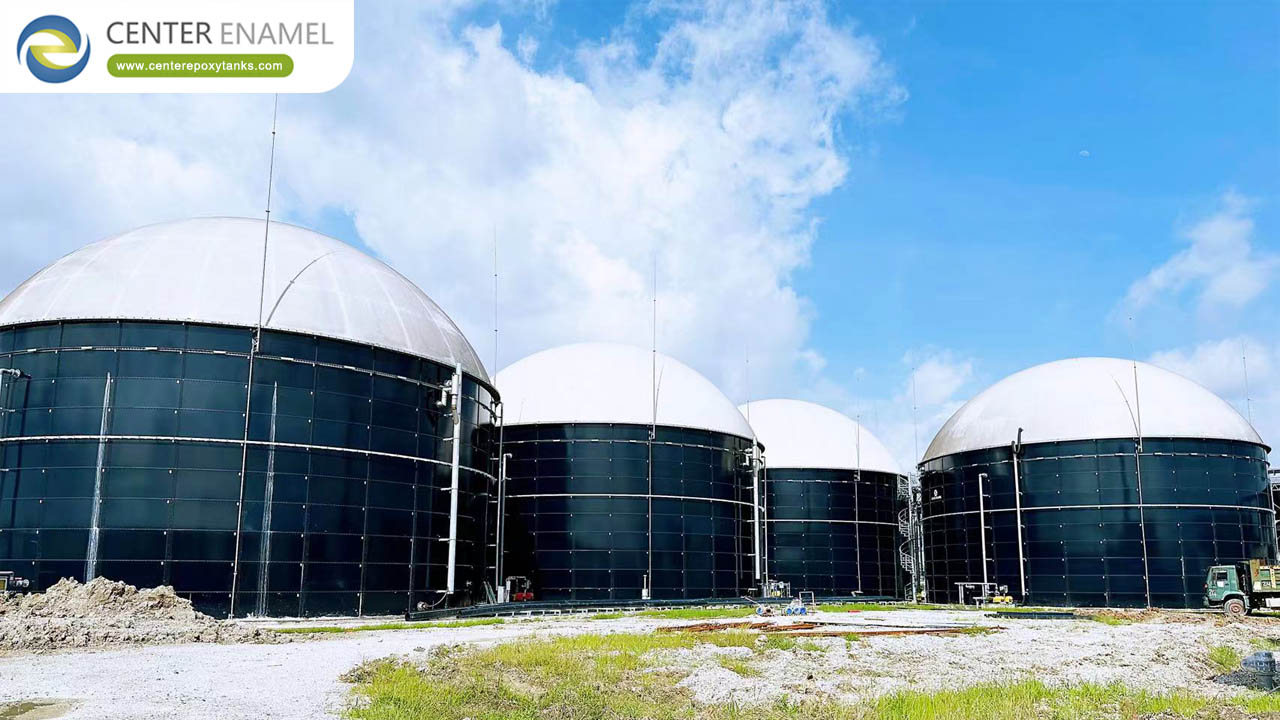
An Integrated Biogas Storage Solution: Anaerobic Digester Covers for Agricultural Waste
An integrated biogas storage solution refers to the use of advanced double membrane gas holders as a dual-purpose roof for anaerobic digesters. Unlike traditional rigid tank covers that simply provide a seal, these integrated systems utilize two high-tensile, flexible polymer membranes. The inner membrane contains the biogas, expanding and contracting based on biological production levels, while the outer membrane acts as a pressurized, aerodynamic shield against wind, snow, and UV radiation. For agricultural waste systems, this integration provides a closed-loop environment that simultaneously manages odor, stabilizes internal gas pressure for downstream energy equipment (like CHP engines), and eliminates the need for expensive, separate external gas storage tanks.
The Challenge: Agricultural Waste Management
Agricultural operations—particularly dairy and livestock farms—face a dual challenge: managing the volume of manure and capturing the energy potential within that waste. Without a proper storage and digestion system, manure lagoons are inefficient and contribute to greenhouse gas emissions.
By integrating the cover directly with the storage system, farmers move from a "waste management" mindset to an "energy production" mindset. An integrated cover turns the digester into a dynamic factory that is sealed, temperature-regulated, and pressure-controlled.
How Integrated Double Membrane Covers Work
The "integrated" nature of this solution comes down to volumetric flexibility. In an agricultural setting, gas production can fluctuate based on feedstock composition (e.g., manure versus food waste mix) and ambient temperature.
Inner Membrane (The Gas Store): This is the variable-volume component. It rises and falls to accommodate the biogas generated by the bacteria. It ensures that the digester does not have a "dead space" that could allow oxygen to enter—a critical safety feature.
Outer Membrane (The Protector): This layer is kept rigid by a constant-duty air blower. It provides the dome shape that sheds rain and snow, while also acting as an insulating layer to keep the gas warm, which is essential for stable methane output in cooler climates.
The Air Gap: The space between the membranes creates a safety buffer. This design effectively mitigates the risks associated with pressure spikes, protecting the tank structure from the forces that would typically threaten a rigid, fixed-roof tank.
Strategic Benefits for Agricultural Operations
Feature | Integrated Double Membrane Cover | Fixed/Rigid Tank Cover |
Storage Capacity | Variable (Flexible Volume) | None (Requires external tank) |
Odor Control | Excellent (Hermetically sealed) | Variable (Potential leaks at seals) |
Installation Speed | Fast (Modular/Bolted) | Slow (Site-poured/Welded) |
Pressure Management | Active (Constant pressure) | Passive (Risk of vacuum/overpressure) |
Maintenance | Low (Minimal mechanical parts) | Moderate to High (Corrosion/Coating) |
Key Factors for Implementation
If you are considering integrating an anaerobic digester cover with your current waste management setup, keep these technical priorities in mind:
Chemical Compatibility: Manure biogas contains hydrogen sulfide (H2S). Ensure your membrane provider specifies materials that are resistant to chemical corrosion and have specialized coatings (like PVDF) to prevent fabric degradation.
Structural Load: While flexible covers are lightweight, the mounting ring on your tank wall must be engineered to handle the tension required for a gas-tight seal.
Agitator Integration: Agricultural digesters require robust mixing. Ensure your cover design provides specific access points or service platforms that allow for agitator maintenance without having to de-gas the entire system.
Safety Protocols: An integrated storage system must be equipped with over-pressure and under-pressure protection valves. This prevents the cover from over-inflating or the tank from imploding during gas withdrawal.
Pro Tip: For farms looking to scale, an integrated system offers "Asset Agility." If you expand your herd size or bring in new feedstocks, you can often upgrade the blower system or membrane height without having to demolish the entire tank infrastructure.
Frequently Asked Questions (FAQ)
Q: Can these integrated covers be used on existing concrete tanks?
A: Absolutely. One of the most common applications for these covers is retrofitting. Because they are significantly lighter than concrete lids, they can often be mounted directly onto existing tank walls with minimal structural reinforcement.
Q: How does the system handle extreme weather like heavy snow?
A: The pressurized dome shape is aerodynamically designed to shed snow. Furthermore, the air-pressure control system can be set to adjust internal pressure, ensuring the dome remains taut and clear even in high-snowfall regions.
Q: Is it safe to store the gas directly on top of the digester?
A: Yes, provided the system is designed to international safety standards (e.g., TRAS 120). By keeping the gas contained in the inner membrane, you are separating the biogas from the air-supported outer layer, significantly reducing the risk of accidental combustion.
Q: Does the gas storage volume affect the digestion process?
A: Indirectly, yes—but positively. By having a variable-volume storage right on top of the digester, you maintain a consistent pressure. This prevents the "draw" or vacuum effects that can disrupt the microbial population at the bottom of the tank, leading to more stable gas production.
To help you determine if this technology is the right fit for your specific facility, are you looking to integrate storage for a new digester build, or are you currently seeking to upgrade/retrofit an existing manure storage tank?


