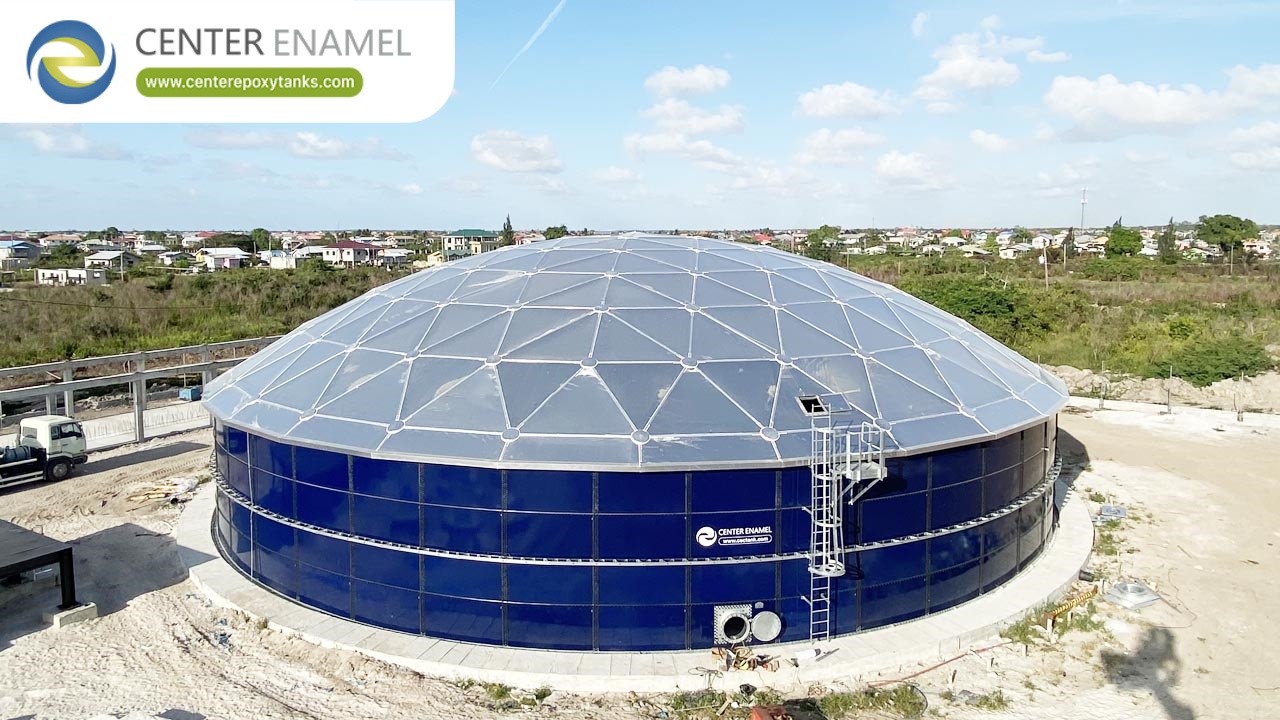
Aluminum Domes for Petrochemical Storage Tanks: Engineering Structural Integrity, Environmental Compliance, and Asset Longevity
In the rigorous operating environment of modern refineries, bulk petroleum terminals, and chemical processing facilities, protecting liquid hydrocarbon assets from atmospheric exposure is critical. Traditional carbon steel fixed roofs are increasingly being replaced or retrofitted by advanced aluminum domes for petrochemical storage tanks.
Engineered as self-supporting, clear-span geodesic structures, these specialized aluminum covers provide exceptional strength-to-weight performance, complete corrosion immunity, and a dramatic reduction in harmful Volatile Organic Compound (VOC) emissions.
Metallurgy and Advanced Engineering Principles
The superior performance of aluminum geodesic domes (AGDs) originates from meticulous material science and structural geometry:
High-Strength Aluminum Alloys (6000-Series): Fabricated primarily from marine-grade architectural alloys such as 6061-T6 and 6063-T6, these domes offer outstanding structural resilience while maintaining an extremely lightweight profile—weighing roughly one-third to one-fifth of a comparable steel roof.
Inherent Self-Healing Corrosion Defense: Unlike carbon steel, which requires continuous sandblasting and protective epoxy recoating to combat atmospheric oxidation and sulfur-rich vapor attack, aluminum naturally forms a dense, continuous oxide passivation layer that completely resists rust and environmental degradation.
Clear-Span Geodesic Geometry: Utilizing a triangulated framework, the geodesic design distributes structural loads evenly across the perimeter tank shell. This clear-span capability eliminates the need for internal support columns, maximizing usable tank capacity and preventing structural interference with internal floating roofs (IFRs).
Zero-Hot-Work Modular Field Erection: Because components are precision-machined and pre-punched in a factory setting, assembly is performed entirely via mechanical bolting. This eliminates dangerous "hot work" (welding) on-site, allowing retrofits to occur safely in active tank farms without costly complete facility shutdowns.
Technical Performance Matrix: Aluminum Domes vs. Traditional Options
Technical Parameter | Aluminum Geodesic Dome Roofs (AGDs) | Traditional Carbon Steel Cone Roofs | Open-Top External Floating Roof Tanks |
Corrosion Resistance & Purity | Superior; inert aluminum oxide layer completely resists atmospheric and H2S attack | Poor; carbon steel rusts rapidly, introducing particulate scale into stored fuels | Moderate to poor; rain and debris accumulate directly on the liquid surface |
VOC & Emission Control | Excellent; reduces VOC emissions by up to 90% when paired with an IFR | Moderate; standard venting allows continuous breathing losses and vapor escape | High evaporation losses due to direct exposure to wind currents and solar radiation |
Structural Weight & Foundation Load | Ultra-lightweight (~1/3 to 1/5 of steel); minimizes stress on tank walls and foundations | Heavy monolithic structure requiring substantial shell and foundation support | N/A (No fixed roof structure present) |
Maintenance Overhead | Virtually maintenance-free; requires zero painting or coating over a 30+ year service life | High ongoing maintenance cost; requires recurring inspection, grit-blasting, and repainting | Moderate to high; requires continuous seal monitoring and rainwater drainage management |
Frequently Asked Questions (FAQ)
Q: Can aluminum geodesic domes be retrofitted onto existing steel petrochemical tanks?
A: Yes. Because aluminum domes are exceptionally lightweight, they exert minimal dead load on the existing tank shell. They are routinely retrofitted onto older tanks—often while the tank remains in service—without requiring foundation or shell structural reinforcement.
Q: How do aluminum domes comply with international engineering standards?
A: Quality aluminum domes are designed, engineered, and fabricated in strict accordance with API 650 Appendix G (structurally supported aluminum dome roofs) and the Aluminum Design Manual (ADM), incorporating advanced second-order non-linear structural analysis for wind, snow, and seismic loads.
Q: Do aluminum domes help petrochemical facilities meet environmental and ESG emissions regulations?
A: Absolutely. By acting as a protective barrier over internal floating roofs, aluminum domes eliminate wind-induced rim seal evaporation and minimize tank "breathing" losses, reducing VOC emissions by up to 90% and assisting facilities in complying with stringent environmental mandates.
Q: Are aluminum domes chemically compatible with aggressive hydrocarbon vapors?
A: Yes. Aluminum is chemically inert to most petroleum hydrocarbons, refined fuels, crude oil vapors, and hydrogen sulfide ($H_2S$) gases, ensuring long-term structural durability without degradation or product contamination.


