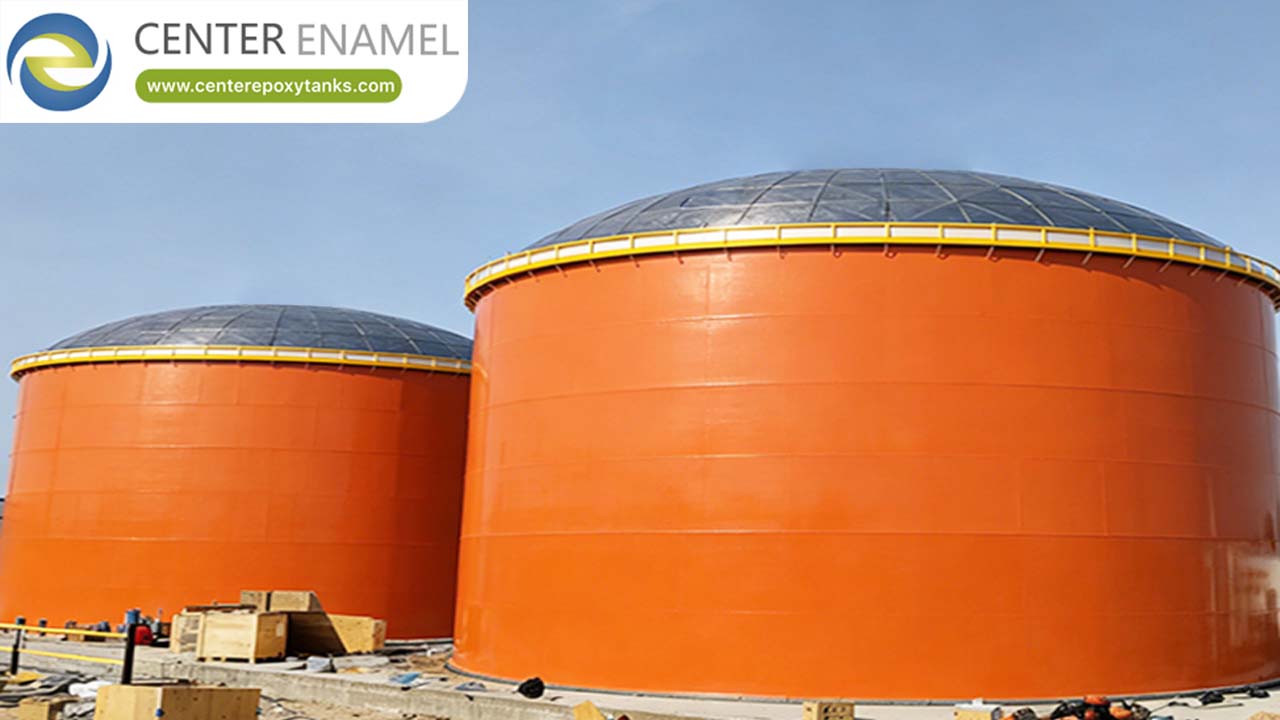
Welded Steel Tank Manufacturers | Large Storage Tank Solutions
When evaluating large-scale bulk liquid or gas storage solutions, engineering and procurement teams face a critical structural decision. Large-scale infrastructure—whether handling petroleum, municipal water supplies, industrial wastewater, or dry bulk materials—demands absolute structural integrity. Traditionally, field-erected, heavy-gauge welded steel tanks have served as the industry default for ultra-high capacities. However, modern engineering developments require a careful balance between field-welded permanence and high-performance, factory-coated modular alternatives.
This technical guide analyzes the design codes governing welded steel tanks and presents a comparative layout of the leading large storage tank solutions available today.
1. Engineering Codes for Large Welded Steel Tanks
Industrial welded steel tanks are not built to loose specifications; they are governed by rigid international structural standards that dictate minimum plate thicknesses, chemistry, joint designs, and localized environmental stress load tolerances.
API 650: Welded Tanks for Oil Storage
The American Petroleum Institute's API 650 is the global benchmark for vertical, cylindrical, aboveground, closed- and open-top welded storage tanks.
● Application Scope: Primarily utilized for hydrocarbons, chemical feedstocks, biofuels, and process water.
● Design Thresholds: Engineered for internal pressures not exceeding 2.5 psig and operating temperatures under 500°F (260°C).
● Dynamic Roof Engineering: Depending on the volatility of the stored liquid, manufacturers specify fixed roofs (cone or dome) or external/internal floating roofs that float directly on the liquid surface to drastically eliminate vapor space and mitigate volatile organic compound (VOC) emissions.
AWWA D100: Welded Carbon Steel Tanks for Water Storage
Published by the American Water Works Association, AWWA D100 establishes the minimum criteria for field-erected welded carbon steel tanks holding municipal potable water, fire-protection water, or raw water reservoir reserves. It balances hydraulic pressures with localized environmental variables like snow loads, high wind shears, and active seismic zone movements.
2. Solution Matrix: Welded Tanks vs. Advanced Modular Alternatives
While heavy-gauge field welding provides a continuous steel structure, the modern industrial landscape frequently utilizes factory-engineered modular solutions. For capacities up to tens of thousands of cubic meters, advanced bolted configurations—such as Glass-Fused-to-Steel (GFS) and Fusion Bonded Epoxy (FBE) tanks—provide distinct logistical and corrosion-control advantages.
The following matrix compares these primary large-capacity storage tank formats:
Engineering Dimension | Field-Erected Welded Tank (API 650 / AWWA D100) | Factory-Coated Bolted Tank (AWWA D103 / GFS / FBE) |
Coating Execution | Field-applied (susceptible to humidity, wind, and environmental contamination during curing). | Factory-applied under controlled thermal conditions (zero environmental contamination; maximum cross-linking). |
Corrosion Resistance | Dependent on continuous maintenance coatings and sacrificial anodes or corrosion allowances. | Superior. Physical glass-to-steel chemical bonds or high-durability epoxy prevent rust scaling seamlessly. |
Civil Construction Cycle | Extensive. Requires weeks or months of on-site field layout, continuous heavy welding, and NDT steps. | Rapid. Parallel site prep and factory fabrication. Panels arrive ready to bolt together with specialized jacks. |
Physical Capacity Limit | Virtually unlimited. Can be field-erected to hold millions of gallons / hundreds of thousands of cubic meters. | Typically optimized for up to 25,000–30,000 cubic meters depending on localized structural codes. |
Site Labor Risk | High. Demands large teams of certified structural welders operating at elevated heights over extended schedules. | Low. Minimal assembly crews execute mechanical panel connection without specialized hot-work permits. |
3. Quality Assurance & Non-Destructive Testing (NDT)
For field-erected welded storage tanks, the construction site transforms into an active manufacturing plant floor. Consequently, quality gates must be uncompromising to prevent catastrophic environmental or physical failure.
The Quality Mandate: A single pinhole defect in a vertical weld seam can lead to progressive stress-corrosion cracking. Top-tier manufacturers and construction teams employ a multi-layered NDT sequence:
● Radiographic Testing (RT): X-ray or gamma-ray imaging is used across structural butt welds, prioritizing the high-stress horizontal-to-vertical T-intersections on the lower shell rings.
● Ultrasonic Testing (UT): Employs high-frequency sound waves to map internal structural flaws, laminate imperfections, or void spaces within the steel matrix and weld root passes.
● Vacuum Box Testing: A specialized clear-window suction device is sealed over bubble-溶液 (soap solution) treated floor lap-welds. Any micro-fissure draws air through, creating immediate, visible bubbling to verify 100% hermetic isolation.
● Hydrostatic Testing: The definitive final qualification step. The completed vessel is completely filled with water to validate real-world loading, soil bearing settlement, and absolute structural containment under maximum design head pressure.
4. Key Procurement Selection Criteria
When finalizing your large storage infrastructure design, structure your Request for Proposal (RFP) around these essential parameters:
1. Chemical Compatibility & Linings: For aggressive industrial wastewater, anaerobic digesters, or desalinated water, standard carbon steel requires heavy interior coatings. Evaluate if a factory-applied Fusion Bonded Epoxy or Glass-Fused-to-Steel alternative will deliver a lower total cost of ownership (TCO) by removing future field-recoating cycles.
2. Geographical & Logistics Constraints: Remote mining locations, highly urbanized infrastructure zones, or island installations present intense shipping and labor friction. Flat-pack modular bolted tanks fit smoothly within standard shipping containers, often bypassing the heavy break-bulk transport costs and specialized site crane requirements of welded designs.
3. Future Project Adaptability: If a plant expansion or process shift requires moving or expanding storage capacity later, bolted steel panels can be unbolted, packaged, relocated, or systematically expanded with additional ring courses—a flexibility that field-welded vessels cannot match.
Selecting the ideal large storage tank solution requires evaluating immediate capital expenditure against long-term maintenance costs, installation speeds, and environmental risks. While welded steel tanks remain an important choice for massive, high-pressure hydrocarbon installations, modern factory-coated bolted storage systems offer a highly competitive, corrosion-resistant, and rapid-deployment alternative for water, wastewater, and industrial processing operations.


